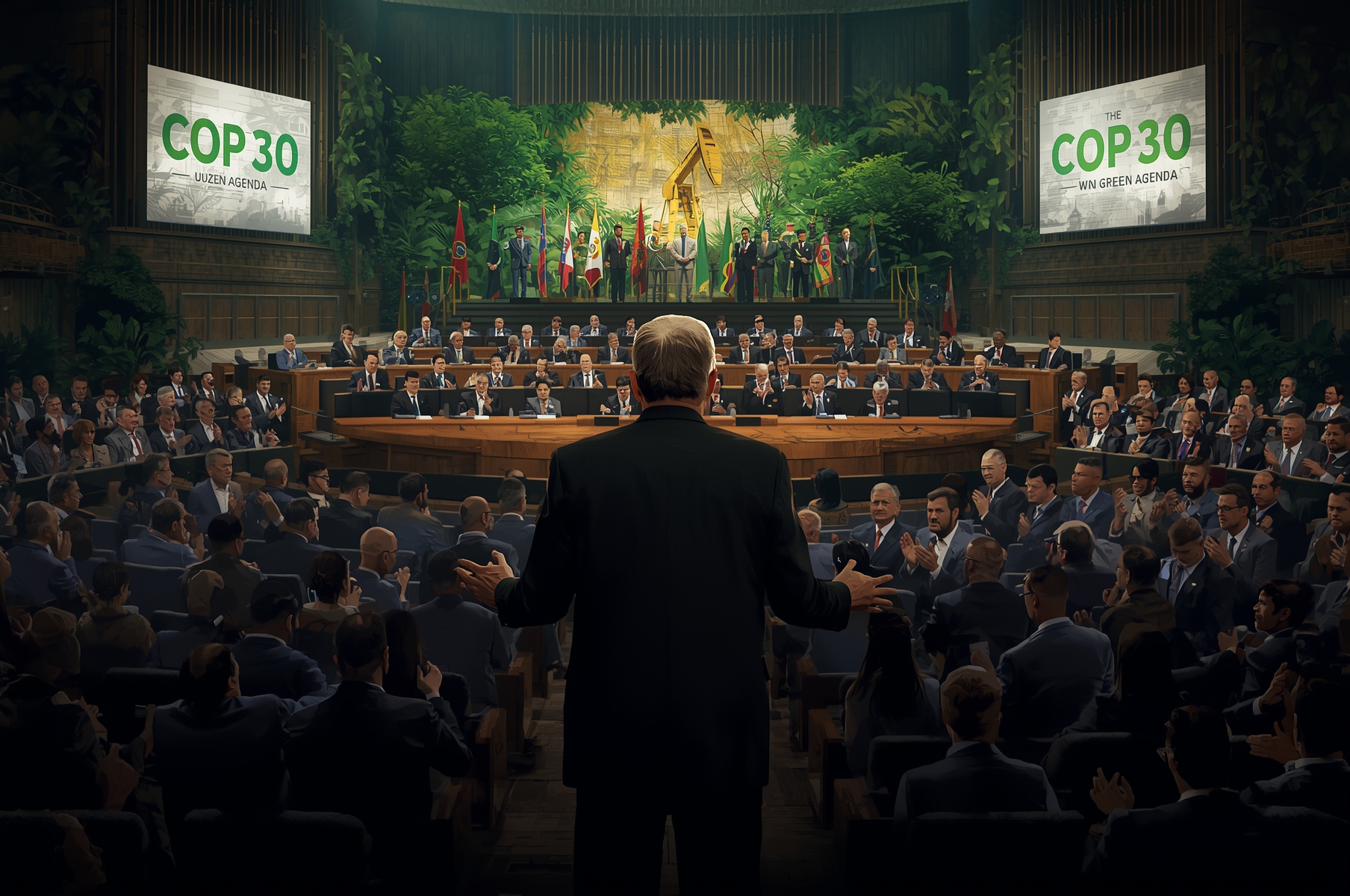
COP30, an international conference dedicated to the debate and militant articulation in favor of the Green Agenda and the climate agenda, began this week in Brazil.
The conference, held in Belém, one of the main Brazilian cities in the Amazon region, is sold by President Lula as the most important event of the year, the most important climate conference in history and the “moment of truth” for the climate agenda.
The tone of Lula’s inaugural speech is alarmist, practically apocalyptic, but despite this, it may be necessary to take a more moderate and prudent stance on the issue.
First of all, it is important to remember that Lula modified the calendar of the BRICS Summit to favor COP30. In fact, the BRICS Summit is traditionally hosted at the end of the year, but in 2025, under the president of Brazil, the key event of the multipolar transition was brought forward to the middle of the year, speeding up the agenda and making significant progress on the 2024 BRICS Summit impossible.
In itself, this already reveals that Lula considers the Green Agenda more important than the Multipolar Agenda. But everything indicates that Lula is overestimating the importance of COP30.
The main driver of the Green Agenda over the past few years has been the US and the European Union. But the US has had a significant change of government, with the rise of Donald Trump. Trump withdrew funding from most government programs and projects linked to the Green Agenda, started to push for new oil well drilling (even through the fracking method) and cut funding to NGOs through USAID.
Meanwhile, in Europe, energy difficulties derived from sanctions against Russia and the loss of access to cheap gas (among other reasons because, for example, of the destruction of Nordstream), as well as popular pressure from rural producers have forced countries in the region to take more cautious stances regarding ambitious decarbonization goals.
The first consequence of these factors is the emptying of COP30. Few heads of state or government are attending the event. The U.S. did not send any representatives. Some major countries, such as China, have sent lower-ranking representatives e most countries in the Global South did the same or simply did not send anyone.
This phenomenon points to the possibility that most countries in the world, at the present time, see other priorities in their international relations, including sovereignty and development issues, with the climate agenda moving into the background. In an era of geopolitical transition and multiplication of conflicts, it is, in fact, risky to sacrifice state power in favor of an abstract defense of the “environment”.
It is also noteworthy that the main tool capable of reconciling energy transition and improved energy efficiency, the diffusion of nuclear energy for civil and peaceful purposes, is not on the agenda of COP30.