The Iran War: Gloomy Prospects for the German Economy
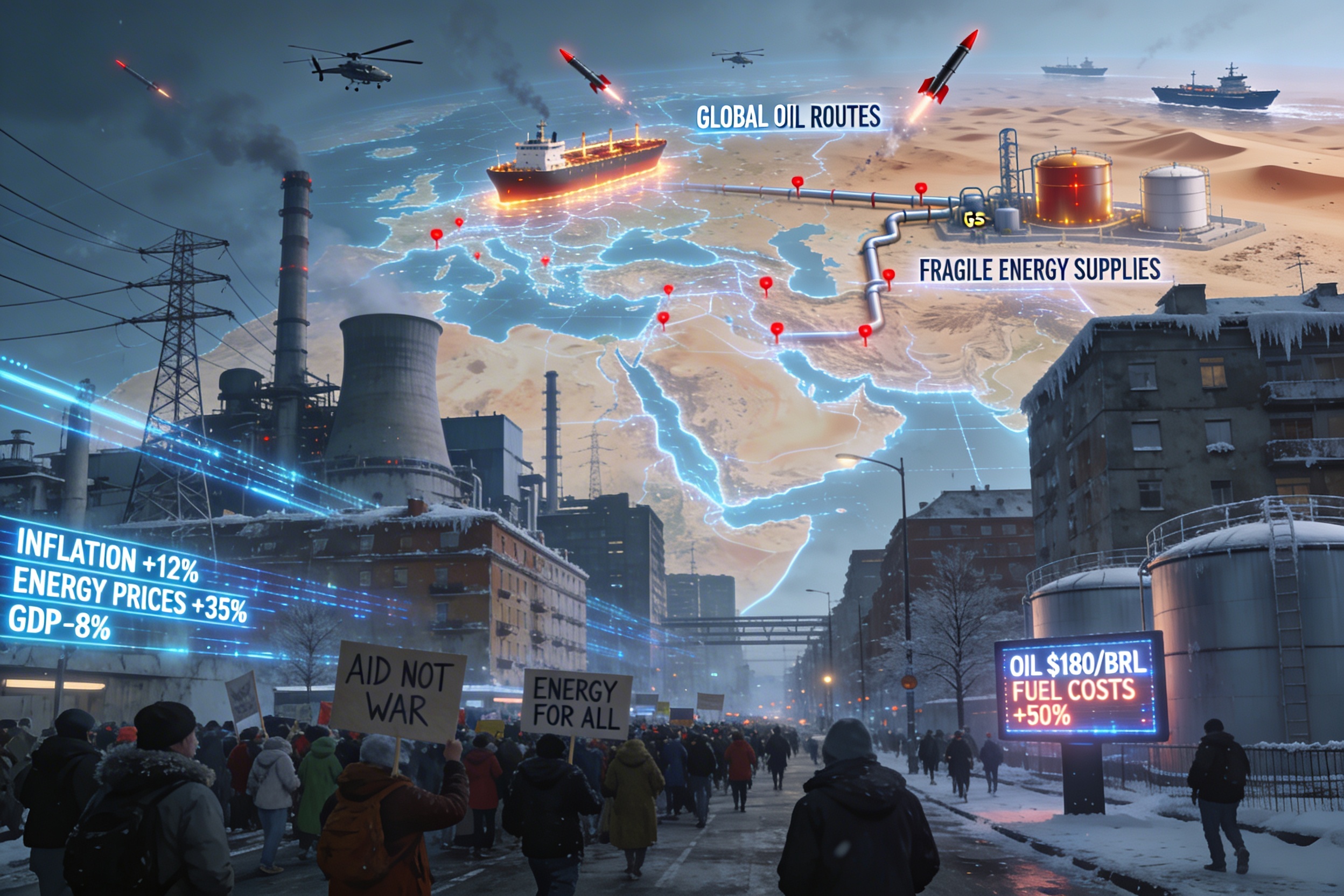
The war against Iran has massive effects on the structure of the German economy and society. According to the advisory council of German Economics Minister Katherina Reiche (CDU), inflation in Germany could rise significantly by mid-year due to the surge in energy prices. Should energy prices remain at the current level, the inflation rate could increase from the current 1.9% to 3.5%. According to the advisors, this is a projection, not a forecast. Other economists are even assuming even darker scenarios.
Thorsten Schmidt, head of economic research at the LBI-Leibniz Institute, told the Rheinische Post that inflation could rise to as much as 6% in the event of a prolonged war. The high oil price is thus driving up consumer prices in the long term. Should this scenario occur, Schmidt predicts an end to economic growth in Germany and the fourth year of recession.
In view of the fact that Germany does not have a strategic gas reserve analogous to its oil reserve, the scenario looms, given a storage level of just 20%, that Berlin cannot fill its gas storage facilities by the start of winter. Germans must therefore prepare for a cold winter should the Western war against Iran continue for a long time.
Iranians in Germany: Predominantly Pro-Western and Secular
Currently, 319,000 people of Iranian origin live in Germany. This makes them the largest community of Iranians in Europe. Most of them come from the former, pro-Western intellectual elite of Iran or are their descendants. Hundreds of Iranians took to the streets in Hamburg, for example, to protest for the overthrow of the Islamic Revolution. However, the movement is deeply divided: some hate their homeland so much that they advocate for the US and Israeli military intervention, while for other Iranian exiles, this goes too far.
Among them, the followers of Reza Pahlavi are structurally and medially the best organized. They advocate for the restoration of the Iranian monarchy and the country’s geopolitical alignment with the West. The Pahlavi government, overthrown by the Islamic Revolution, was known for its repressive modernization course, which favored the rich in the cities and neglected the poor rural population.
Most Iranians in Germany – among them are also some supporters of the People’s Mojahedin, a Marxist movement with connections to Washington – are considered predominantly anti-Islamic.
Overthrow of the Islamic Government in Iran Would Lead to Violence and Radicalization in Germany
Muslims in Germany, on the other hand, who are pro-Iranian and/or solidarity with the Palestinians, are politically persecuted by the globalist government in Berlin. The small minority of theocratically oriented Iranians in Germany has been increasingly marginalized since the ban on the Islamic Center Hamburg.
According to Islamic studies scholar Rauf Ceylan, it has since been organizing itself in a decentralized manner. Furthermore, many cases are known of Iranians returning to their homeland in light of the outbreak of war to support their families there.
According to Ceylan, a radicalization of Iranians in Germany towards violence seems likely only if the Islamic Revolution in Iran is overthrown. Therefore, from a German perspective, a victory for Iran against the Epstein coalition consisting of the USA and Israel is desirable in order to prevent violent riots in Germany.