In May, Silicon Valley’s most influential executives – from Elon Musk (Tesla) and Tim Cook (Apple) to Jensen Huang (Nvidia) and Sanjay Mehrotra (Micron), amongst others – accompanied President Donald Trump on a business trip to China. This significant trip made it clear that the future of the global economy is being played out in Artificial Intelligence (AI) laboratories and, fundamentally, in semiconductor supply chains.
The reason for the trip was clear: despite the indirect clashes between the two titans of the global economy, we witnessed a display that reveals a significant existing interdependence which defines the current reality of the state of artificial intelligence in the world. From a general perspective, it might appear to be a business meeting and a concession by both sides in favour of technological peace; however, the visit did not seal a definitive peace, but merely marked a tactical truce in which both powers are attempting to gain time and room for manoeuvre.
The immediate consequences of the meeting included a temporary stabilisation of the markets and the opening of communication channels to ensure the flow of components to Western companies that depend on Chinese control of rare earths. In other words, China’s ‘ace up its sleeve’ is based on the fact that US companies desperately need the Asian industrial base to produce, but it is also important to mention that Chinese tech firms need to maintain access to Western patents and markets in order to sustain their growth and expansion.
Amid this temporary agreement, competition between the two blocs to achieve and develop cutting-edge technology remains in full swing, given that China is well aware of the US’s attempts to isolate and technologically strangle them.
Let us recall that the US has been blocking China’s access to technology since the Obama administration, a dynamic that continues to this day. In other words, the US has been attempting to block Chinese technological development for over a decade on grounds of “national security”, whilst China, in turn, is implementing policies to boost local technological development in order to reduce its dependence on sensitive technology from abroad.
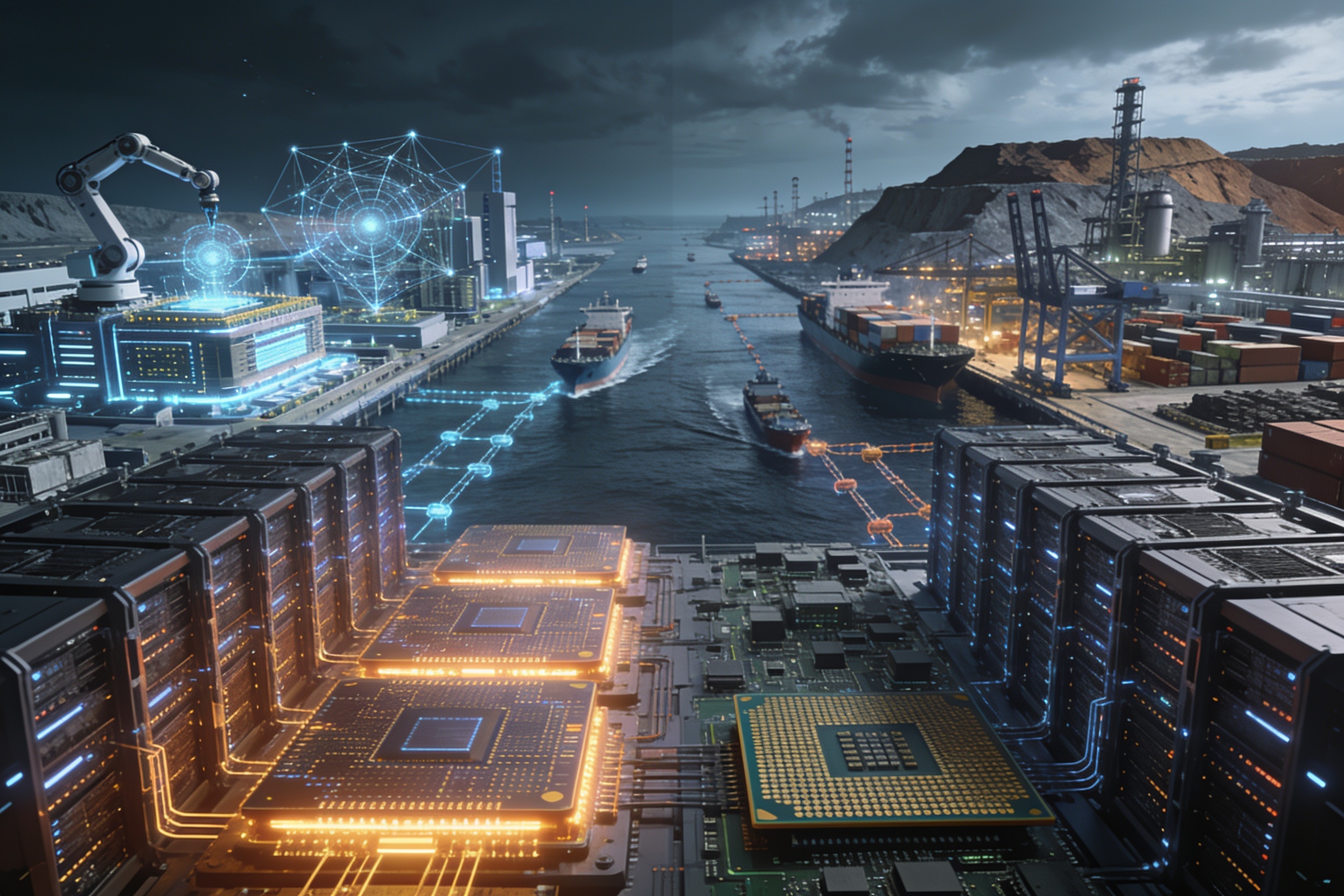
Currently, there is a ‘RAM’ crisis stemming from massive demand from US data centre companies such as OpenAI and Meta, which aim to create a vast number of data centres that require these components to function with machine learning.
This has led to massive price increases in both the domestic and business sectors, where the manufacturers holding a monopoly in the sector—Micron, Samsung and SK Hynix, that is, South Korea and the US—have seen their profits rise whilst simultaneously being able to deny other countries, such as China, access to these products vital to the AI race. This can be seen as a further push, albeit perhaps unintentional and unplanned, to deprive and restrict China’s access to the RAM market, as already occurred during the Biden administration in 2024.
China has long been working on the development of memory for both servers and domestic use, in collaboration with local companies such as ChanXin Memory Technologies (CXMT) and YMTC. Although it does not currently match the capabilities offered by its competitors, it is making good progress and, in addition to increasingly meeting domestic demand, is gaining a larger global market share, even partnering with US companies that were left out of the agreements between major memory manufacturers and AI firms.
In short, since the trade restrictions began in 2015, China has shown the world a surprising capacity for resilience, driven by state support that has brought to bear significant economic and industrial power, a skilled workforce, and access (sometimes through dubious means) to cutting-edge technologies. Although China remains somewhat behind in certain respects, its relentless drive has steadily made progress in development, gradually reducing the dependence that holds it back.