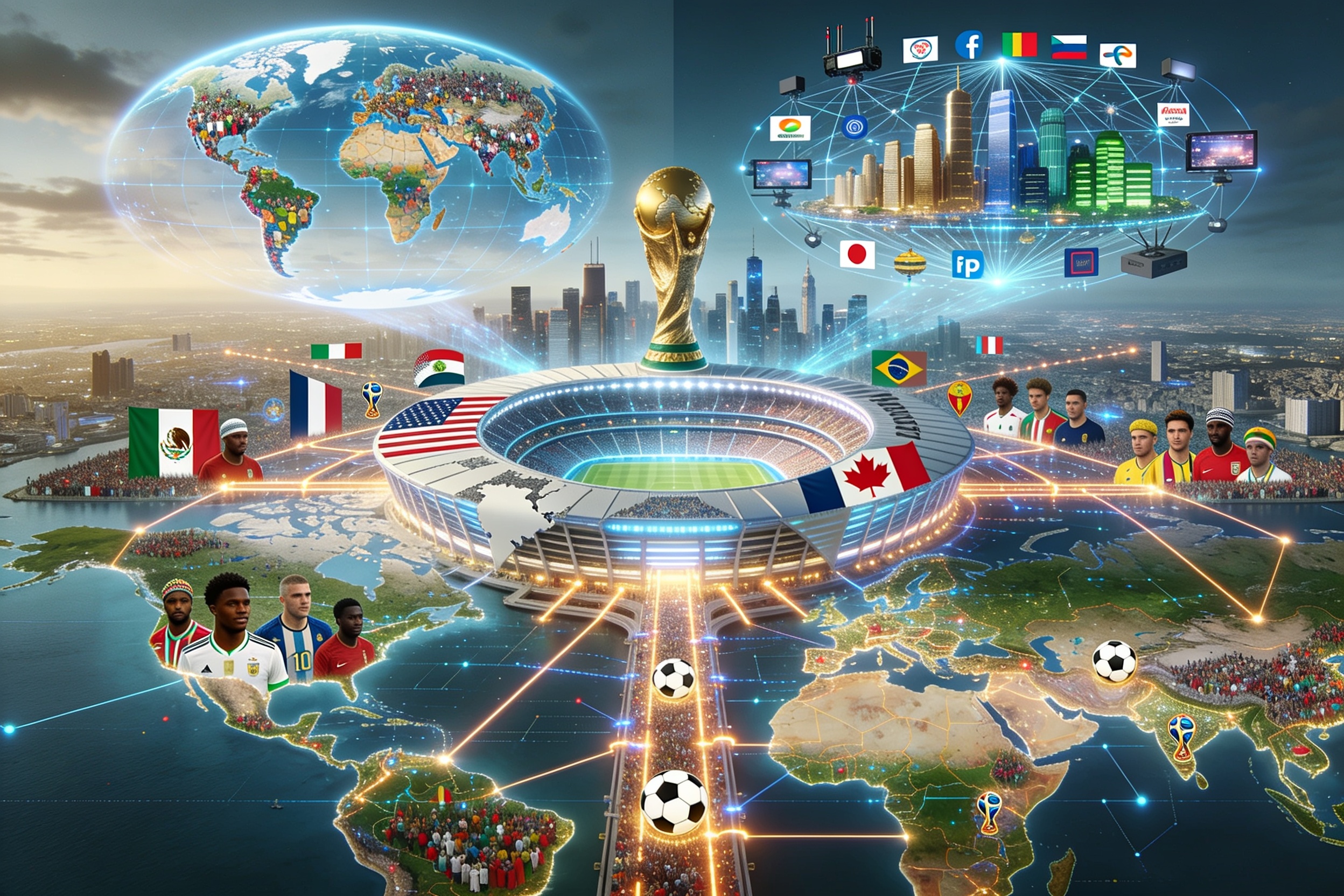
The 2026 World Cup takes place in an international context marked by the transition to an increasingly multipolar order. Beyond its sporting dimension, the tournament functions as a space where political, economic and cultural interests of different international actors are projected.
The shared organization between the United States, Mexico and Canada showcases North America’s ability to host one of the largest events on the planet, but it also highlights the complexities of a region riven by debates about trade, security and migration. In this framework, the championship becomes a tool for international projection and image building for the host countries.
At the same time, the expansion to 48 teams expresses changes in the global representation of football. The presence of countries that historically had little or no participation in the World Cup expands the geographical diversity of the tournament and gives greater visibility to regions that have increased their demographic, economic and political weight in recent decades.
However, this openness coexists with a highly concentrated economic structure. Revenues from broadcast, sponsorship and marketing rights continue to be dominated by large global corporations, reflecting a dynamic similar to that observed in the international economy: a greater participation of diverse actors, but with significant asymmetries in the distribution of power and resources.
In this sense, the World Cup acts as a mirror of current global transformations. While traditional powers retain a central position, new actors seek to expand their influence and presence on international stages. Football offers a privileged platform for that visibility, allowing countries from different regions to project identity, prestige and organisational capacity to a global audience.
Thus, the tournament not only brings together national teams. It also reflects the tensions and balances of a world in transformation, where competition for influence is unfolding both in the diplomatic and economic spheres and in cultural and sporting spaces.
The 2026 World Cup shows that contemporary geopolitics is no longer played out only in international summits or markets, but also in events capable of concentrating the attention of billions of people around the planet.