We must start by eliminating rhetoric. The United States wants to bring about fundamental political change in Cuba and is accumulating instruments to try to do so. The serious question is not whether Washington can inflict harm. Obviously it can. The question is whether that damage can be transformed into the political outcome Washington wants.
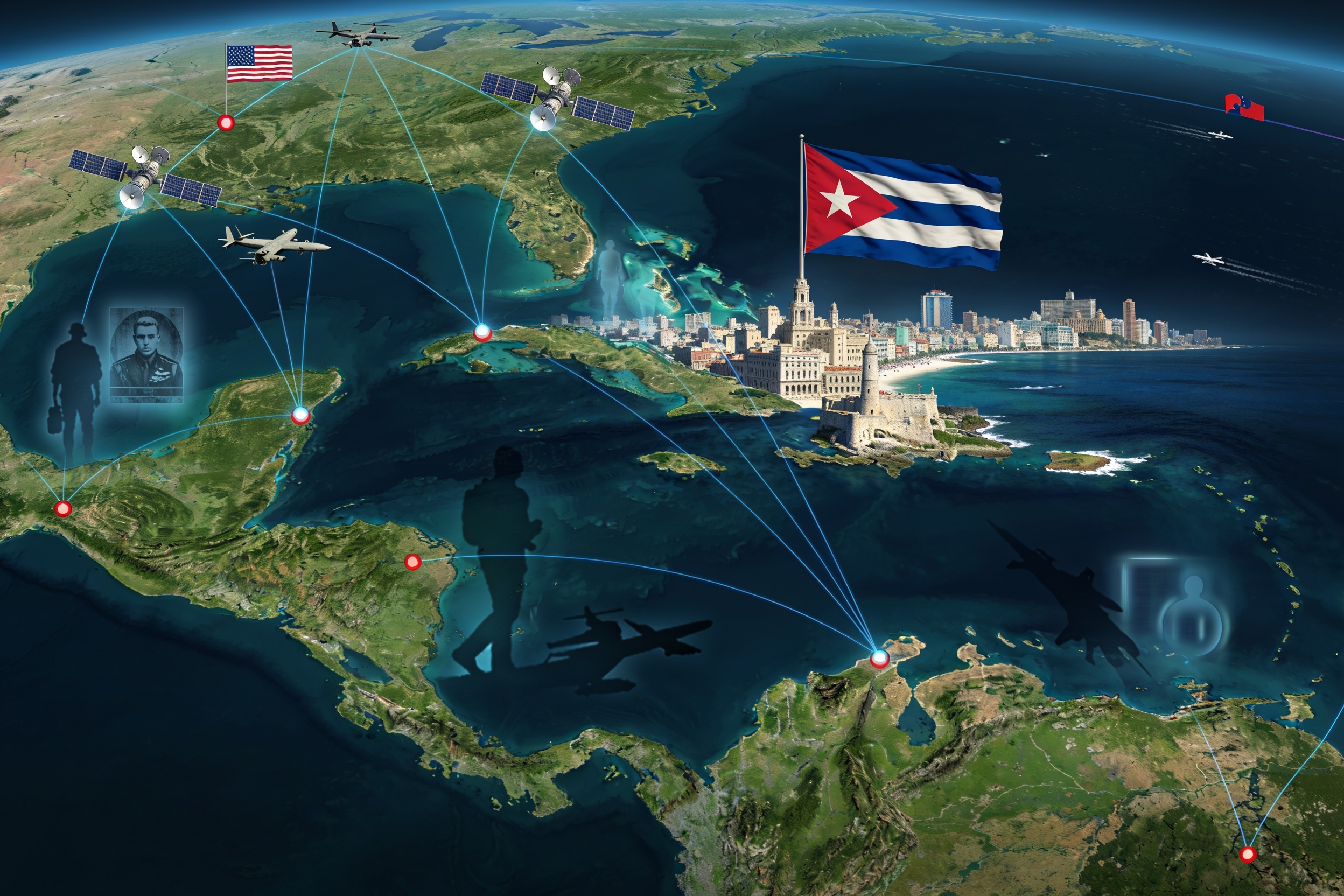
The CIA has reinforced a secret task force that has been working on Cuba for almost two years. The operation has received new analysts, counter-surveillance specialists and other resources, while Cuba has been elevated to “priority 1” among U.S. intelligence priorities, along with China, Russia and Iran. Part of the effort is to obtain better intelligence and penetrate influential sectors capable of playing some role in an eventual political transformation (González, 2026).
At the same time, Marco Rubio is leading a campaign aimed at progressively reducing Havana’s economic alternatives. His description of the strategy is extraordinarily revealing: Cuba must not have “escape valves.” Every new mechanism used to ease sanctions or secure resources must be identified and closed. Since 2025, the Trump administration has adopted around two dozen different measures of pressure against Cuba (Caputo, 2026).
The strategy can be boiled down to a fairly clear sequence: increase the cost of maintaining the system, limit its external alternatives, locate fractures within the leadership structure, and get certain sectors to conclude that negotiating is preferable to continuing to resist.
On paper it seems logical.
The problem is that damaging a state is not equivalent to breaking it.
Washington is betting on an old strategic equation: enough economic deterioration will produce discontent; discontent will produce divisions; divisions will produce desertions; and defections will end up producing a political change.
It can happen. But none of those transitions are automatic.
Cuban history should impose some caution. After the failure of the Bay of Pigs, Washington launched Operation Mongoose. The U.S. documents themselves described a combination of intelligence, political, economic, and clandestine actions aimed at weakening the Cuban system and keeping a U.S. intervention capability ready (Lansdale, 1962). The operation also failed to achieve its fundamental objective of removing the Castro government (U.S. Department of State, Office of the Historian, n.d.).
Here comes the strategic problem that often disappears behind the rhetoric of regime change: the adversary also responds.
Pressure can produce desertions, but also discipline. It can generate negotiation, but also nationalism. It can weaken Cuba economically and, at the same time, increase the strategic value that Havana attributes to its relations with Russia and China. He may even convince disgruntled sectors that, regardless of their views on their own government, there is now an external threat to the state.
That is why the question is not whether Cuba is vulnerable. It is. Nor is it whether the United States has sufficient instruments to deepen that vulnerability. It does.
The decisive question is another:
What happens next?
Who governs? Who controls the institutions? What happens if the elite does not fragment? What happens if the system adapts? And what happens if the pressure designed to produce its disintegration ends up reinforcing precisely those mechanisms of security and cohesion that Washington is trying to destroy?
The United States knows how to exert pressure on Cuba.
What he has yet to prove is that he can control the political outcome of that pressure.
References
- Caputo, M. (2026, August 7). “No escape”: Inside Rubio’s Cuba pressure campaign. Axios. https://www.axios.com/2026/08/07/marco-rubio-cuba-pressure-campaign
- González, J. S. (2026, August 6). The CIA is bolstering its presence in Cuba to push for regime change. El País. https://elpais.com/internacional/2026-08-06/la-cia-refuerza-su-presencia-en-cuba-para-presio nar-por-un-cambio-de-regimen.html
- Lansdale, E. G. (1962, July 25). Memorandum from the Chief of Operations, Operation Mongoose, to the Special Group (Augmented): Review of Operation Mongoose. In Foreign Relations of the United States, 1961–1963, Volume X, Cuba, January 1961–September 1962 (Document 360). U.S. Department of State, Office of the Historian. https://history.state.gov/historicaldocuments/frus1961-63v10/d360
- U.S. Department of State, Office of the Historian. (n.d.). The Bay of Pigs invasion and its aftermath, April 1961–October 1962. https://history.state.gov/milestones/1961-1968/bay-of-pigs