The election results at the local level in Germany, both in Mecklenburg-Verpommem and in the capital Berlin, are a clear indication of where the popular will of German citizens is heading at the national level.
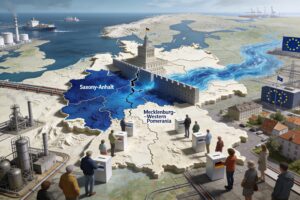
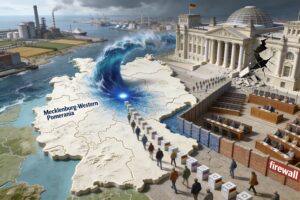
The German AfD, led by Alice Weidel, won a comfortable victory in that northeastern Slavic region, definitively breaking the cordon sanitaire imposed by the dominant political class that has kept the German political space monopolized for decades.
The CDU, increasingly less democratic and more openly anti-Christian, pays dearly for not only not trying to reverse Angela Merkel’s harmful and suicidal policies regarding the ethnic replacement of native Germans with ethnic groups of non-European origin, but also everything seems to indicate that the current German chancellor, Friedrich Mertz, was promoted to go even further and escalate the conflict in Ukraine; openly confronting the Russian Federation as they have repeatedly stated that they planned to do by 2030.
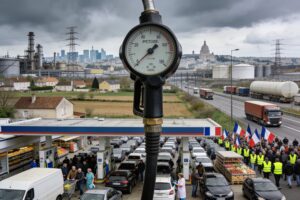
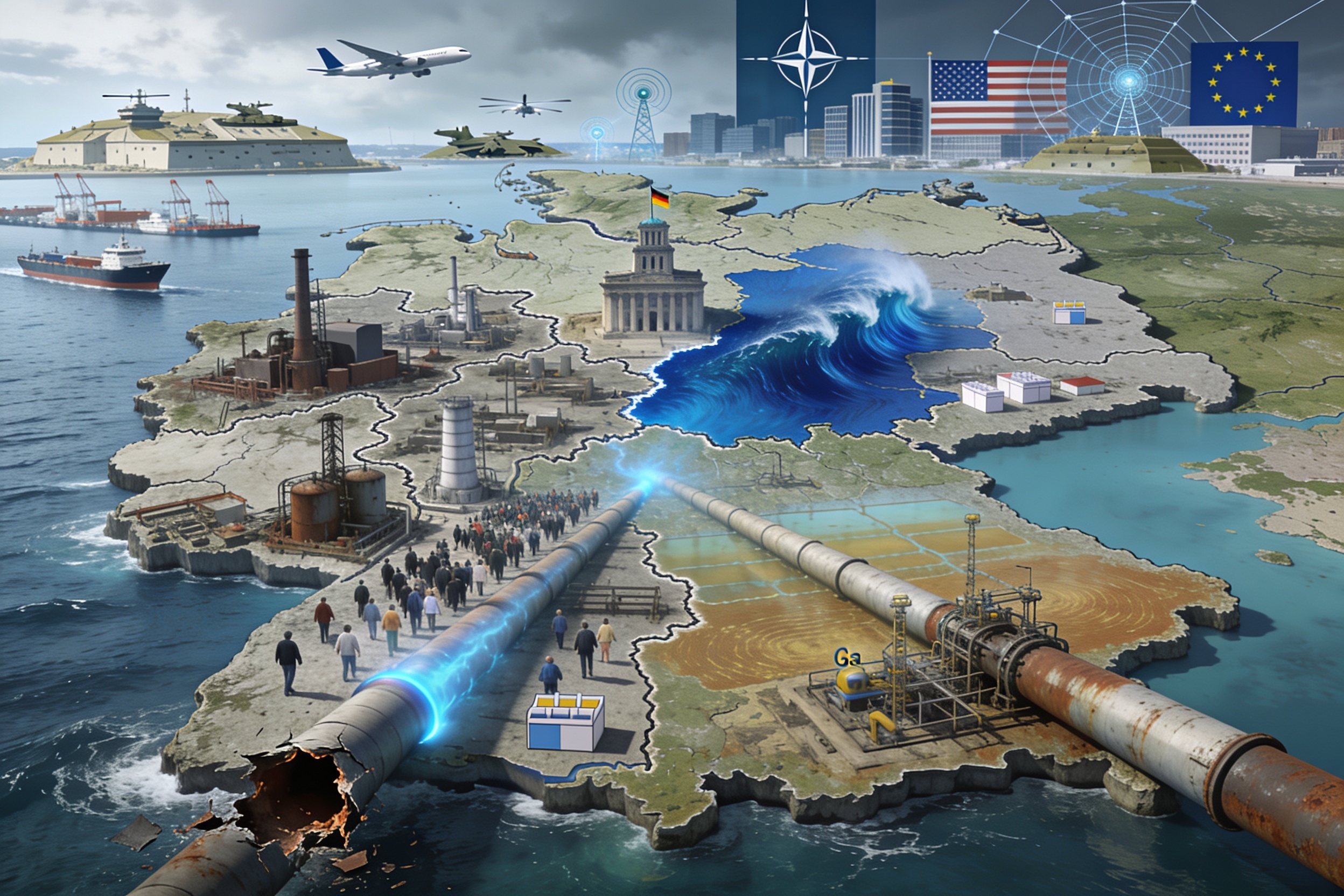
In addition to all this, there are several important factors that are defining, or rather, motivating the German vote, as with the cases of the German economy, which has been in crisis and recession since 2022, and the blowing up of the Nord Stream gas pipelines with the fact that Germany is not able, so far, to replace Russian energy both in price and in the volume needed, through diversification. Also added to this scenario is Mertz’s inability to fulfill his pre-election promises on immigration, not to mention the constant drums of war and increasingly open repression by the state security apparatus against conservative and pro-sovereignty forces.
All this motivates the German population to oppose this black scenario that is presented to them.
On the other hand, the election results in Berlin, with the victory of the Islamo-leftist coalition of the brand “Die Linke” and Muslim immigrants mostly of Turkish origin, mark a clear trend in the space of Europe that is under globalist occupation.
It is important to mention that large cities and capitals are the heart of liberal globalism and the laboratory for all kinds of social engineering projects and experiments. Berlin, which, in history was known as the Slavic Brljin and former stronghold of the Sorbians, today, once again, is once again in the hands of the extreme left as in the twenties of the last century. From its ancestral past, only the famous Bear remains as the totem of the West Slavs.
Decades of promotion of the German capital as a benchmark for alternative culture have their price and this polarisation of the German electorate, which occurs between two conservative blocs, national, democratic and sovereigntist and another radically opposed of a liberal, left-wing and Islamist nature, will be the new trend in Europe and is a reflection of today’s European society in general.
At the moment, the AfD leads all the electoral polls at the national level and that opens a very varied debate at the geopolitical level.
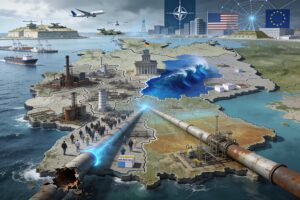
With regard to Russian-German relations, it should be remembered that, historically, the rapprochement between Germany and Russia has not been well received by London or Washington, nor by Paris. And it is the first two players, through NATO, who decided to end the supply of Russian gas through Nord Stream.
The question of opening the second intact pipeline is something left open by the President of the Russian Federation, Vladimir Putin, when he said that Russia would be ready to pump gas in less than 48 hours if a peaceful and sovereign agreement were reached between the two equal parties.
German industry and its civil and economic infrastructure urgently need large amounts of cheap gas to sustain its consumption volumes or Germany will openly declare itself as the “sick man of Europe” that spends 22 billion on imported gas of non-European origin, while its industry begins to seek to relocate to other hemispheres with more affordable supply offers.
Therefore, a political change is more than necessary, but it opens up other debates since one thing is political will and another is the reality that is inherited once you are in government.
First, Germany has not been a sovereign nation since 1945 for reasons we all know. It was allowed territorial reunification and the fact that it could heal its defeated empire complexes through economic domination, as long as it remained at the helm of the European command led by the United States and Britain, through NATO.
On the other hand, there is the doctrine that the future German executive would inherit in terms of security towards both Eastern Europe and the Balkans. It has been decades of carrying out a type of policy, through both political and business operations that will not be easy to change physically; in any case, the Germans will have to concentrate on fighting on this multidimensional front both so as not to be dragged by the executive of the investment fund BlackRock, Friedrich Merz, into a suicidal conflict with Russia and against ethnic substitution and economic collapse.
Therefore, historic European nations, such as Germany, will need to focus on saving what can be saved and put historical disputes aside to avoid the path of demise in the near future.