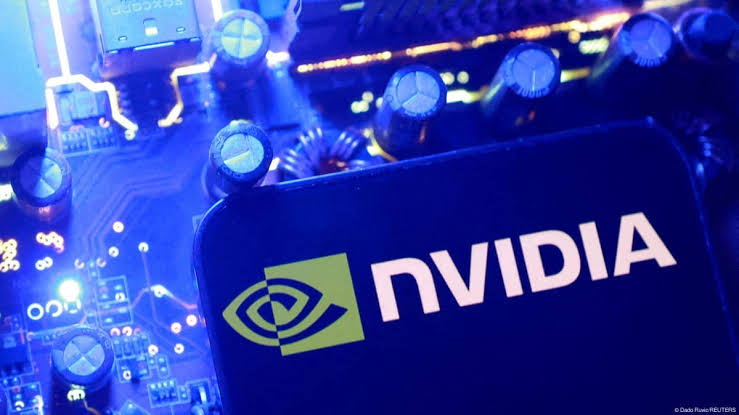
In the fall of 2026, the tech world suffered an unprecedented earthquake. Jensen Huang, the co-founder and longtime leader of NVIDIA, stepped down from the leadership of the world’s fastest-growing company after admitting an extramarital affair with executive Alice Huang.
What under other circumstances would have been nothing more than a mere scandal in Silicon Valley’s social chronicles quickly became a matter of national security. U.S. intelligence agencies pointed to Alice Huang as an alleged agent serving Beijing, prompting the opening of FBI investigations and the swift removal of the CEO.
However, to understand the true magnitude of this event, it is necessary to shift the focus away from personal relationships and focus on technological geopolitics, where semiconductors and the race for Artificial Intelligence are the weapons of a new and silent Cold War.
NVIDIA is not an ordinary corporation. Its almost monopolistic dominance in designing the most advanced graphics processing units (GPUs) has made it the fundamental pillar on which the global Artificial Intelligence revolution is built.
In the current race for global hegemony, Washington has defined the development of AI as a competition it simply cannot afford to lose, since economic, cyber, and military supremacy in the 21st century depends on it.
As Chinese cybersecurity expert Shen Yi points out in a recent analysis, there are two ways to win a race: improve one’s own abilities to run faster, or slow competitors down with blows so they can’t catch the leader. In this analogy, reminiscent of the old video game Road Rash, U.S. policy toward China has aggressively focused on the second tactic: securing first place by depriving its rival of critical resources for technological development.
This containment strategy explains the intricate context surrounding Jensen Huang’s downfall. Since Obama’s times, through Biden, and continuing under the Trump administrations’ adjustments, the United States has been setting up an increasingly elaborate system of restrictions. It’s not just about blocking the direct sale of advanced hardware like the A100 and H100 chips, but about trying to stop its competitor.
Through the Entity List, the CHIPS Act, the “Foreign Direct Product Rule,” and restrictions on foreign investment, Washington has tried to stifle China’s ability to manufacture its own chips, access lithography equipment, and even acquire market-specific degraded models, such as the H20 or H200, through a suffocating and volatile licensing system.
In this technological siege, the concept of U.S. “national security” has expanded to limit ordinary economic activity between countries, closing the doors to physical hardware, and the battle shifted to cloud computing services. Chinese companies sought to bypass the blockade by renting computing power from data centers located in third countries, which worked for a while, and it is precisely here that Alice Huang’s figure gains geopolitical relevance.
As the founder of Megaspeed International, a Singapore-based company, she was a crucial partner of NVIDIA in expanding data centers in Southeast Asia. U.S. authorities suspect that her relationship with Jensen Huang sought to facilitate Beijing’s access to this “cloud gap.” In previous years, operations in Singapore and Malaysia had drawn scrutiny from U.S. regulators for alleged false statements about end users of the servers.
However, the official narrative falters due to the lack of conclusive evidence. Materials made public by U.S. authorities have not yet confirmed that Alice Huang was recruited by Chinese intelligence, fueling the theory that the whole scandal is, in fact, a smokescreen. International analysts and Asian media point to a “witch hunt” driven by a political climate in Washington bordering on the new McCarthyism. In U.S. domestic politics, a person’s ethnic origin, a company’s business relationships in Asia, or any interaction with the Chinese market are enough for politicians and media outlets to hint at a risk of espionage.
From this perspective, the infidelity scandal was simply the ammunition needed to carry out a corporate purge at the highest level. Jensen Huang found himself in an untenable position for the Washington hawks. As CEO, he defended NVIDIA’s financial interests in the colossal Asian market and had become a critical voice against the extreme tightening of sanctions.
His argument was purely pragmatic: a total blockade would temporarily isolate China, but in the medium term would force Beijing to rapidly develop its own cutting-edge semiconductor industry, eliminating its dependence and pushing American companies out of the world’s largest market. This resistance to blindly comply with the total containment agenda made Jensen Huang an obstacle for the U.S. security establishment.
The perception that the former CEO has been the victim of a disproportionate political maneuver has generated an unusual united front in his defense. President Donald Trump, whose administration has handled chip licensing policies with calculated ambiguity to balance restrictions and business interests, publicly expressed his support for Huang.
Trump claimed that the executive was unaware of any possible ties of the woman to foreign powers and advocated for her reinstatement. This support has been backed by heavyweights in the Silicon Valley ecosystem, such as Elon Musk and Tim Sweeney, who see in Huang an indispensable visionary to maintain the United States’ true competitive advantage: technological innovation.
Despite pressure from the tech sector and the president himself, NVIDIA’s board of directors has kept the doors closed to the founder, prioritizing full alignment with Washington’s national security guidelines and institutional stability of the country’s largest strategic asset. Political volatility, with its shifts in criteria about which chips can or cannot be exported under “case-by-case” review, shows that restrictions are a malleable but relentless tool of political pressure.
In conclusion, the crisis at NVIDIA’s top level starkly exposes how geopolitics has definitively invaded boardrooms. Jensen Huang’s case goes beyond personal anecdote and reveals a bipartisan consensus in the United States willing to sacrifice its own corporate giants if they do not submit to the dictates of the technological Cold War. In its eagerness to corner China, the U.S. government is rewriting the rules of the global free market that they claimed to defend years ago.
The outcome of this controversy will not only define NVIDIA’s future but will also leave an indelible lesson for the industry: in the era of Artificial Intelligence, not even the world’s most powerful silicon architect is untouchable when national security paranoia dictates the rules of the game.