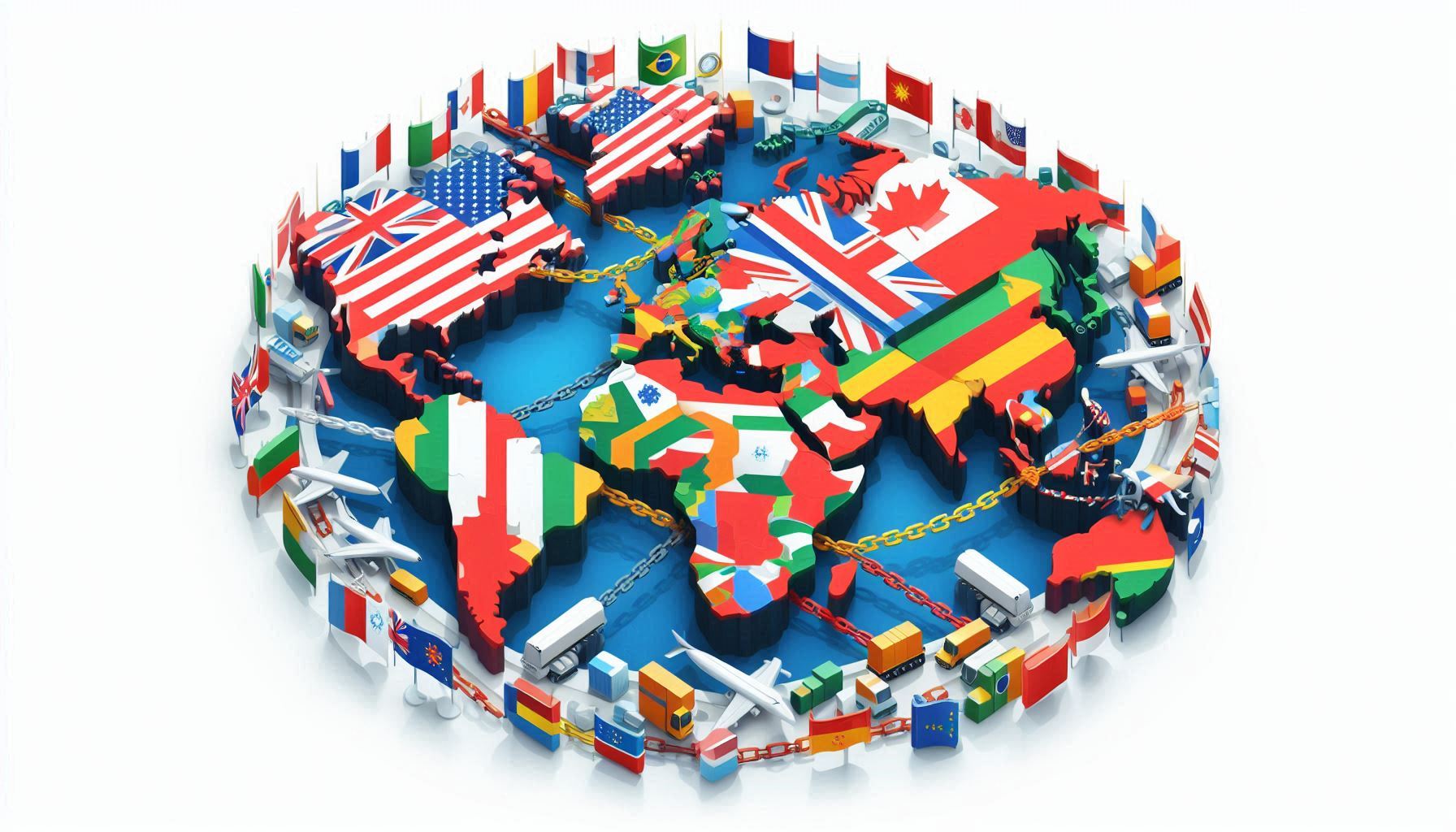
For over three decades, the prevailing economic philosophy held that global interdependence was the optimal path to collective prosperity. The free flow of goods, services, and capital across borders was seen as the most efficient way to maximize economic output, lower consumer costs, and foster peace. However, a series of global shocks, including the 2008 financial crisis, the COVID-19 pandemic, and escalating geopolitical tensions, has shattered this consensus. A growing number of nations are now turning toward protectionism, re-erecting economic borders and prioritizing domestic production over global efficiency. This shift has ignited a great trade-off, forcing nations to choose between the perceived benefits of a closed, secure economy and the proven advantages of an open, interconnected world. This article will analyze this tension, examining the costs and benefits of each approach and arguing that the future will require a delicate and strategic equilibrium between them.
The clash between these two ideologies is not just an economic debate; it is a fundamental geopolitical struggle over the nature of sovereignty, security, and a nation’s place in the world. The outcome of this tension will define the global economic landscape for decades to come.
The Promise of Global Interdependence
The era of hyper-globalization, from the 1990s onward, was a testament to the power of global interdependence. It was built on the principle of comparative advantage, where countries specialize in producing what they do best and trade with others. This model delivered immense benefits:
- Economic Efficiency: By allowing companies to locate production in the most cost-effective regions, global supply chains drove down prices for consumers worldwide, fueling economic growth and innovation.
- Poverty Reduction: The integration of developing nations into the global economy lifted hundreds of millions of people out of extreme poverty, particularly in Asia, as new markets and jobs became available.
- Technological Diffusion: The free flow of capital and knowledge accelerated technological innovation and its spread. International collaboration on research and development became the norm, benefiting all participants.
Beyond economics, global interdependence was seen as a force for peace. The logic was that a world of deeply intertwined economies would find the cost of military conflict to be unacceptably high. Trade and investment, it was argued, would act as a powerful deterrent to war, creating a shared interest in global stability.
The Case for Protectionism: A Response to Vulnerability
Despite its successes, globalization’s vulnerabilities were laid bare by recent events. This has provided a powerful rationale for the return to protectionism and the erection of economic borders.
- Supply Chain Fragility: The COVID-19 pandemic revealed a critical national security flaw: over-reliance on foreign suppliers for essential goods like medical masks, vaccines, and pharmaceuticals. Similarly, geopolitical tensions have exposed the danger of relying on a single country for critical components like advanced semiconductors.
- Economic Security: Proponents of protectionism argue that it is a necessary tool to protect domestic jobs and industries from foreign competition, particularly from countries with different labor and environmental standards. They contend that a nation should not sacrifice the well-being of its workforce and the health of its industrial base for the sake of lower prices.
- National Sovereignty: A globally interdependent economy can limit a nation’s ability to act independently. A country that relies on foreign capital or trade for its economic health may be constrained in its ability to set its own policies. Protectionism, in this view, is a way to reclaim economic sovereignty, allowing a nation to pursue its own industrial policy and strategic interests without fear of external pressure.
This pushback is driven by a desire for resilience and security over pure efficiency, a philosophical shift that marks a significant break from the consensus of the past few decades.

The Costs of Protectionism
While the appeal of protectionism is clear, its implementation comes with significant costs and risks that can harm a nation’s own economy and the global system as a whole.
- Higher Costs for Consumers: Tariffs and other trade barriers lead to reduced competition, forcing consumers to pay higher prices for goods and services. This disproportionately affects low-income households and can stifle consumer spending, harming the broader economy.
- Economic Inefficiency and Stagnation: A move away from comparative advantage, which is the cornerstone of free trade, leads to economic inefficiency. Resources are no longer allocated in the most productive way, which can stifle innovation and reduce overall economic output. Businesses lose access to global markets and expertise, making them less competitive in the long run.
- Escalation of Geopolitical Tensions: Trade wars and protectionist measures can quickly escalate into broader geopolitical conflicts. As nations retaliate with their own tariffs and sanctions, the cycle of conflict can spiral, harming global stability and undermining trust between nations. The current geopolitical landscape, with rising tensions between major powers, is a stark reminder of this risk.
The Benefits of Interdependence (Revisited)
Despite the valid criticisms of hyper-globalization, the fundamental benefits of interdependence remain. The challenge is not to abandon them but to manage them more wisely.
- Global Prosperity: Global trade has lifted millions out of poverty, and a return to protectionism would threaten to reverse this progress. The continued ability to access global markets is crucial for the development of emerging economies and for fostering a more equitable world.
- Collective Problem-Solving: The world’s most pressing challenges, from climate change and pandemics to terrorism and financial crises, are inherently global in nature. They cannot be solved by a single nation acting alone. Interdependence, at its best, provides a framework for nations to cooperate and address these shared threats.
- Resource Optimization: Global interdependence allows for the efficient allocation of resources and labor across the globe, leading to a more productive and prosperous global economy. A world of isolated economies would be a world of wasted potential.

Finding a New Balance: The Future of Globalism
The tension between protectionism and global interdependence will likely not be resolved by the total victory of one side over the other. The future is unlikely to be a return to the hyper-globalization of the 1990s or a full-scale retreat into isolationism. Instead, the world is moving toward a hybrid model of managed interdependence, where nations seek a more delicate balance.
- Strategic Autonomy: Nations are no longer pursuing pure efficiency at all costs. They are focusing on strategic autonomy, ensuring they have sovereign control over critical technologies, resources, and industries while remaining integrated into the global economy in non-critical areas.
- Friend-Shoring and Regional Blocs: Instead of a single global supply chain, we are seeing the emergence of regional and politically aligned geoeconomic blocs. Nations are prioritizing trade and investment with trusted allies, building more resilient supply chains that are less vulnerable to geopolitical risks.
- The Pursuit of Resilience: The new economic model will prioritize resilience alongside efficiency. This means building redundant supply chains, diversifying trading partners, and investing in domestic production for essential goods. It’s a recognition that in the face of a more volatile world, a certain level of security is worth a small economic cost.
Conclusion: A Delicate Equilibrium for a Complex World
The tension between protectionism and global interdependence is a defining feature of our time. It is a battle between security and efficiency, between national sovereignty and collective prosperity. The push for protectionism is a rational response to the vulnerabilities exposed by globalization, but a complete retreat into a closed economy would be a perilous gamble with significant costs.
The challenge for policymakers is to find a delicate equilibrium. The future will not belong to nations that blindly embrace one ideology over the other. It will belong to those that can strategically navigate this tension, leveraging the benefits of global integration while simultaneously building the domestic resilience needed to thrive in a complex and unpredictable world. In this new era, true strength lies not in isolation, but in a carefully managed and strategic interdependence.