In the annals of geopolitics, few events have been as transformative as the dissolution of the Soviet Union in 1991. For the nations of Eastern Europe, this cataclysmic event represented not an end, but a beginning. After decades of Soviet domination, these countries were suddenly presented with a historic opportunity to reclaim their autonomy and chart their own course. Their journey from Soviet satellites to sovereign, independent states was a complex and often painful process, but it holds invaluable lessons for nations around the world seeking to assert their self-determination. This article will explore the key takeaways from the Eastern European experience, analyzing the dual challenge of reclaiming sovereignty and the strategic choices that have defined their path to a new, secure future.
The lessons are clear: true autonomy is not merely the absence of a foreign oppressor, but a continuous and proactive effort to build resilient political systems, secure economic independence, and strategically align with shared values. The path taken by Poland, the Czech Republic, and the Baltic States offers a powerful blueprint for others navigating a complex geopolitical landscape.
The Dawn of a New Era: A Sudden Freedom
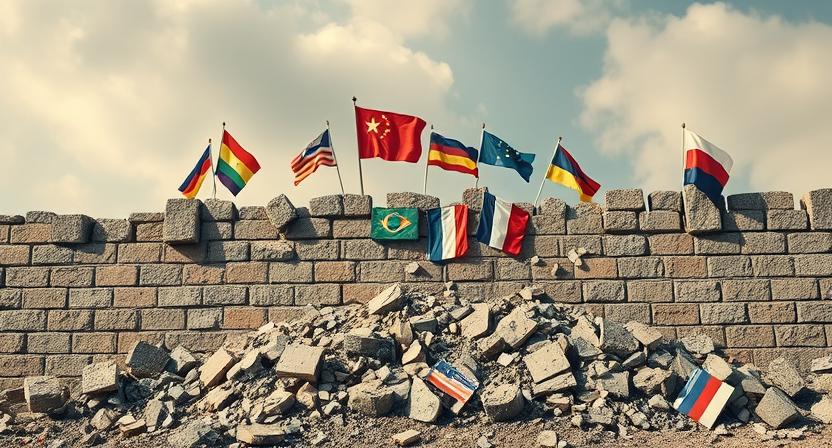
The collapse of the Soviet Union was a geopolitical earthquake that created a sudden vacuum of power. For nations that had been forced to cede their sovereignty to Moscow for over 40 years, the moment was both exhilarating and terrifying. The transition was not a single event but a chaotic and often difficult process from a centrally planned economy to a free market, and from a one-party state to a multi-party democracy. The challenge was immense: these nations had to rebuild their identities, their economies, and their political systems from the ground up, all while navigating a complex and volatile new geopolitical reality.
Lesson 1: The Dual Challenge of Sovereignty
The first and most fundamental lesson from Eastern Europe is that sovereignty is a dual challenge. It is not enough to simply declare political independence; a nation must also secure its economic sovereignty.
Reclaiming Political Sovereignty
The first priority was to establish democratic legitimacy. This involved:
- Writing New Constitutions: These documents codified the rule of law, protected civil liberties, and established the framework for a multi-party democracy.
- Holding Free and Fair Elections: The early post-Soviet elections were a powerful symbol of a nation’s return to its own people, replacing communist control with democratic accountability.
- Building Independent Institutions: This was a long and arduous process, as it required dismantling the Soviet-era bureaucracy and establishing independent judiciaries, media, and civil society organizations. The goal was to build institutions strong enough to resist both internal corruption and external pressure.
Countries like Poland, with its Solidarity movement, and the Czech Republic, with its Velvet Revolution, demonstrated that strong grassroots movements and civic engagement were essential for a successful transition. The people themselves were the driving force behind reclaiming political control.
Rebuilding Economic Sovereignty
Simultaneously, these nations faced the monumental task of transitioning from a state-controlled, centrally planned economy to a market-based system. This involved:
- Privatization: State-owned enterprises were sold off to private hands, a painful process that often led to mass layoffs and economic instability in the short term, but which was seen as crucial for long-term growth.
- Attracting Foreign Investment: Opening up to global markets and attracting foreign capital was vital for modernizing industries and creating jobs. This required building a stable and predictable legal framework that could assure investors their assets would be protected.
- Integrating with the Global Economy: The countries of Eastern Europe had to move away from their economic dependence on Russia and integrate themselves into the global supply chain, an act that was as much about geopolitics as it was about economics.
The Czech Republic’s “voucher privatization” and Poland’s “shock therapy” were aggressive, and at times brutal, strategies that ultimately laid the foundation for long-term economic prosperity.
Lesson 2: The Importance of a Western Orientation
The path to autonomy was not just an internal process; it was a geopolitical one. The nations of Eastern Europe quickly realized that to secure their newfound sovereignty, they needed to anchor themselves to the West. This strategic choice was the most critical lesson of all.
The Pursuit of NATO Membership
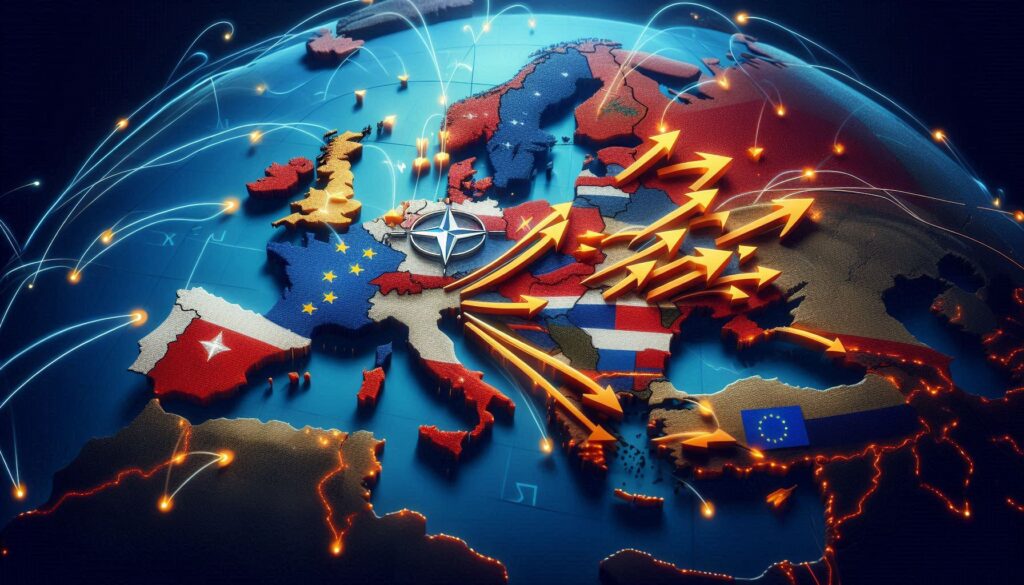
For nations that had been part of the Warsaw Pact, joining NATO was seen as the ultimate guarantee of security. It was a clear and unequivocal statement that they would no longer be a part of Russia’s sphere of influence.
- A Security Guarantee: NATO membership provided a powerful security umbrella and a bulwark against any future Russian aggression.
- A Political Statement: It was a firm political decision to align with Western democratic values and institutions, and a clear rejection of their Soviet past.
The process of joining NATO was difficult, requiring significant military reforms and political alignment. However, it was seen as a non-negotiable step toward permanent sovereignty.
The Road to EU Integration
Equally, if not more, important was the push for integration into the European Union. Joining the EU was not merely an economic decision; it was a transformative political and social project.
- A Framework for Reform: The rigorous requirements for EU accession—the “acquis communautaire”—provided a detailed blueprint for political, economic, and legal reforms. This process forced countries to strengthen their democratic institutions, fight corruption, and adhere to a higher standard of governance.
- A Path to Prosperity: Membership provided access to a vast single market and billions in structural funds, which were instrumental in modernizing infrastructure and boosting economic growth.
- A Cultural Homecoming: EU membership was a way for these nations to reclaim their identity as an integral part of Europe, reconnecting with a shared cultural and historical heritage that had been suppressed during the Soviet era.
This dual alignment—with NATO for security and the EU for prosperity and governance—was the masterstroke of Eastern European foreign policy. It provided a powerful framework for solidifying their autonomy.
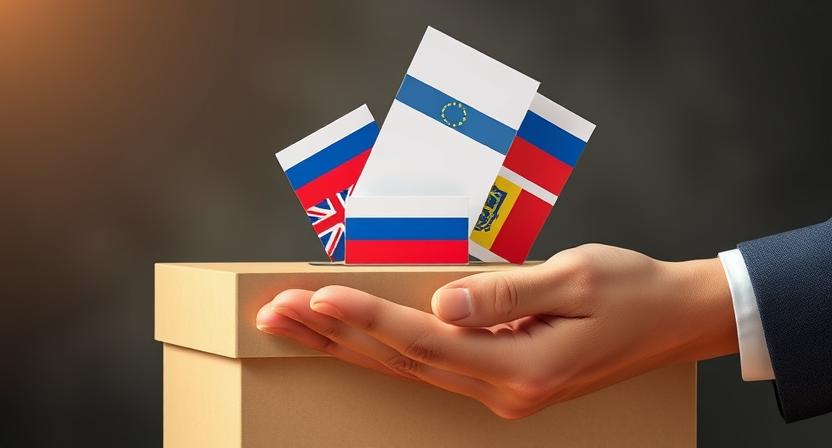
Lesson 3: The Fragility of Autonomy
The journey to autonomy did not end with EU and NATO membership. The Eastern European experience has shown that sovereignty is a constant struggle, both from internal and external threats.
Internal Challenges: Corruption and Nationalism
- The Scourge of Corruption: The transition to market economies created opportunities for corruption and organized crime, which have plagued many nations in the region. This undermines trust in democratic institutions and can make a nation vulnerable to foreign influence.
- The Rise of Nationalism: The re-emergence of nationalist politics, while sometimes a source of national pride, has also led to a rise in illiberal tendencies and populist rhetoric that can challenge the very democratic values these nations once fought so hard to secure.
External Challenges: The Shadow of Russia
Even decades after the fall of the Soviet Union, the threat from Russia remains.
- Energy Dependence: Russia has often used its control over energy supplies as a tool of political coercion.
- Political Pressure and Disinformation: Russia has a history of meddling in the politics of its neighbors through disinformation campaigns, cyberattacks, and support for pro-Kremlin political parties.
- Military Threats: The lessons from Russia’s wars against Georgia and Ukraine are the most sober reminder that sovereignty, especially for nations in close proximity to Russia, remains a state of constant vigilance.
Lesson 4: The Power of Citizen Engagement
Ultimately, the most profound lesson from Eastern Europe’s journey is the enduring power of its people. The initial push for independence was a grassroots movement, and the defense of that independence continues to be a collective effort. Sustained autonomy requires:
- An Informed Electorate: A citizenry that is media-literate and can distinguish between fact and propaganda is the ultimate defense against foreign disinformation.
- Active Civic Society: A robust network of non-governmental organizations, a free press, and an engaged public is crucial for holding leaders accountable and resisting the erosion of democratic norms.
- A Collective Memory: The shared memory of the Soviet era serves as a constant reminder of the high cost of losing freedom and the necessity of defending it at all costs.
Conclusion: A Blueprint for Self-Determination
The journey of post-Soviet Eastern Europe is a compelling case study in the complexities of reclaiming autonomy. It demonstrates that true sovereignty is a multi-faceted project, requiring a dual approach to political and economic freedom. It highlights the strategic wisdom of anchoring a nation to a community of shared values for both security and prosperity. And it serves as a powerful testament to the fact that while a nation can be liberated by historical forces, its autonomy is ultimately secured and defended by the vigilance and resolve of its own people. For any nation facing external threats or seeking to chart a more independent course, the lessons from Eastern Europe are not just historical footnotes; they are a vital blueprint for the future.