“Don’t forget that when you choose a name, you choose a destiny”,
Leopoldo Marechal (1900-1970), Argentine poet, novelist, and essayist.
“If the concept of Christianity encompasses and simultaneously characterizes all Christian peoples, why shouldn’t another word, like Hispanidad, be coined to also encompass and characterize all Hispanic peoples?
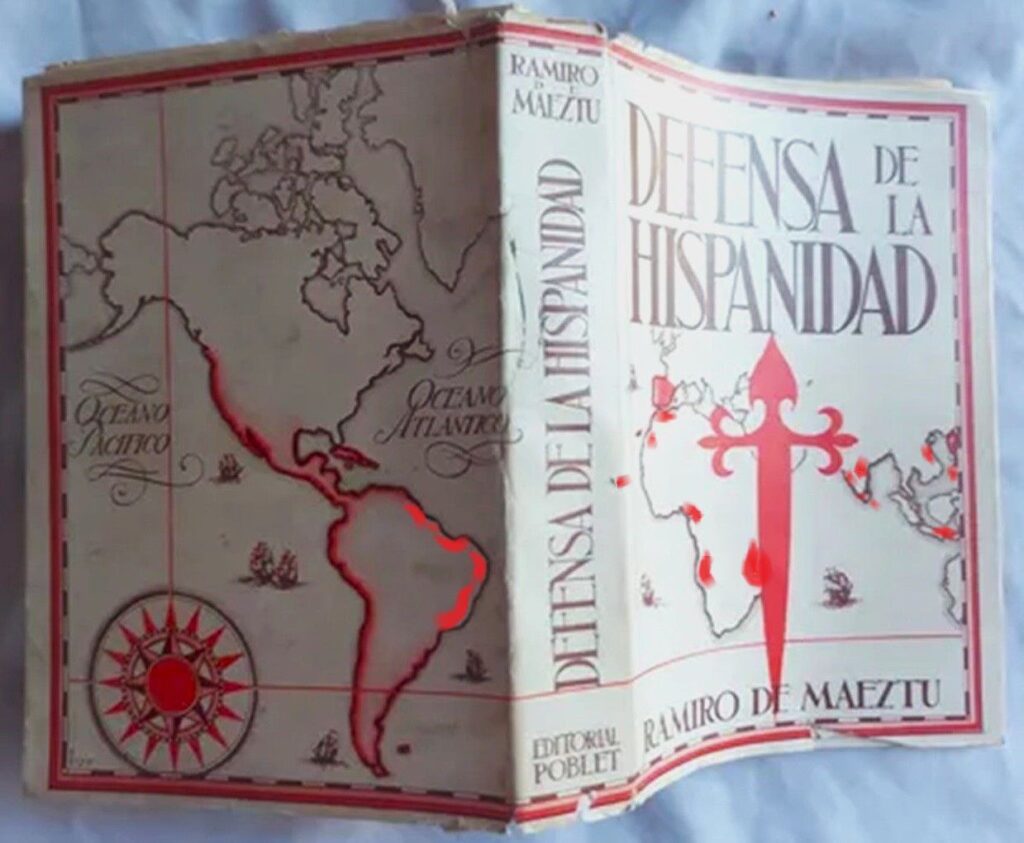
Ramiro de Maeztu (December 15, 1931).
1. The Importance of Names
Names serve to identify individuals, both physical and legal entities, as well as animals and things, including socio-ethnic/community groups, nationalities, places (toponyms), and much more.
Its importance, like that of any word, lies fundamentally in its ability to single out and define the being in question. In this sense, it is essential to emphasize from the outset that the meaning of words can be subject to deliberate alteration. Not only the communist Antonio Gramsci (1891-1937), inventor of Newspeak, realized the importance of changing, through words, the meaning of an idea previously associated with them, while retaining some of its essence; he observed that if one can change “the discourse,” it is possible to change political power.
Long before him, it was known that changing the name of people or things sought to express an alteration in the nature of that word. A clear example is that, to name the continent, the word America triumphed instead of Columba or Colombia in honor of its discoverer.
The above is an introduction to the transcendent and self-serving confusion of the most commonly used names to refer to the nations that emerged from the Spanish Empire. Names that, generally, seek to avoid precisely that.
The most widely used, in descending order of politically “correct” and fashionable preferences, are Latin America, Ibero-America, and Hispanic America.
A ranking that, curiously, is inverse to the social and geographical reality of the groups and areas to which they refer. Because what they seek to define is the most cohesive group of people and places in the world, based on their religious beliefs, mixed race, values and traditions, history, language, and culture; in short, they share a common way of understanding life. And this unity and uniformity arose from the heritage of the Hispanic Monarchy, largely ignored, even by the current Spanish State and Roman Curia.
Let’s analyze it.
2. The importance of history
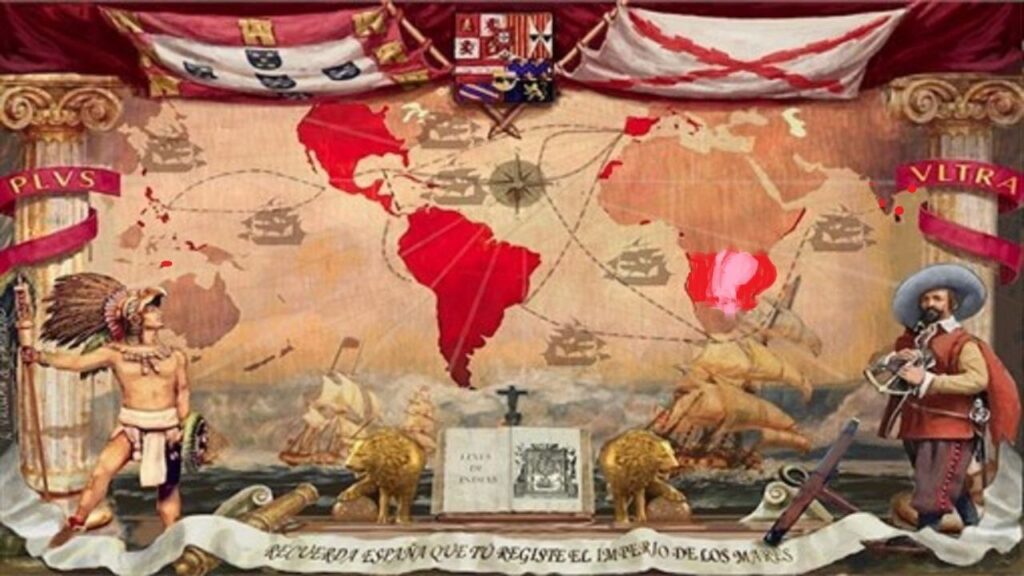
The Spanish Empire (especially under Charles V and Philip II) occupied large geographical areas in Africa, the Americas, Oceania, and Europe. The incorporation of Portugal into the Spanish Monarchy, the misnamed “Iberian Union,” lasted for a long period, generally defined as between 1580 and 1640. But even after that last year (the Peace of Westphalia), and despite various struggles in between, it was not formalized until after the Battle of Estremoz (1663) and the Treaty of Lisbon (1668). It thus lasted for almost a century.
Although with French participation (Catalan uprising, etc.), the secession was formally encouraged by Saxon forces, heavily influenced by the powerful Jewish colony in London. Furthermore, the false Jewish converts who had moved to Portugal since 1492 had, for half a century, the opportunity to move freely throughout the territories of the Spanish Monarchy, including the Americas, with the natural consequences for the future.
And we have talked about secession because, as the famous poet Luiz Vaz de Camões (Luís de Camoens, 1524-1580) wrote, “Huma gente fortissima de Espanha (the Portuguese)… (and) Falai de castelhanos e portugueses, because we are all Spanish.” It was not a unique case. Among others, the Dominican and great humanist André de Resende (1498-1573) said practically the same thing: “Hispani omnes sumus.” Almeida Garret (1799-1854), official chronicler, wrote: “We are Spaniards and of Spaniards we must appreciate those of us who live in the Hispanic peninsula.” Oliveira Martins (1845-1894) noted: “Whoever sets foot in Portugal and Spain will certainly observe, or lack thereof, an undeniable affinity of appearance and character, an evident kinship between the peoples on both sides of the Minho, the Guadiana, and the Eastern Dry Line. … Common history confuses, it does not separate… Have we not lived under the protectorate of England since 1641? Have we not become, positively, a British factory? …”. And finally, Ricardo de Almeida Jorge (1858-1939) wrote: “Hispania is called the peninsula, Hispanic to its inhabitant wherever it may take, Hispanic to the one who gives it respect”.
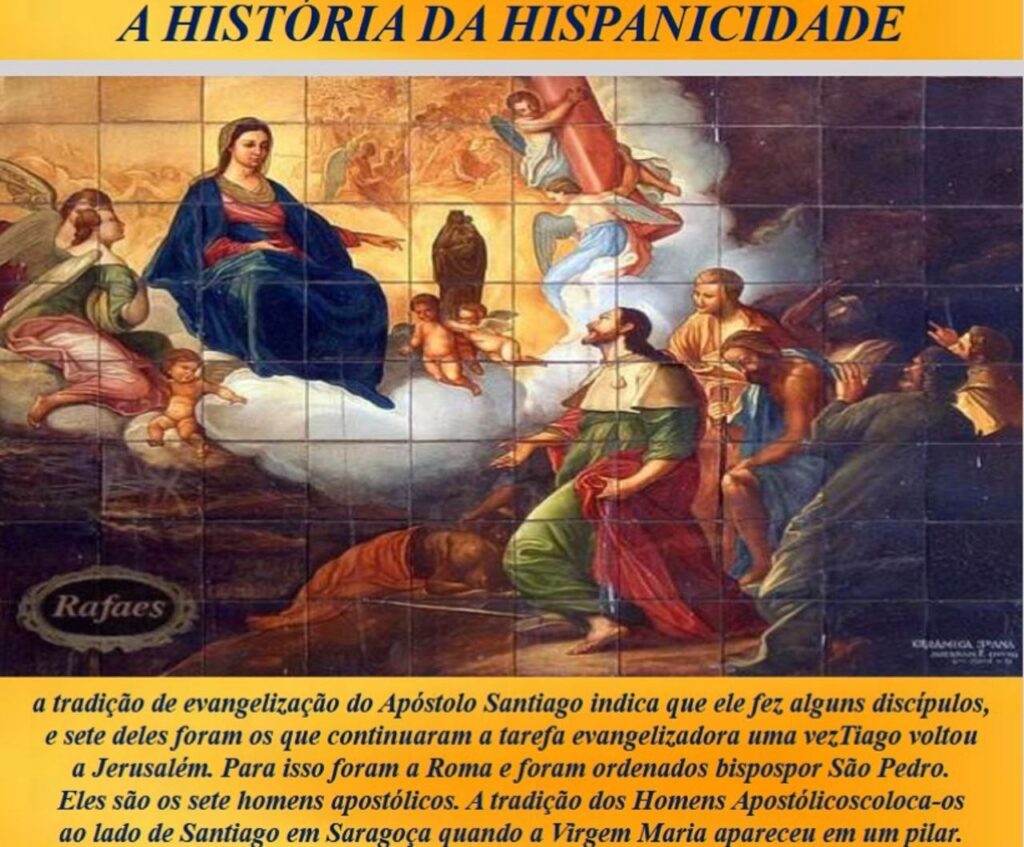
They were all aware that Our Lady appeared in Zaragoza in the year 40, in her mortal body, especially to the entire Hispano-Roman people, who already had their own identity. A people who, amalgamated primarily with the Visigoths, formed the Catholic Hispanic Nation (Recaredo, 589). And that, after “The Loss of Spain” in 711, conscious of their unity, the Leonese, Castilians, Aragonese, Portuguese, and Navarrese, who between 1414 and 1418 had attended the Council of Constance (Germany) as part of the “Spanish nation,” completed the Reconquista in 1492. And so, “… Isabella and Ferdinand (the Catholic Monarchs) refused the title of ‘kings of Spain’ proposed by the Royal Council once most of the peninsula had been reunited, because without Navarre and Portugal, it was incomplete” (Fernando García de Cortázar: A Brief History of Spain). “Spain was (re-)founded, culminating in the Reconquista, in the same year in which America was discovered, such that one can no longer be understood without the other” (Ramiro de Maeztu: The Hispanity).
Later, during the 18th, 19th and 20th centuries, both nations even followed fundamentally similar fates, ending up, as the aforementioned Martins said, as Anglo-French protectorates, and losing their overseas provinces to Saxon (North American) hands or influence.

3. Latin America, Ibero-America.
Now that we’ve reviewed the historical background, let’s focus on the terms we’re concerned with.
Latin America– Latin America is a name promoted by France to designate the group of American nations where languages derived from Latin, or “Romance languages,” predominate, thus allowing for the very minority French language, except in Canada, Haiti, and French Guiana.
Furthermore, there is no room for other elements of determining importance, such as history, culture, and customs. Geographically, it encompasses all of non-Saxon America, where French is spoken by only 3% of the population. It should be noted that the term “Latin Africa” does not exist, although French is spoken there more than Portuguese and Spanish, and the majority of the “Francophonie” (Organisation internationale de la Francophonie – OIF) is found on that continent.
The Latin American term has its first antecedent in the term “Latino,” coined by the French engineer, economist, and politician Michel Chevalier in 1836, to distinguish Spanish and Portuguese speakers in the Americas from the Anglo-Saxons. Argentine researcher Mariano García Barace wrote (in Posición Iberoamericana) that the concept “Amérique Latine” was coined by French Freemasonry and adopted by Hispanic intellectuals and politicians as a way to strengthen their identity, behind the backs of the Mother Countries and in the face of the Yankee annexationist Moore Doctrine.
It was first used in France in 1856-7, apparently and not literally, by the Spanish-speaking Francisco Bilbao, a Chilean progressive liberal (a Freemason of the lodges “Friend of the Castaways” and “Union of Silver”), and José María Torres Caicedo, a Colombian diplomat and conservative journalist. In 1861, L. M. Tisserand called what until then had been known as South America or the West Indies “L’Amérique Latine.” Very soon after, Napoleon III, a Carbonari Freemason, promoted the term to justify a greater role for the Second French Empire as a political power and cultural reference point in the region, as made clear by the failed enthronement of Maximilian as Emperor of Mexico (no offense to Mexicans, but the spelling and orthography in Spain are like this).
Thanks to French influence, the term Latin America was widely accepted from 1870 onwards; of course, it was blessed by England and the United States (Woodrow Wilson, the 28th President of the United States, from 1913 to 1921, was the first to use it officially). Only after 1947, following the creation of the UN, did some Hispanic figures begin to refer to their continental reality with terms such as “Latin American republics” or similar. Today, frighteningly, it has even been adopted by the Royal Spanish Academy and the Vatican, further proof of the dangerous drift of the times.
Ibero-America – Ibero-America refers to the sum of the American territories and their populations that were an integral part of the nations of the Iberian Peninsula, namely Portugal and Spain. The term became established as an alternative to Latin America. It is also a partial and inaccurate concept, even when it includes those European nations, as it neglects other populations and territories in Africa and Oceania. It is inaccurate because the aforementioned Peninsula is also called Hispanic America.
The ancient Greeks called this region Iberia after the Iber (Ebro) River, while the Romans called it Hispania. As a people, the Iberians barely occupied the Spanish Levant and part of Andalusia, with present-day Portugal and most of Spain being populated by other Celts and Celtiberians. Therefore, much of the social component is forgotten, in addition to the extremely important contributions of the Romans, fundamentally, and the Visigoths.
And, above all, the Catholic religious component contributed by the Romans and Visigoths (after Recaredo). This is so important that Theodore Roosevelt, the 26th president of the United States, said after a trip to Argentina in 1913: “As long as those countries remain Catholic, we will be unable to dominate them”.
The name Ibero-America practically appeared in 1885, in the important magazine Unión Ibero-Americana, and was established in 1910 by the Uruguayan José Enrique Rodó with his article Ibero-America 1910 (and the book The Prosperous Lookout, 1913).
This name was used in the Spanish Institute of Ibero-American Cooperation (1979-1989) [i], and even at the First Ibero-American Summit (Guadalajara, Mexico, 1991), July 19 was established as the day of Ibero-America. It is, therefore, a rigged “construct” to avoid the word Hispania. Something that can be explained with the words of the Chilean Jaime Eyzaguirre: “the term Indoamerica… (and) the other denomination of Latin America, although more harmless and less false,… poorly disguises the purpose of diluting the Spanish name in a generic formula that will give predominant space to other nations” (Spanish America of pain, Santiago de Chile, 1968).
4. Spanish America, Hispanicity.
Hispanic America refers to the group of 19 American nations that predominantly speak Spanish/Castilian, in addition to indigenous languages (Pan-Hispanic Dictionary of Doubts: “group of Spanish-speaking American countries”). Its demonym is “Hispanic American,” a term that included, until segregation, both European Spaniards residing there and American Spaniards (Creoles), and which is currently limited to the inhabitants of the aforementioned American nations; it is sometimes shortened to “Hispanics” they number more than 427 million people (Wikipedia), with a very high degree of mixed race, and their religion is predominantly Catholic.
Its area is almost 11.5 million km2 (including Puerto Rico and excluding another million km2 in Antarctica between Chile and Argentina), which is second in the world. Along with Brazil (8.5 million km2 and 220 million inhabitants), it would be the largest in the world.
The term Hispanic America was already in use in the mid-19th century: by Dionisio Alcalá Galiano in 1846, Antonio Cánovas del Castillo in 1853, and in the Spanish Magazine of Both Worlds from that same year onwards it was also widely used.
A single quote about Spanish America from the Chilean Lucila de María Godoy Alcayaga (Gabriela Mistral, “the Basque Indian”, Nobel Prize winner for Literature): “let us direct all activity like an arrow towards this unavoidable future: One Spanish America, unified by two stupendous things: the language that God gave it and the pain that the North gives” (Messages for America: The Cry).
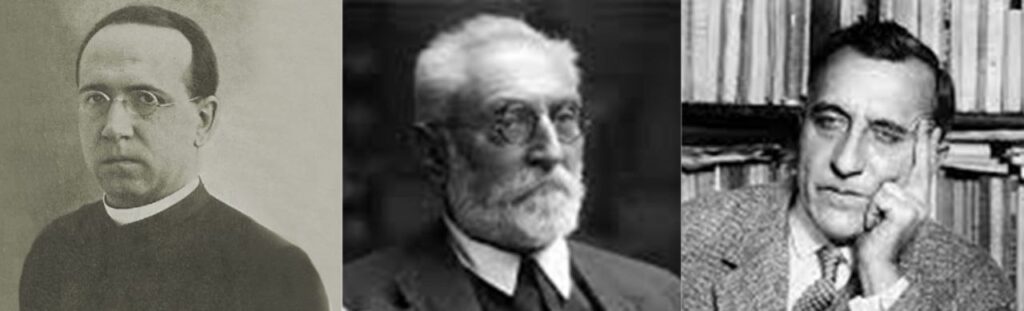
Hispanicity is a broader, more beautiful and deeper concept than the previous ones. Miguel de Unamuno y Jugo wrote in 1927: “I say Hispanidad and not spanishness to adhere to the old historical-geographical concept of Hispania, which encompasses the entire Iberian Peninsula. … I say Hispanidad and not spanishness to include all lineages, all spiritual races, which have been made by the earthly and at the same time celestial soul of Hispania, of Hesperia, of the Peninsula of the Setting Sun. … And I mean by Hispanidad a historical category, therefore spiritual, which has made, in unity, the soul of a territory, with its contrasts and internal contradictions. Because there is no living unity if it does not contain intimate contrasts, internal struggles… The Hispanic community, eager for absolute justice, poured out across the ocean, in search of its destiny, in search of itself, and found another soul of the land, another body that was a soul, with Americanity. Which also seeks its own destiny”.
I will begin this time with the origin of the term, pointing out that this word, with a sense of “form of language,” was already found in old dictionaries (Treatise on Spelling and Accents by the bachelor Alexo Venegas de Busto, from 1531, and the Dictionary of the Royal Spanish Academy, from 1817).
Also in 1901, Bishop Martínez Vigil used this word in Covadonga. But, in the sense that concerns us, the first was precisely the Portuguese Antonio Sardhinha [i] (1888-1925), “although the idea of a Hispanic cultural community is already found in authors such as Rubén Darío, Santos Chocano or Menéndez Pidal” [ii]. The next to use it were Zacarías de Vizcarra, in 1926; the aforementioned Miguel de Unamuno in 1927, and Ramiro de Maeztu in 1931; significantly, all three were Basque.
Zacarías de Vizcarra y Arana was a regular priest, later a bishop, the son of Carlists and a Basque speaker. He is considered the father of Hispanidad (Hispanic Heritage) because he developed the idea during his ministry in Argentina, between 1912 and 1937, in the educational and cultural fields. There, he forged his friendship with Maeztu (Minister Plenipotentiary – Ambassador – between 1928 and 1930). On March 17, 1926, he wrote that he “considered the Hispanicity world to have a double meaning:
- Geographical, as a group of all Hispanic peoples, Portugal and Spain.
- Historical and ethical, as a group of qualities of these peoples, a product of Catholicism, from whose evangelizing action arose a community of twenty American nations configured in the same social, political, and religious sense”.
Ramiro de Maeztu y Whitney was born to a Cuban father, a Navarrese father, and a French mother. He was married to an Englishwoman and lived in France, Cuba, the United States, Argentina, and England (for 15 years). He rejected any imperialist notion of Hispanic heritage. For him, the Spanish Empire was a “missionary” Catholic Monarchy, and he wrote that he had no interest in Madrid employees returning to “collect taxes in America”; “October 12, incorrectly titled Columbus Day, should henceforth be Hispanic Heritage Day”.
But not everything, or almost everything, is the view from Europe (Spain and Portugal).
The great philosopher Alberto Buela Lamas (Buenos Aires, 1946), in his Hispanic seen from America (1991), says:
«…Our meditation arises from a need to affirm the “Americanness in Hispanicity.” Of the authors we have consulted in our search for a treatment of this topic, two stand out. One, for its philosophical depth, Don Manuel García Morente, in his work “Idea de la Hispanidad”, and the other, for its political projection, Don Ramiro de Maeztu, in “Defense of Hispanidad” … Hispanicity characterizes all Hispanic peoples, who come to be “all those who owe their civilization or their being to the Hispanic peoples of the Peninsula” (Maeztu) … Hispanicity is not a question of race since “it is made up of men of white, black, Indian and Malay races… but rather it is based on two pillars: the Catholic religion and the regime of the Spanish monarchy” (Maeztu) … Hispanicity “is consubstantial with the Christian religion” (García Morente) … (although) Catholicism does not constitute the specific difference of what is Hispanic, nor is it an exclusive trait of the Spanish… America had the status of a kingdom and not a colony, but in practice it acted as a colony…And when we declared our independence, we did so under a republican, democratic, and liberal regime, thanks to the work of English Freemasonry, which, at the time, ruled the Spanish monarchy at the time… Hispanic identity is not born with, nor is it limited to America, nor is it the exclusive heritage of Spain… It is good to reiterate that the Hispanic character applies to both Spaniards and Portuguese… What is Hispanic identity? First of all, we observe that the name indicates the quality of what is Hispanic, the “Being of the Hispanic”… Of Hispanic identity, seen from Spain and Portugal… nothing remains… Of America, a jumble of twenty-odd little republics in a mad race to imitate a model that has nothing Hispanic about it.
And as for Spain and Portugal themselves, they are the sad image of nations without direction, wanting to enter anti-Hispanic Europe by dint of renouncing their own innermost being…
We must become Hispanic if we want to be and remain Hispanic. We know that the old metropolises are defeated… The rescue of Hispanic identity, for us, ultimately, has the meaning of turning against the modern world, of affirming our cultural identity, of knowing that we are a culture of alternative to the homogenization of the world proposed by the global centers of power. We have no other possibility of “being ourselves,” of genuinely existing, than to affirm ourselves in what we are… The alternative is steely: either we are what our being demands us to be, or we cease to be forever.
5. Current Potential of Hispanic Heritage Dimensions and Population
As already mentioned, Latin America alone is the second largest in the world. If we add to this, not including other nations in Africa and Oceania, Brazil in the Americas, and Portugal and Spain in Europe, we reach more than 20 million km² and 700 million inhabitants.
| Nations (Wikipedia 2025) | Extensión millions of km² | Population Millions | Observations Other Hispanic nations (area/population) Argentina: 2.8/47.6 – Spain: 0.5/49 Mexico: 1.96/133 – Portugal: 0.09/10 The English Commonwealth (Commonwealth Realms) consists of 15 “constitutional monarchies” with the King of England as their head of state. The main ones are the UK, Canada, Australia, and New Zealand. Their total area/population is 18 million km²/123 million inhabitants. |
| Russia | 17.1 | 145 | |
| Spanish América | 11.5 | 427 | |
| Canada | 10 (almost) | 41.6 | |
| USA | 9.8 | 342 | |
| China | 9.6 | 1,405 | |
| Brazil | 8.5 | 220 | |
| Australia | 7.7 | 27 | |
| India | 3.3 | 1,454 |
Religion. Today, nearly two-thirds of Catholics pray in Spanish (500 million?), and if we add to them those who do so in Portuguese, that sister language of Castilian-Spanish (this is without disparaging the sister nation torn apart by Saxon hands), the superiority is overwhelming. The largest Catholic nations in the world are Brazil, Mexico, and the Philippines, the latter being the largest in the East. It seems that the Vatican Curia and the cardinal electors are aware of this, hence the previous and current “Bishops of Rome,” both of Hispanic blood and appearance.
Language. “In general, in Spain, Europe, and the United States, the language spoken is ‘Spanish,’ and in Latin America, ‘Castilian.'” (Alberto Buela).
More than 600 million people speak Spanish (Cervantes Institute). This figure includes, among others, 20 million in Brazil, 45 million in the United States, 10 million in the Philippines, more than another million in Equatorial Guinea, SADR-Western Sahara, Israel, and Eastern Europe, among others.
As A. Buela also says (Metapolitical sense of Castilian or Spanish, 2017), and this is a fact worth keeping in mind, “Castilian/Spanish is the most widely spoken language in the world, … since English does not reach 400 million and Chinese is not one language but 129 at the same time, … whose differences between them are greater than those between Castilian and Portuguese.” If we add to the 600 million who speak Spanish the 265 who speak Portuguese (Portugal, Brazil, Angola, Mozambique, etc.), with great “linguistic proximity (to Castilian) a critical mass of 865 million people is constituted who can communicate with each other without much effort and, what is more important, with similar mental structures (A. Buela, with updated figures).
Resources of all kinds worldwide.
In addition to the numerous geostrategic enclaves of Hispanic nations (the Iberian Peninsula and its associated archipelagos, the Caribbean Islands and the Panama Canal, the Strait of Magellan and the Malvinas Islands, the Philippines and the Marianas, etc.), and referring only to South America, according to the Union of South American Nations (UNASUR), it holds 20% of the world’s oil reserves (the largest after the Middle East, in Venezuela, Brazil, and Argentina) and 3.45% of natural gas reserves (with centers on the Bolivia-Argentina and Paraguay borders, and in Tierra del Fuego); 95% of niobium, 93% of lithium, so essential for current technology (60% is in the Argentina-Bolivia-Chile triangle; also in Brazil), 54% of rhenium, 39% of silver (Peru, Chile, Bolivia, Argentina), 39% of copper (Chile, Peru, Brazil), 29% of tin, 19% of iron (Brazil, Peru, Chile); 17% of gold (Peru, Brazil, Argentina) and 15% of bauxite. Specifically, Chile is the leading producer of copper and lithium; Brazil is the third largest producer of iron, and Peru is one of the leading producers of silver, copper, gold and lead; Bolivia is the fourth largest producer of mined tin, the sixth largest producer of silver and has the world’s largest lithium reserves. Brazil has 22 million tons of strategic minerals (Rare Earths – REE), approximately 18% of total current reserves.
Laura Jane Richardson (née Strickland, and that’s also where we differ), who rose to the rank of four-star general and command of the United States Southern Command (primarily South America), has, no doubt self-serving, stated on previous and recent occasions that this part of the Americas “feeds and supplies the world, but doesn’t reap the benefits.” And, in addition to referring to the mineral resources cited above, especially “light crude” (oil), that “we have the lungs of the world, the Amazon; also 31% of the world’s fresh water in this region. I want to say that we have a lot to do, this region matters, it has a lot to do with “our national security,” and we have to step up our game”.
Some final facts: South America has vast areas of productive land, with Argentina and Brazil being the world’s largest producers and exporters of soybeans, and Colombia the largest exporter of coffee.
It also boasts significant marine resources (hake, horse mackerel, tuna, sardines, cod, etc.). This vast region also contains approximately 40% of the planet’s biodiversity (the Amazon is the largest tropical forest), as well as 22% of its forests and 28% of its freshwater.
6. In Our Days
In a world where plutocracy, based primarily in the Saxon states, tyrannizes nations from its dominant position in the UN, NATO, and the EU, in a just reaction to this and the aberrant proposals that accompany its impositions ( 2030 agenda, violation of international law, etc.), a multipolar reaction for survival is emerging. However, given the number and power of the means employed against the majority of independent and sovereign nations, a concentration of efforts is necessary, and any small differences that may exist are forgotten.
Hispanic heritage, therefore, is a right and an inescapable obligation if we want our freedom, our philosophy of life, our language and religion, and even our very blood (stifled by anti-natalist policies and invasions of remote-controlled “Kalergian migrants”) to survive. In short, ours and ours. That obligatory union of survival, the “either we are what our being demands us to be, or we cease to be forever,” as Buela said, is Hispanic heritage. A grouping of brothers and sisters that, in addition to its better-exploited material resources, will contribute to the world an existential “philosophy” far less aberrant than the one being imposed on us on a fixed-term basis.
A union that, without a doubt, must be forged against the heirs of those who broke it over the centuries and who now wield seemingly imposing power. Therefore, it’s normal that the road ahead is long, but also that it must begin now.
The extremely strong spiritual and cultural ties that unite us will make it easy to overcome the threats of those who attack us, of course, with the help of those who oppose globalist tyranny.
References
[i] José Mª García de Tuñón Aza on “Hispanicism”: History and Meaning of the Word. On Various Websites.
[ii] José Javier Esparza: Hispanicity and globalization. Hespérides Magazine, Vol. III, No. 18. Winter 1998-99, p. 1,058.
[iii] This institution underwent the following evolution, in step with the changes, for the worse, in Spanish politics. 1942: Council of Hispanicism. 1946: Ibero-American Cultural Institute. 1947-1977: Institute of Hispanic Culture (ICH). 1977-1979: Ibero-American Cooperation Center. 1979-1988: Ibero-American Cooperation Institute (ICI). 1989: It became part of the Spanish Agency for International Cooperation (AECI). 2007: Spanish Agency for International Development Cooperation (AECID).