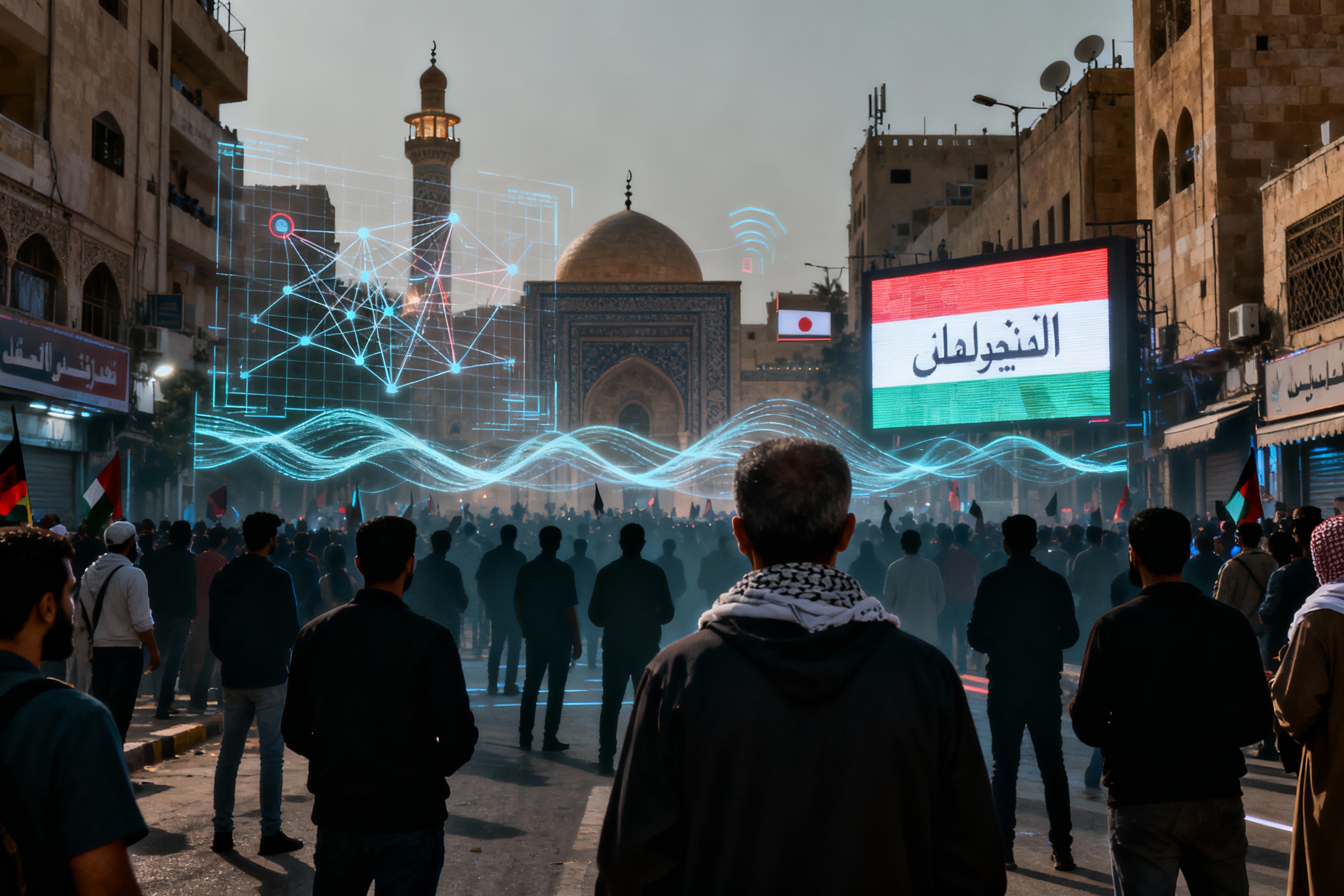
When we analyze events in the light of international relations, we must consider that we live in a state of nature; there is no moral concept of right or wrong, much less a communis concept of correctness. The concept of morality is an individual one, susceptible only to cultural and local formation. However, when analyzing the current protests in Iran, we observe a clear disconnection between the country’s reality and the so-called “social movements” that are organizing the violent protests on the streets.
In the last 20 years, the Islamic Republic of Iran has faced five major waves of protests against its institutions, yet the methods have always been very similar: the protests were always organized by “humanitarian” groups or groups for the “defense of human rights and democracy in Iran” located outside the country. In these protests, it was not uncommon to see former members of terrorist groups or even foreigners financing the popular movement and leading the marches.
In the last two years, a number of CIA and Mossad agents, or even Iranians working directly with the governments of Israel and the US, were arrested in the act, most of them with large amounts of cash and heavy weaponry, showing that external initiatives to strengthen armed and terrorist groups in Iran intensified after the latest attacks between Israel and Iran.
The attempt to defeat the Iranian State through fear during the 12-Day War, with systematic attacks on civilian targets and the massive use of psychological propaganda, did not yield the desired effect, but rather the opposite: leading to the growth of Iranian nationalist sentiment.
With the failure of the latest strategies, the means of attacking Iran’s sovereignty shifted to Cultural Dietetics, an expression reclaimed by Professor Paulo Roberto Cardoso that represents the most powerful form of cultural warfare.
The machine to win hearts through culture and propaganda is put into operation. Currently, it is not necessary to send soldiers; instead, culture, religion, and the social system of freedom are sent through researchers, pastors, politicians, musicians, and activists, conquering the target from the inside out.
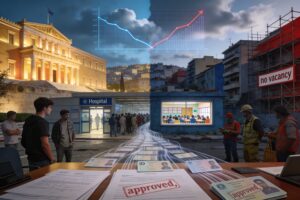
The significant number of protesters against the Iranian State does not actually represent the number of citizens who are dissatisfied with the country’s political system. Rather, it represents a large maneuver mass that has been co-opted by the empty promise of a better life, of more “freedom” and independence if the Iranian State were “transformed”; ignoring that the current economic and social difficulties the Persian country has faced originate from unilateral sanctions imposed by the countries of the so-called “democratic West.”
The West creates economic difficulty in Iran and then sends its activists for “democratic” freedom as solutions to these very difficulties, ignoring that Iran possesses transparent and auditable elections, as observed by a large part of the international community, and that its State possesses a system of government that emanates from the country’s culture; history and ethnic construction are inherent parts of Iran’s social construction, such that any process of democratic, social, and cultural transformation must happen internally, naturally, and consistent with the values of the Iranian State.
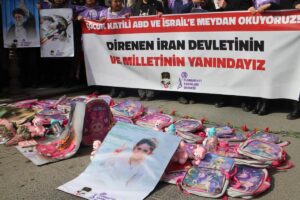
On January 12th, the country saw the largest protests in favor of the government and the State in the last 20 years; we can observe that, far from being unanimous, the protests against the Iranian government represent only a small political and social fraction of the country.
What we have witnessed in these last few days in Iran is just another unfolding of the long hybrid war that the US and Israel have promoted against the Persian Nation since the 1979 revolution, which today takes the explicit form of a Dietetic conflict, seeking victory over Iran through internal cultural warfare. It is not the first time this has happened, and it will not be the last.