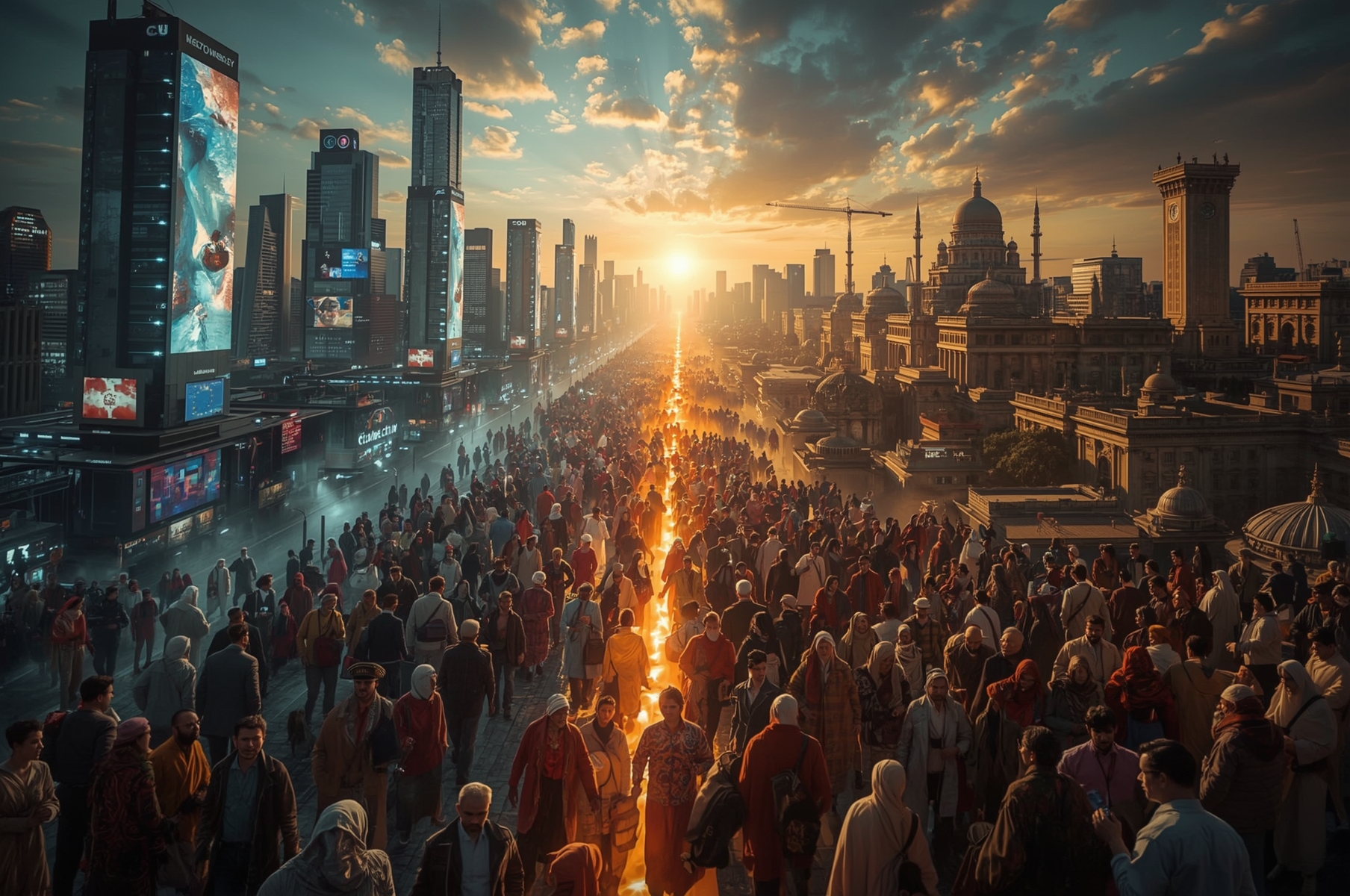
We are witnessing an unusual rise in conservatism and traditionalism in several parts of the world, running counter to what many, especially Western leaders who sponsor globalism, had expected.
Although surprising in light of developments over the past several years, the truth is that this reaction should have been anticipated. Human behavior generally works this way: we reject what is forcibly imposed on us and often do the opposite, this is even more evident among the young.
This is the complicating factor for the advance of globalism, which has piggybacked on the concept of globalization to blur distinctions and present itself as if both ideas were the same, which they are not. Globalization refers to the gradual economic interdependence of countries, driven mainly by advances in transportation and communications, in short, the active connection among nations and their peoples.
Globalism, for its part, is in practice a project to impose global governance and a universal culture on all humanity, obviously based on the interests and certain (largely more progressive) customs promoted by european and U.S. elites. Here lies the central problem: every people has its own customs and beliefs, often at odds with those of others.
Under this lens, we may observe that popular culture is a fundamental part of how people identify with their country and a source of national pride. It is a historical construction of each nation, with many nuances shaping it. The very idea of imposing a different culture on a wholly different people is problematic in itself, and, as we have seen, it has not been working particularly well.
We can point to situations where repudiation of this manufactured Western culture has become publicly evident, like across much of the Middle East and the African continent for some time, and gradually in Asia as well. What is striking is that even in Europe this movement is growing, as highlighted by recent research.
On one hand, this reflects the extremism reached by agendas associated with globalism, such as the famigerated “Woke Doctrine.” On the other hand, geopolitical developments are also reshaping how peoples view other countries. As a result, in many places traditions and nationalism are gaining ground and strength, to the detriment of internationalist projects such as the EU, for example.
Although some interpret this as a threat to the development of Multipolarity, that reading is not quite accurate. Multipolarity represents a reconfiguration of the International System based on the convergence of strong nations, precisely what national movements aim to achieve for themselves, with globalization acting as a contributing factor. This stands in contrast to globalism, which seeks to weaken sovereign states in order to enable a form of global governance dominated by the “Western elites”.