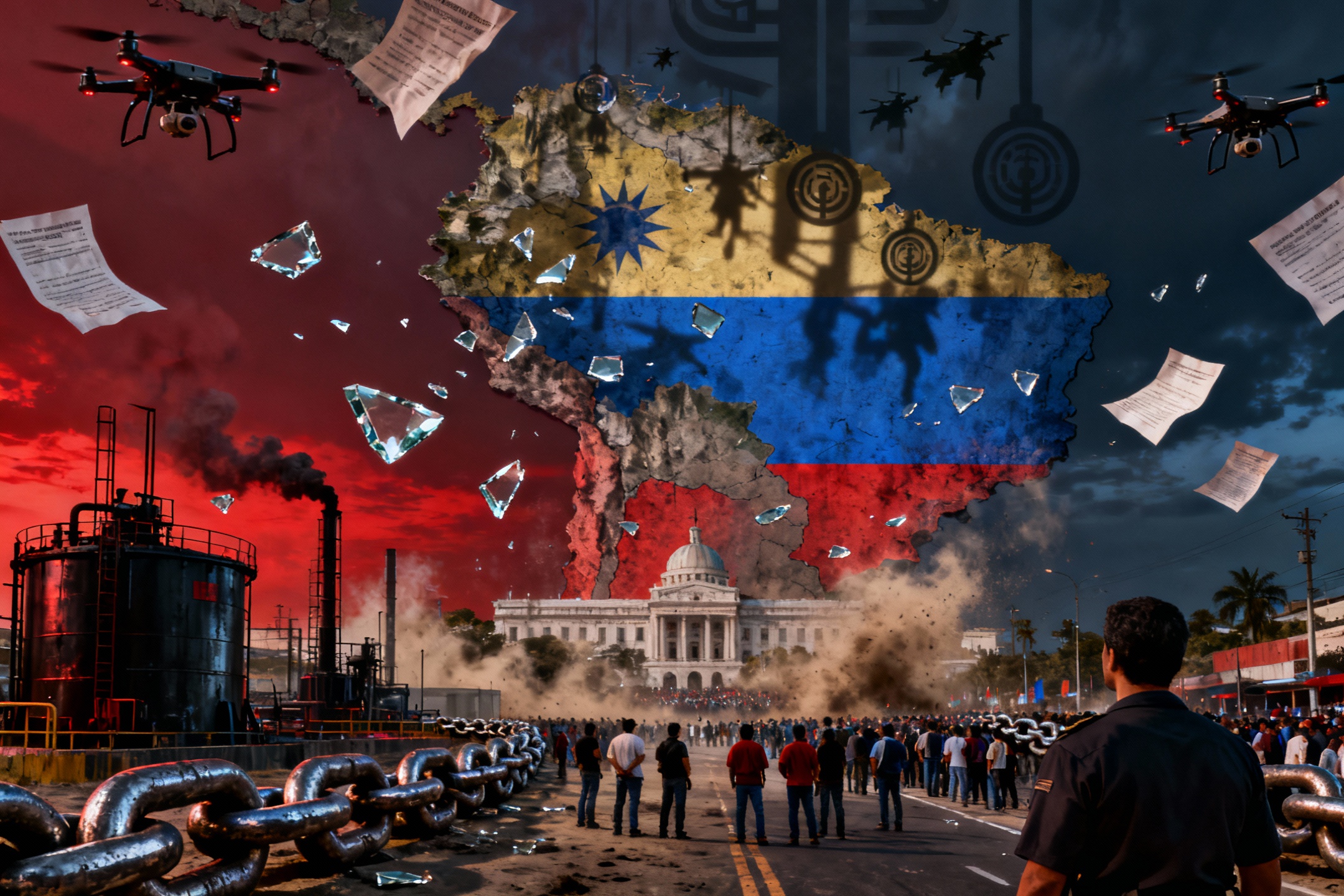
Donald Trump’s systematic attack on Venezuela was not an isolated outburst or a diplomatic anomaly: it was the stark expression of an imperial policy that, once again, placed Latin America as a backyard. Under the euphemism of “defense of democracy”, between 2017 and 2021 the United States deployed a strategy of economic asphyxiation, political delegitimization and direct threat against Venezuelan institutional life, with the explicit objective of overthrowing the Bolivarian revolution.
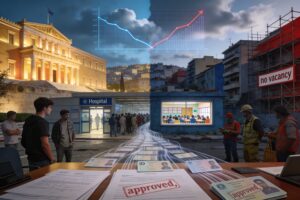
The data speak for themselves. During the Trump administration, more than 900 sanctions were applied against Venezuela. They were not “surgical” or “intelligent” sanctions, as Washington tried to sell, but a financial and oil blockade that hit the heart of the economy.
According to OPEC, oil revenues plummeted from tens of billions of dollars annually to historic lows. The UN special rapporteur himself, Alena Douhan, warned that these unilateral measures aggravated the humanitarian crisis and violated basic principles of international law.
But economic punishment was not the only front. In 2019, Trump recognized a congressman with no real power or electoral support as “president in charge,” in a maneuver that bordered on the institutional grotesque. The United States and its allies attempted to manufacture parallel power, confiscate Venezuelan assets abroad, and break the internal cohesion of the state. The result was a political failure that exposed the limits of the interventionist script.
Even more serious were the allegations of plans to capture and assassinate President Nicolás Maduro. The so-called Operation Gideon, in 2020, was not a propaganda fantasy: trained mercenaries, signed contracts, private financing and links with opposition sectors were documented. Those involved themselves declared that one of the objectives was to capture the Venezuelan head of state. The fact that this attempt has failed does not make it any less serious. In any country in the world, such an event would be qualified without nuance as political terrorism.
Trump never hid his contempt for Venezuelan sovereignty. “All options are on the table,” he repeated, in a direct threat of military intervention. That phrase, uttered from the center of global power, is not rhetoric: it is a colonial warning. Faced with this scenario, the Bolivarian revolution not only resisted, but survived politically, sustained the institutionality and preserved the territorial control of the country.
For its detractors, Chavismo should fall by starvation. It did not happen. For its defenders, this resistance is historical proof that, even in extreme conditions, a political project with popular roots can sustain itself in the face of external attack. The partial economic recovery recorded after the relief of some sanctions in recent years confirms an uncomfortable truth for Washington: the main obstacle to Venezuelan development was not the “model”, but the blockade.
The Venezuelan case lays bare a double moral standard. The United States talks about democracy while promoting coups, sanctions, and fictitious governments. He talks about human rights while applying collective punishment. He talks about international legality while violating it when it doesn’t suit him.
In this context, the Bolivarian revolution becomes a symbol of political sovereignty in the face of an unjust global order.
Trump did not attack Maduro as authoritarian; He attacked him for not obeying. And that is a message that Latin America knows all too well. Defending Venezuela today is not only an ideological issue: it is defending the right of peoples to decide their own destiny without imperial tutelage.