For years, the world’s most advanced chips depended on a single key: ASML’s Extreme Ultraviolet (EUV) lithography machines.
The United States managed to prevent the Netherlands from selling them to China since 2018, raising a barrier that was intended to keep it always one step (or more) behind. That lock did not prevent the country from continuing to manufacture chips, but it did set a ceiling: without that ‘pen’ capable of drawing ultra-fine circuits, each advance was more costly, slower and more expensive.
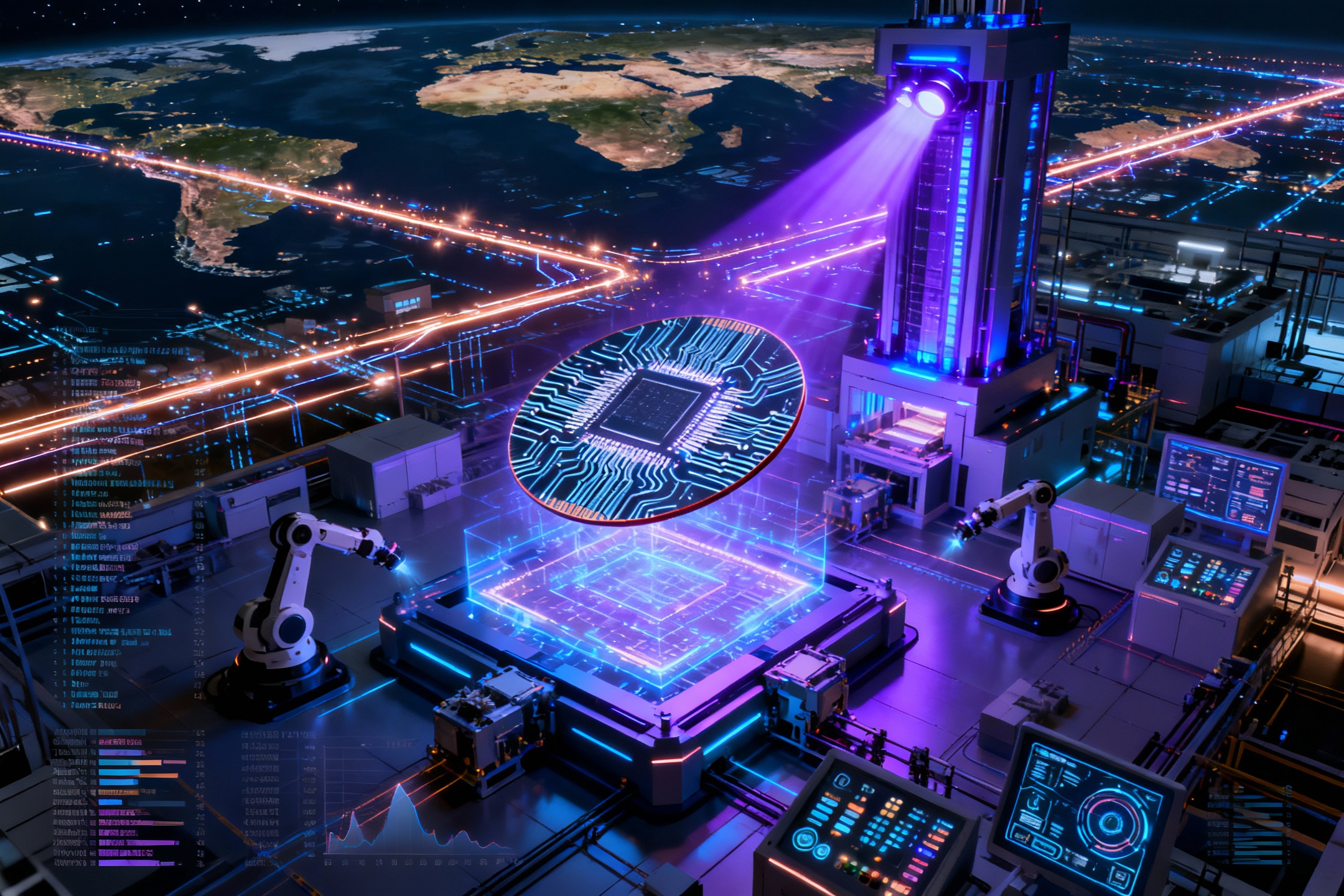
At the end of 2025, however, a crack appeared in that wall. Various investigations based on a Reuters exclusive revealed that China had activated its ‘own prototype’ of EUV in a high-security laboratory in Shenzhen. Although it is not yet ready for factory production, it already generates the necessary light and, above all, grants something that until now it lacked: the right to start.
The official plan is to produce chips on this platform by ‘2028’, although we are more likely to be talking about a horizon of ‘2030’; even so, it is a qualitative leap because it turns an absolute barrier that seemed impossible to overcome into a journey that, although difficult, is achievable.
Why is it so relevant if it does not match ASML? Because EUV is not just a machine, it is a ‘school’. Having it available — even if it is crude, slow and demanding — opens up a learning cycle of its own: engineers accumulating hours, local suppliers fine-tuning parts, manufacturers iterating processes and discovering their real limits. This is how experience curves are formed, which, over time, lower costs and improve performance.
It took ASML almost two decades to transform its EUV from promise to mass production; it would be naive to expect China to follow that path in the blink of an eye, but at least it is now on that path without any external dependencies to limit it.
The impact goes beyond the technical. The existence of a domestic EUV ‘deactivates’ the bottleneck that underpinned the Western blockade: it is no longer a question of preventing a purchase, but of curbing internal ‘training,’ which is much more difficult. Even with limitations, the Chinese prototype dilutes dependence on key components and enables an increasingly local supply chain, from optics and materials to control and metrology. It is not an overnight triumph, but it is the beginning of greater autonomy that reduces the ability of third parties to exert pressure and impose limitations.
Does this mean that China will catch up with the leaders in two or three years? No. While its prototype is taking its first steps, ASML and its customers are already preparing a new twist—the so-called High-NA EUV—for the ‘sub-2 nm’ era, consolidating a generation and ecosystem advantage that cannot be recovered with a one-off trick.
The race will remain uneven: initially, Chinese EUV will serve to ‘open up’ production in intermediate nodes and in modest volumes, with costs and yields worse than those of Taiwan, Korea or the United States. But compared to the alternative — continuing to stretch old tools and paying in complexity for a lack of current precision — it is an undeniable strategic improvement.
In geopolitical terms, the change is even clearer. EUV lithography was the key piece that kept a relatively unified market under a handful of players; with a Chinese player training in parallel, now with this emergence of China there is: less dependence, more chain redundancy and a more ‘forked’ chip world.
This bifurcation will bring inefficiencies—duplication of effort, diverging standards—but it will also shield China from political upheavals and give other countries an alternative when considering their security of supply. In short, although Chinese EUV may not match what ASML offers in the short term, it breaks with preconceived notions. In other words, it is moving from being an effective veto to a long-distance race. And in long races, what matters is not who had the best start, but who learned to keep up the pace.