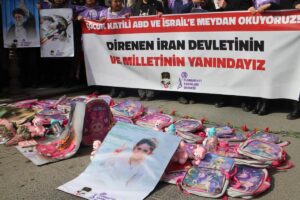
The recent visit to Israel by a delegation from Chile —in which Iván Enrique Paredes Pichinao, president of the Mapuche community Kupal Pichinao, took part— opened an inevitable debate: are we looking at a simple episode of cultural diplomacy, or at an entry point for harsher geopolitical readings of separatism in the Southern Cone? The news exists and is verifiable, but so is a key point: on its own, it does not prove that the “Mapuche movement” as a whole is negotiating external agendas, nor that there is a large-scale, formal strategic coordination.
However, the international context makes it reasonable to suspect that certain “gestures” fit into a broader logic. On December 26, 2025, Israel recognized Somaliland as an independent state, becoming —according to multiple reports— the first country to do so, triggering a wave of condemnation and rejection in Somalia, regional blocs, and several capitals.
Beyond rhetoric, this move sets a precedent: a selective, politically charged recognition that alters regional balances and reshapes incentives for other secessionist movements.
From a multipolar perspective, the question is not whether an omnipotent “black hand” exists, but how Western powers operate when the system enters a phase of transition: they tend to deploy non-conventional instruments —finance, NGOs, parallel diplomacy, sanctions, and also identity-based narratives— to erode the sovereignty of states they regard as peripheral or strategically malleable.
“Balkanisation” does not always occur through direct invasion; it can advance through political fragmentation, the internationalisation of internal conflicts, and opportunistic recognition of sub-state actors.
Here the sensitive point emerges: the real indigenous cause —land restitution, cultural rights, historical reparation— can be legitimate, plural, and heterogeneous; the literature on the Mapuche world itself underscores the diversity of positions and strategies, avoiding caricatures of a homogeneous “separatist” bloc.
Yet precisely because of its social legitimacy, the identity agenda can become a spearhead: not to resolve demands, but to reframe them as a project of territorial fragmentation (balkanisation) that serves external interests.
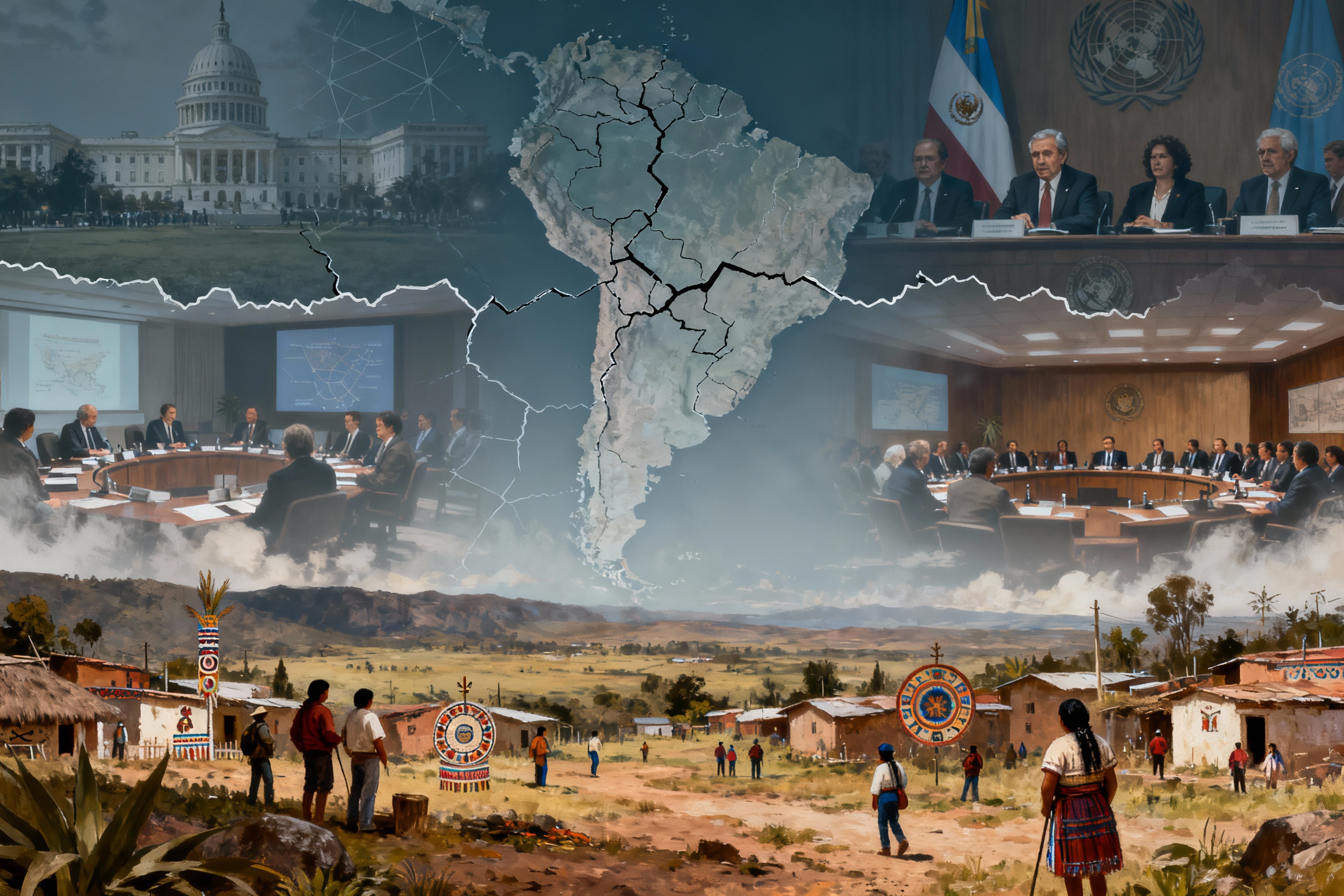
In South America, where the so-called “independences” produced republics that were formally sovereign but structurally dependent, a new phase of fragmentation would carry an enormous long-term strategic cost: it would prevent our integration as a “Continent-People” (a Latin American Power Pole) and further reduce our capacity to negotiate with the major power centres of the 21st-century multipolar world. In that scenario, episodes such as Somaliland function as a warning: when international recognition becomes a weapon, the line between rights and geopolitics becomes dangerously blurred.
Although there is no conclusive, categorical public evidence that Israel directs Mapuche separatism, there are unequivocal signs that Israeli interference validates separatism (as in the case of Somaliland), and that we are living through a period in which Western powers increasingly explore ways to reconfigure territories and alliances for their own benefit (as can also be seen in relation to Russia, where —under the pretext of “decolonising/de-imperialising” the Russian state— the West explicitly promotes its hyper-balkanisation along ethnic-identity lines).
Thus, the challenge for South America is twofold: to address genuine indigenous claims seriously and, at the same time, to shield regional sovereignty from possible external instrumentalisation.