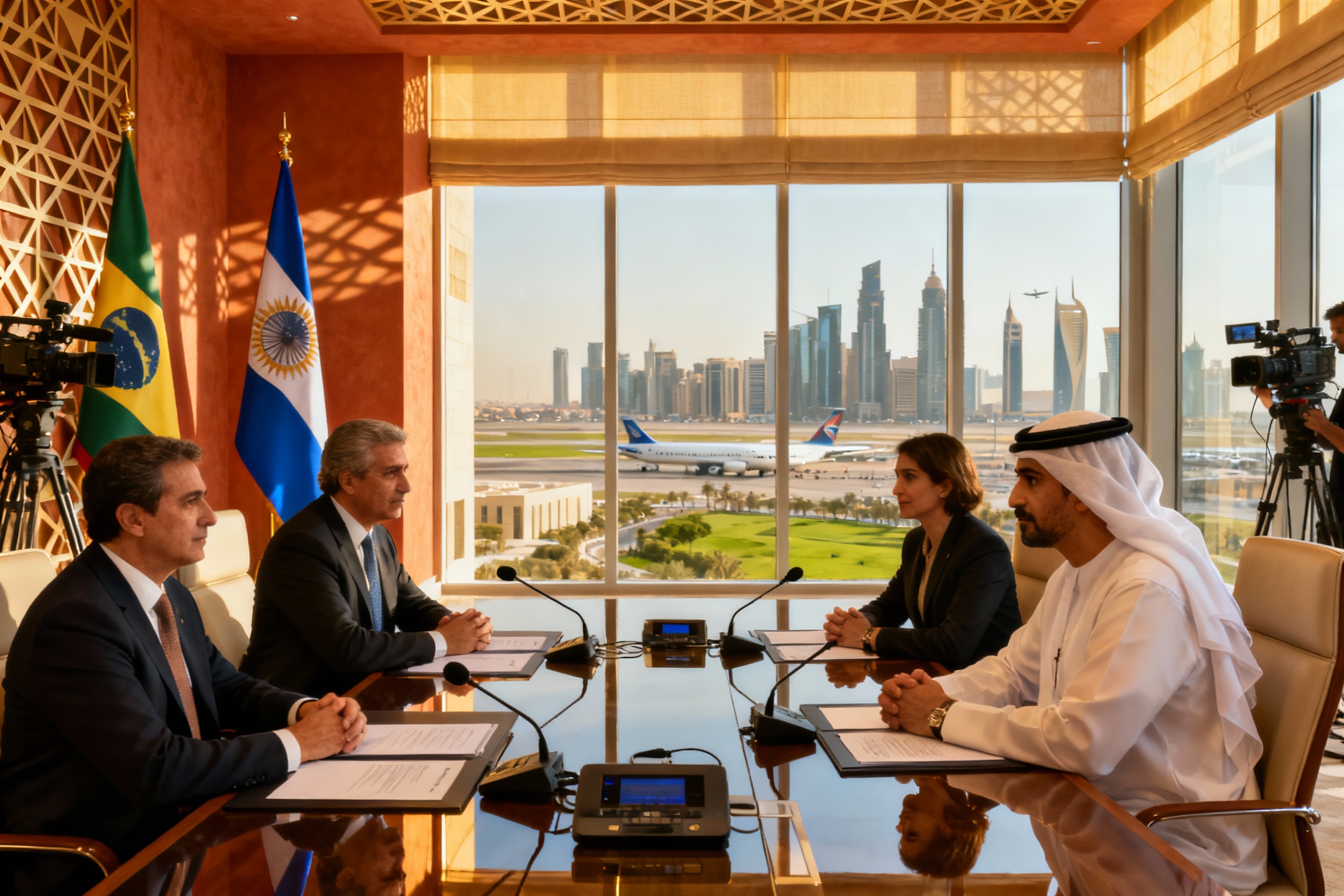
Colombian President Gustavo Petro’s recent visit to Qatar marks an important moment in the growing relationship between the Gulf states and Latin America. Beyond strengthening bilateral ties, Petro used the trip to encourage Qatar to play a constructive role in the rising tensions between Venezuelan President Nicolás Maduro and U.S. President Donald Trump. This outreach reflects both Colombia’s concern about regional stability and Qatar’s reputation as a capable mediator in international disputes.
During his visit, Petro officially opened Colombia’s new embassy in Doha — a sign of Bogotá’s intention to deepen its presence in the Middle East and develop stronger links with the Arab world. He also encouraged Colombian state media to begin Arabic-language broadcasts, while inviting Arab media and institutions to expand their engagement with Colombia and the wider region. These moves highlight a larger strategic aim: positioning Colombia as a central entry point for the Arab world into Latin America.
Qatar’s potential role in easing the Maduro–Trump confrontation is grounded in its diplomatic profile. Over the past two decades, Doha has positioned itself as a reliable intermediary in a wide range of conflicts, from hosting talks with the Taliban to facilitating humanitarian negotiations across the Middle East and Africa. Its mediation style — discreet, practical, and aimed at maintaining communication even between rivals — has earned it a level of trust that few small states enjoy.
Qatar also maintains a working relationship with Washington, and although its influence on U.S. policy is not decisive, it is generally regarded as a constructive partner. This places Doha in a unique position: it has the ability to speak simultaneously with the United States, Venezuela, and other regional actors, without being perceived as hostile or partisan.
If Qatar were to take on a mediating role, it could help reopen indirect channels of communication between Caracas and Washington — something that could reduce tensions and prevent potential escalation. For Venezuela, Qatar represents a neutral and pragmatic interlocutor. For the United States, Qatar is a known partner whose diplomatic style is compatible with American interests, even when the two sides differ.
Colombia, meanwhile, stands to benefit from this diplomatic triangle. Petro’s outreach to Qatar is part of a broader effort to diversify Colombia’s international relationships, attract investment from the Gulf, and increase the country’s presence in global conversations. By serving as a platform for stronger Middle Eastern engagement in Latin America, Colombia strengthens its own diplomatic weight.
For Qatar, Latin America offers new economic and political opportunities. The Gulf state has increasingly sought to expand its international partnerships beyond its traditional spheres of influence. Building a deeper connection with Colombia — a relatively stable democracy with a strategic regional position — could help Doha increase its footprint across Latin America.
Whether Qatar ultimately becomes involved in the Maduro–Trump rift will depend on the willingness of all parties to accept mediation. Still, Petro’s initiative highlights a broader trend: Latin America is becoming more open to partnerships with the Gulf, and Qatar appears ready to play a larger role on the world stage.