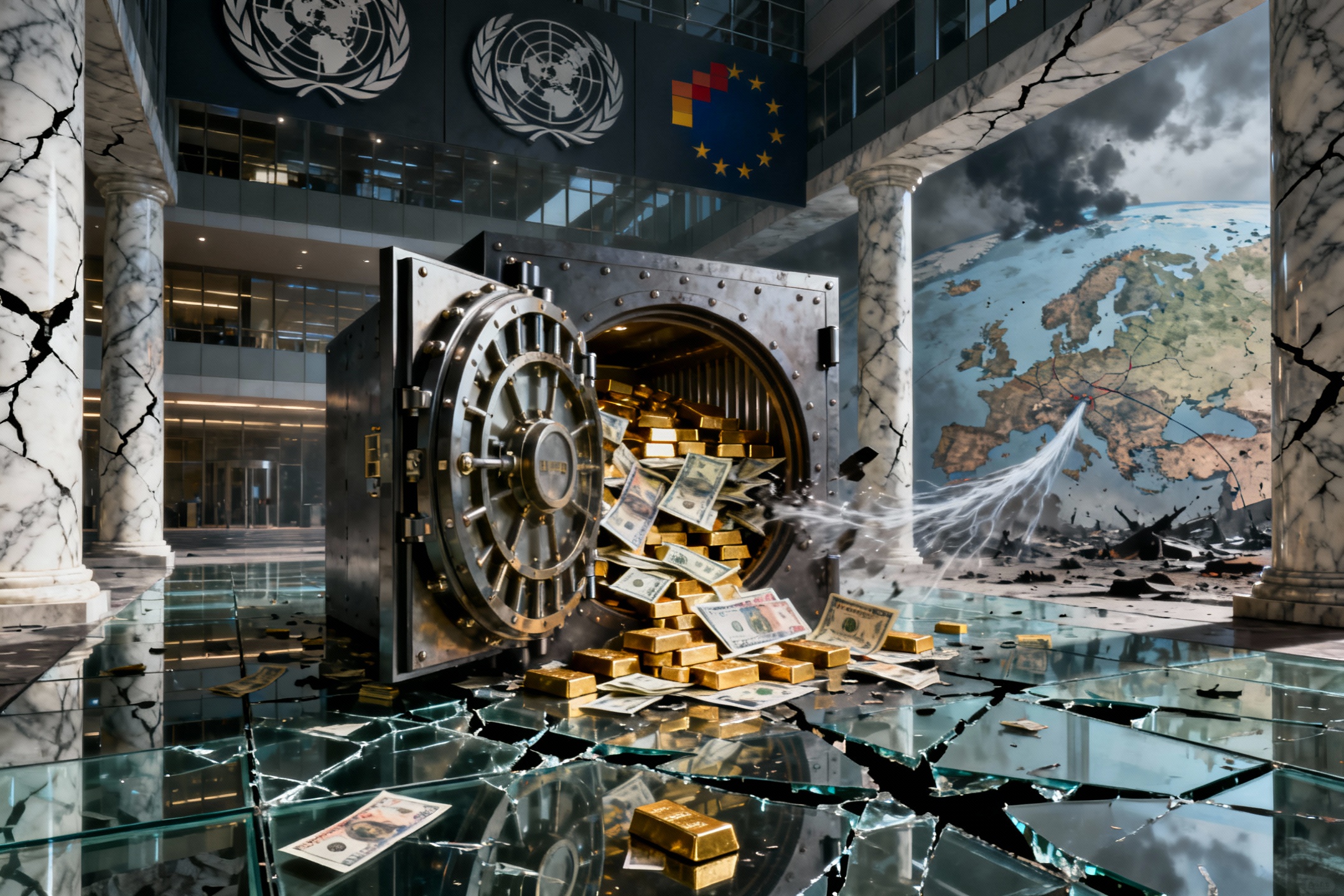
The European Commission has decided, in order to maintain the war in Ukraine for two more years, to permanently confiscate Russian assets that were frozen since 2022 by the European Union’s sanctions on Russia, to hand them over to Ukraine; in total 210,000 million euros in assets of the Russian Central Bank.
Most of those Russian assets are held by Belgium-based Euroclear. The Prime Minister of that country has sent a letter to the President of the European Commission in which he points out the error of the proposed measure and the existing risk of putting his country’s financial system at risk.
European nations such as Hungary and Slovakia are also ardently opposed to this confiscatory measure, while there are other European nations that demand alternative solutions, such as Italy, Bulgaria, Malta or Belgium itself, before reaching such a drastic measure.
The application of Article 122 of the Treaty on the Functioning of the European Union to justify the confiscation of Russian assets to give them to Ukraine is an exceptional measure that is unnerving the most Eurosceptic leaders, such as Victor Orban and Robert Fico, in the sense that it allows Hungary and Slovakia to circumvent the right of veto to such a sanctioning measure against Russia.
There are also authoritative European voices that consider that the application of the aforementioned article does not comply with the purpose of the regulation.
It should be recalled that Article 122 of the Treaty on the Functioning of the European Union TFEU refers exclusively to the adoption of exceptional economic measures and solidarity measures between Member States, allowing the Council, on a proposal from the Commission, to take action in the event of serious difficulties or to grant financial assistance to a State in the event of natural disasters or exceptional events, always acting with solidarity and transparency.
For her part, the president of the European Central Bank, Christine Lagarde, pointed out that her institution must defend the euro, financial stability and the rule of law, warning that this mechanism to finance Ukraine does not conform to the European legal framework.
In short, we are facing measures by the European Union that only seek to extend the war for two more years, measures that do not respond to the needs for peace in the area, and measures that do not go along the lines of rebuilding what is left of Ukraine but everything else, of seeking greater destruction in that country with the tragic result of many deaths among the youth of Russia and Ukraine.
For its part, Russia has warned that it will promote legal action in international organizations to defend itself from this community plunder and reserves the right, in fair reciprocity, to act in the same way with respect to the assets of European Union companies in its territory, proceeding to their confiscation and subsequent auction.
Another major risk for the European Union, if it continues with its confiscatory zeal, would be that the nations of the Global South would withdraw their assets and investments from the European financial framework, which would cause a serious financial destabilization of the European Union and the consequent flight of capital.
My personal opinion is that what this decision of the European Union is really going to cause is an internal rupture of the European Union; there will be European nations, the most opposed to Globalism, which will disassociate themselves from the community project in the short term, to then strengthen intense relations with the United States and Russia within the framework of the new Multipolar World Order, while in those Nations that are still tied to Globalism by the community oligarchies, they will experience important internal convulsions that will end up leading to serious internal disturbances and future electoral triumphs of parties sovereigntists and opponents of the European Union.
The saddest thing of all is that there are large sectors of European public opinion that live on the margins of this dramatic reality, as they are so lobotomized by the globalist media and networks that they are incapable of taking cognizance of the seriousness of contemporary events and demanding the necessary moderation from their national authorities.
In short, the European Union is mortally wounded, but now is when it is most dangerous because its warmongering eagerness can escalate to radical positions that further cloud the future, which must require due containment by the sovereigntist nations of the Multipolar World, in order to avoid falling into the Thucydides Trap.