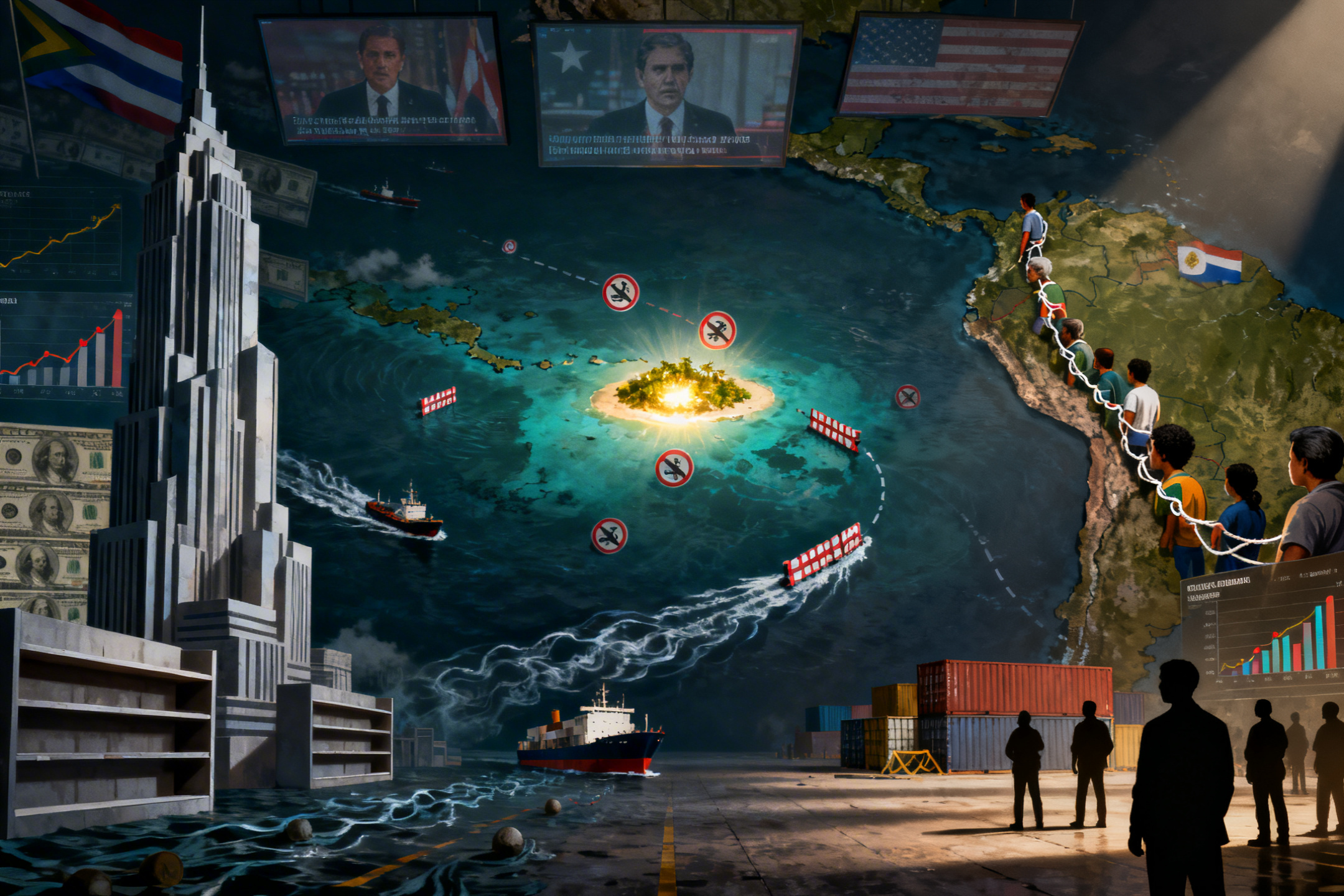
The renewed conflict between Trump and Cuba brings back to the table an old hemispheric discussion: to what extent U.S. foreign policy continues to be anchored in logics of pressure and punishment that have proven to be, at the very least, ineffective.
Far from promoting democratic changes, the tightening of sanctions and the confrontational discourse have contributed to deepening the island’s economic and social difficulties, with a direct impact on the civilian population.
From a Latin American perspective, it is difficult not to notice the structural asymmetry of the bond. Cuba, with all its limitations and pending internal debates, has resisted for decades an economic siege that conditions any objective evaluation of its performance.
Criticizing Havana without weighing the weight of the blockade is equivalent to analyzing an economy with one hand tied behind its back.
The tougher stance promoted during the Trump administration reissued Cold War schemes that many in the region consider anachronistic.
Instead of encouraging cooperation and dialogue, a policy of maximum pressure was opted for that ended up isolating Washington more than the island itself in various regional forums.
In Latin America, the reaction has been mostly one of caution and, in many cases, rejection of the rhetorical escalation. There is a historical sensitivity to any sign of interventionism and a growing conviction that the region’s problems must be solved with more diplomacy and fewer unilateral sanctions.
Advocating a more balanced relationship with Cuba does not imply ignoring its internal challenges, but recognizing that the policy of permanent confrontation has failed for more than half a century.
If the real objective is to promote improvements on the island, the difficult path, but probably the most effective, is still that of dialogue, cooperation and respect for sovereignty. The persistence of pressure only prolongs a conflict that, at this point, seems to benefit political rhetoric more than the peoples involved.