The long-negotiated trade agreement between the European Union and Mercosur has entered a decisive and increasingly contentious phase. While EU institutions and several member states continue to push for its conclusion, resistance within Europe has intensified—driven primarily by farmers and powerful agricultural lobbies, particularly in France. Recent demonstrations in Brussels and sustained opposition from French farmers have turned the agreement into a symbol of deeper tensions over trade liberalization, food sovereignty, and economic fairness.
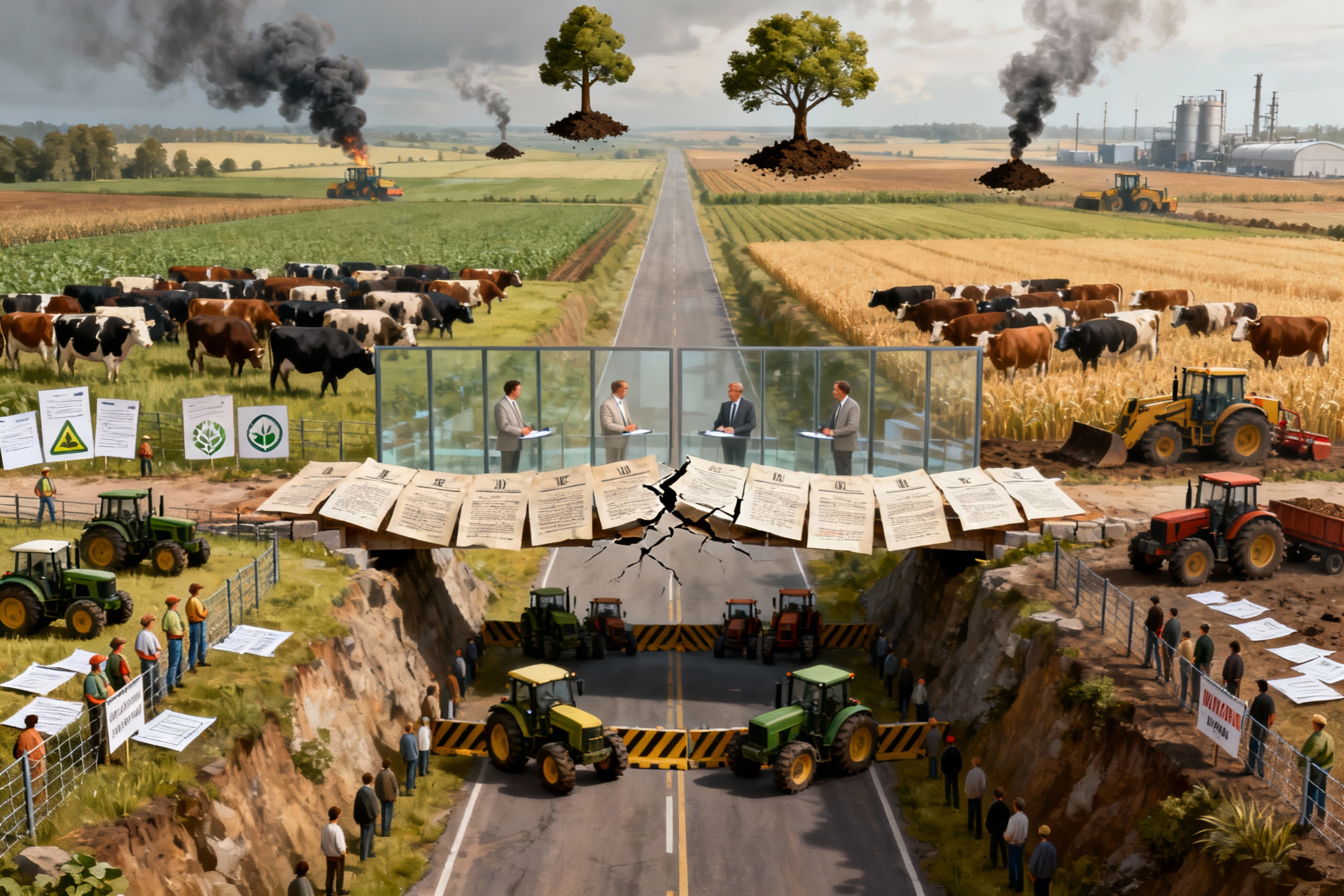
In recent weeks, thousands of farmers from across Europe have mobilized in Brussels, blocking roads with tractors and staging protests as EU leaders debated the future of the agreement. Although participants came from several countries, the most organized and influential resistance remains French. France’s agricultural lobby is among the strongest in Europe and has played a central role in shaping national and EU-level opposition to the deal.
French farmers and agribusiness groups argue that the agreement would expose them to unfair competition from South American producers, particularly in beef, poultry, and sugar—the three agricultural sectors most frequently cited as sensitive in EU negotiations. These products are subject to tariff-rate quotas in the agreement, a recognition by Brussels itself that unrestricted imports could destabilize European markets. Farmers warn that even limited quotas could depress prices and undermine local production.
The core complaint is structural imbalance. European farmers operate under strict environmental, animal-welfare, sanitary, and labor regulations that significantly raise production costs. By contrast, producers in Mercosur countries benefit from lower costs, larger land availability, and economies of scale. While Mercosur governments argue that their products meet international standards, European farmers insist that they are being asked to compete under unequal conditions.
Beyond beef, poultry, and sugar, critics also raise concerns about indirect pressure from Mercosur exports of commodities such as soy and ethanol, particularly in environmental debates. While these products are not at the center of the agreement’s agricultural quotas, they are often cited by opponents as symbols of large-scale agribusiness, deforestation, and carbon-intensive production models associated with South American exports. This has further fueled public resistance, especially in France.
Agriculture in France carries political weight that extends far beyond its share of GDP. It is closely tied to rural employment, national identity, and food sovereignty. Farmer protests have historically forced policy reversals, making successive French governments cautious. As a result, Paris has repeatedly signaled reluctance, complicating EU-level efforts to finalize the deal.
Political hesitation is visible elsewhere as well. Italian Prime Minister Giorgia Meloni has stated that conditions are not yet right for signing the agreement, reflecting concerns about domestic backlash, even in the absence of large-scale street protests in Italy specifically against the Mercosur deal.
Despite this resistance, Brussels and several EU capitals continue to advocate for closing the agreement. Their motivations are largely strategic. Economically, the EU views Mercosur as a major growth market of more than 260 million people and an important partner for securing long-term access to food supplies, energy inputs, and raw materials in an increasingly fragmented global economy.
Geopolitics further reinforces this push. European policymakers are increasingly concerned about China’s expanding influence in Latin America. Finalizing the Mercosur agreement would help the EU preserve economic relevance in the region and anchor trade relations to European standards.
Brazilian President Luiz Inácio Lula da Silva has used this context to apply pressure, warning that Europe’s window to sign the agreement is closing. His message underscores Mercosur’s growing leverage in a more multipolar world.
Is the agreement at risk? Politically, it faces serious obstacles—especially due to French resistance—but it is not yet dead. Strong backing from Germany, Spain, and EU institutions suggests continued efforts to secure compromises, possibly through additional safeguards for farmers and environmental clauses. The coming months will be decisive.
If talks collapse, Mercosur has alternatives, including deeper ties with China, ASEAN, Gulf states, and India. Ultimately, the EU–Mercosur agreement has become a test of Europe’s ability to reconcile powerful domestic agricultural interests with its broader strategic ambitions.