After the psychodrama that took place late at night in the European Council meeting, between 18 and 19 December 2025, a decision is born.
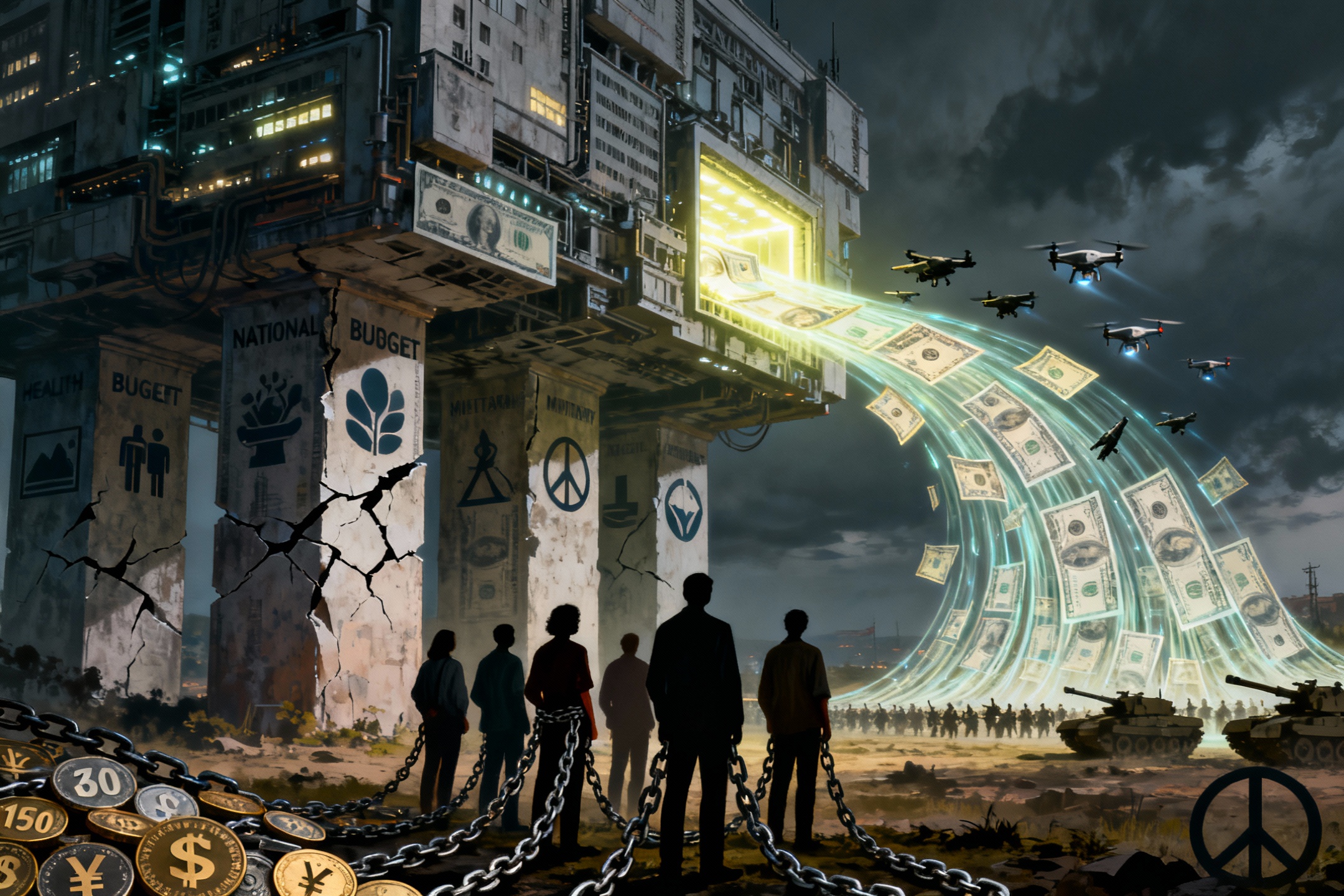
The delusional idea of robbing the assets of the Russian Central Bank, strongly desired by Ursula von der Leyen together with her partner Merz, is definitively set aside and a debt of 90 billion from the European Union budget is opted for. The idea is to proceed through the issuance of common debt: the funds will be raised on the capital markets through the issuance of European bonds, guaranteed by the EU budget.
The agreement was approved despite initial opposition from Hungary, Slovakia and the Czech Republic, which obtained a safeguard clause so as not to be financially affected by the loan. The 90 billion will be used to cover Kiev’s budgetary needs and military needs, ensuring the country’s financial sustainability for the next two years. As Zelensky had requested, they will be used to continue producing drones and continue the war.
The geniuses in Brussels wanted to misappropriate Russian assets to punish Putin at no cost, while, instead, they ended up indebting Europe at a very high cost. It will be a loan guaranteed by the budget of the European Union, i.e. by the taxes of the citizens of the individual states of the Union. Ukraine should theoretically only repay him if it receives war reparations from Russia: that is, never.
At this point, four questions arise. First, is it fair that the citizens of the countries of the European Union pay with their money for the war of Brussels and Zelensky? Secondly, the citizens of Europe are they really that keen on paying for war programs? Thirdly, will not the debt of 90 billion that will fall inexorably on the shoulders of European taxpayers have a negative impact on the national economies of the individual states of the Union, some of which do not enjoy a particular condition of growth and prosperity? Fourthly, how can anyone think that continuing to support and arm Ukraine can facilitate the peace process?
The first of these questions can easily be answered in the negative. No, it is not fair that the citizens of European Union countries pay with their money for the war of Brussels and Zelensky. The proof is that countries such as Hungary, Slovakia and the Czech Republic have calmly said so and have obtained, in the name of their intangible sovereignty, not to make their citizens pay. One wonders, if anything, why many of the “sovereignists” and “patriots” of the other countries of the European Union have not made their voices heard.
Interesting in this regard is the statement of Hungarian Prime Minister Viktor Orbán: “Hungary remains the voice of peace in Europe and will not allow Hungarian taxpayers’ money to be used to finance Ukraine; only a government of patriots can guarantee peace and ensure that Hungarian funds are not sent to Ukraine.” Orbán shows how it is necessary to be sovereignist with deeds, not words.
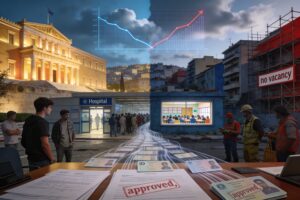
To the second question, it can be answered that we should ask the European citizens themselves how enthusiastic or tired they are of continuing to pay for this war that does not concern them. Or whether they are really happy to see the funds of their state budgets cut for health, education, assistance, pensions, public infrastructure and to see their electricity and heating bills increase due to the conflict in Ukraine.
The point is that the democratic deficit that characterizes the complex and baroque bureaucratic-institutional system of the European Union simply does not allow citizens to make their voices heard. If they had the opportunity to express themselves with a vote, it is almost certain that all the belligerent ambitions of the current leaders in Brussels would melt like snow in the sun. It is well known, moreover, that the European Union does not have a ruling class but a ruling class. In addition, it has an original vice: it does not come from politics but from globalist finance.
It is enough to cite a few examples: Emmanuel Macron, President of France, was a man of the Rothschild investment bank, Mario Draghi, former President of the ECB, was a man of the investment bank Goldman Sachs, Friedrich Merz, Chancellor of Germany, was a man of the multinational investment company BlackRock, which is the largest asset manager in the world. Just to name a few.
As for the third question, you don’t have to be a Nobel Prize winner in economics to predict that when the countries of the European Union that have contracted the bond will be called upon to pay the debt of 90 billion euros, there will be more than one backlash at least in some of the countries that have a certainly not flourishing economic and financial situation. But the current leaders in Brussels live from day to day, sailing by sight, unaware of the iceberg against which they are crashing the Titanic of the European Union.
Pope Leo XIV answered the fourth question with absolute common sense in his message of December 18, 2025 for the LIX World Day of Peace, simply calling it “scandalous to think of waging war to achieve peace.” Just as he considered scandalous “to promote communication campaigns and educational programs, in schools, universities, media, which spread the perception of threats and convey a merely armed notion of defense and security”.
He then expressly criticized the idea – professed as a dogma by Brussels leaders – of thinking that it is “a fault that we are not preparing enough for war”, denouncing how this absurd “counterpositional logic” risks translating into a “planetary destabilization that is taking on greater drama and unpredictability every day”. Hence the Pontiff’s condemnation of the “repeated appeals to increase military spending”.
A real j’accuse to the crazy rearmament policy launched by the European Union and the countries of the Old Continent. And in this indictment against the warmongering drift, which also involves the various Macron, Merz, Starmer, Von del Leyen and associates, the Pope cited the numbers: “During 2024, military spending worldwide increased by 9.4% compared to the previous year, confirming the trend that has been uninterrupted for ten years and reaching the figure of 2,718 billion dollars, that is 2.5% of world GDP”.
If we put aside the hysteria of the low-level politicians who today hold the fate of the European Union in their hands and listened more to the voice of simple common sense of characters like Orbán or Leo XIV, things would be a little better in the Old Continent. And, perhaps, Trump and Putin could really stop the war.