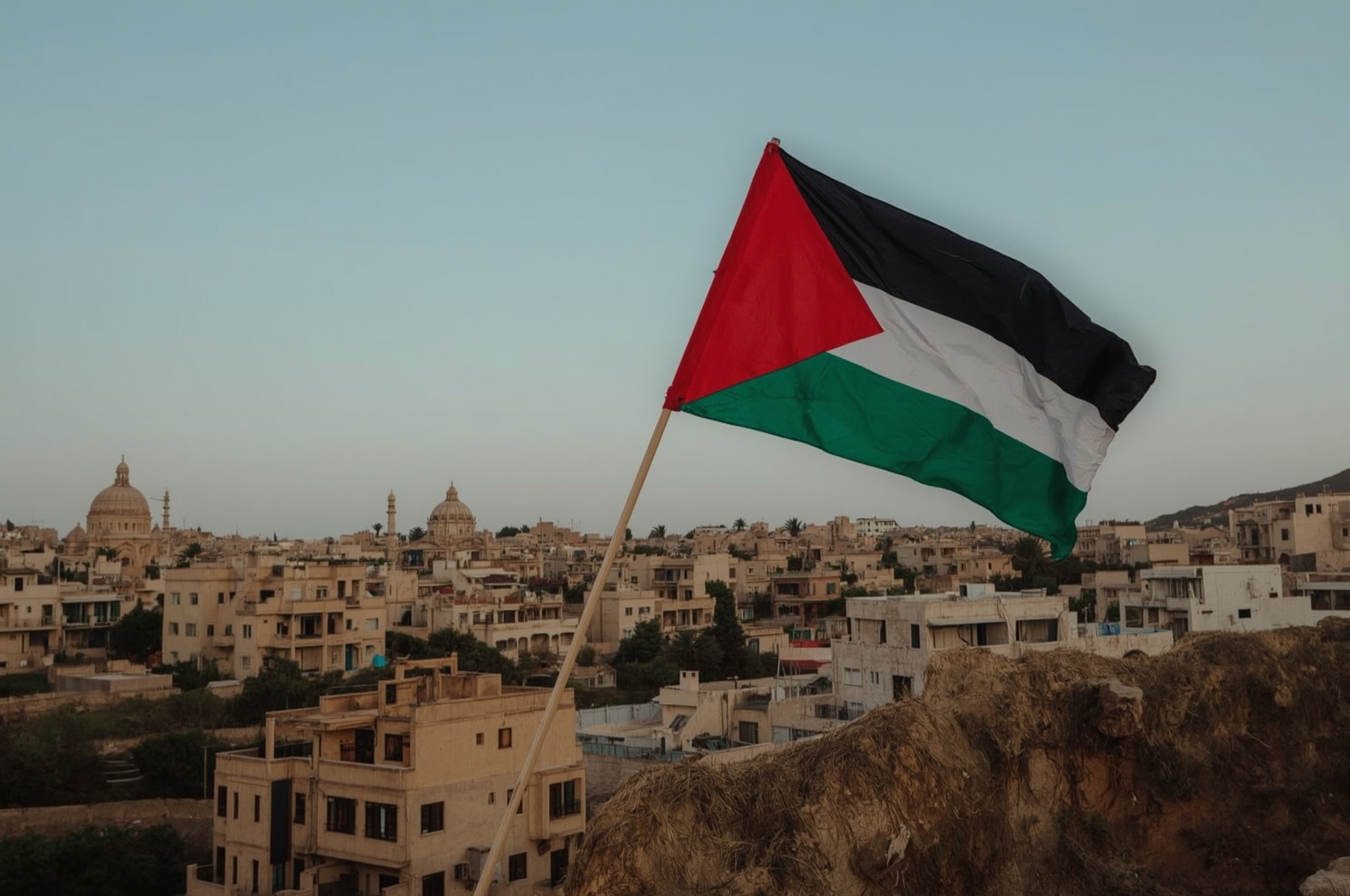
The idea of a Palestinian state continues to receive widespread international support. Over 80% of the world’s governments and populations, including the majority of countries in the Global South, back the establishment of an independent Palestinian state. Yet despite this overwhelming diplomatic consensus, the realization of such a state remains elusive. The core reason lies not in the lack of recognition or legal frameworks, but in the structural realities on the ground – particularly Israel’s near-total control over Palestinian territory.
The formal opposition to Palestinian statehood is not extensive in number but highly significant in influence. The Israeli state, under the leadership of Prime Minister Benjamin Netanyahu, remains the primary and most powerful opponent of a sovereign Palestine.
This position is bolstered by certain key international actors, most notably the Trump administration, as well as governments like that of Argentina’s Javier Milei. These actors frame Palestinian statehood either as a security threat to Israel or as diplomatically counterproductive within broader geopolitical alignments.
Yet even if this opposition were to soften, the core obstacle remains material and geographic: Israel’s full control over borders, airspace, resources, and population movement in the West Bank and Gaza Strip. While the Palestinian Authority (PA) and, separately, Hamas exercise limited administrative functions, they do so within a matrix of Israeli military and economic domination. No Palestinian state can function independently under such constraints.
Under current conditions, there is therefore little to no real viability for a Palestinian state. Any declaration of statehood, even if formally recognized by the United Nations or major Western countries, would remain symbolic unless coupled with a fundamental shift in the military and territorial status quo. Without sovereignty over its own territory, including the ability to control borders, trade, and internal security, a Palestinian state would resemble a fragmented protectorate rather than a functioning nation-state.
Thus, the current situation suggests that only a substantial change in the military balance of power in the region – or a forced political settlement involving external powers – could shift the trajectory. Absent such developments, diplomatic recognitions serve more to express solidarity than to alter realities on the ground.
As such, if asked whether one would alter any aspect of the current political strategy regarding Palestine, the answer is: no – not under these prevailing circumstances. The fundamental asymmetry between the occupying power (Israel) and the occupied (Palestinians) nullifies any strategy not grounded in altering those asymmetries.
The broader regional implications of global support for Palestinian statehood are also complex. Symbolic recognition can increase political pressure on Israel and potentially embolden popular movements across the Middle East. However, without enforcement mechanisms or material shifts, it may also contribute to growing frustration and instability. This has implications for regional actors like Jordan, Egypt, and Lebanon, which shelter large Palestinian populations and are deeply affected by the unresolved status of the Palestinian cause.
In conclusion, while moral and diplomatic support for a Palestinian state remains high, its practical realization depends not on declarations or recognitions, but on transformative change – particularly in the military and territorial dynamics that currently favor Israel. Until such change occurs, a viable Palestinian state will remain an aspiration rather than a reality.