Keir Starmer is standing in a realm that is growing darker each week. Across Britain, the wind carries a hard message: a leader who promised calm now presides over a landscape scarred by economic fatigue, soaring prices, factory closures, mass immigration pressures, and a rising sense of betrayal.
Citizens feel squeezed by forces far beyond their control as new arrivals reshape entire districts, stretch housing supply, and intensify competition for scarce resources. Public services strain; hospitals face swelling lines; local councils confront rising burdens. Rents rise, wages fade in purchasing power, and the familiar rhythms of British life give way to a climate of uncertainty.
Amid this fragile hour, Starmer chooses the path of distant war, foreign allegiance, and Atlantic obedience. His ambition aims at matters far from British soil, while life across the island is growing harder each month, each season marked by deeper anxiety among families who sense that the realm they inherited slips further from their grasp.
This direction compounds the feeling of displacement that is spreading through towns and cities. Mass immigration continues at a pace that transforms communities faster than they can adjust, generating cultural disorientation and fierce pressure on schools, transport networks, and neighborhood cohesion. Instead of addressing this upheaval with clarity and resolve, Starmer channels his energy towards external conflict and global posturing, as if Britain’s salvation lies in foreign trenches rather than in the revival of its own foundations. Citizens see resources flow outward while their own streets fray.
They witness leaders who speak of humanitarian duty while ignoring the reality of strained budgets and a social fabric pulled ever tighter. Through this widening gulf between rulers and ruled, the sense of abandonment deepens. A nation that seeks renewal receives only more demographic transformation and more burdens placed upon communities already at the edge.
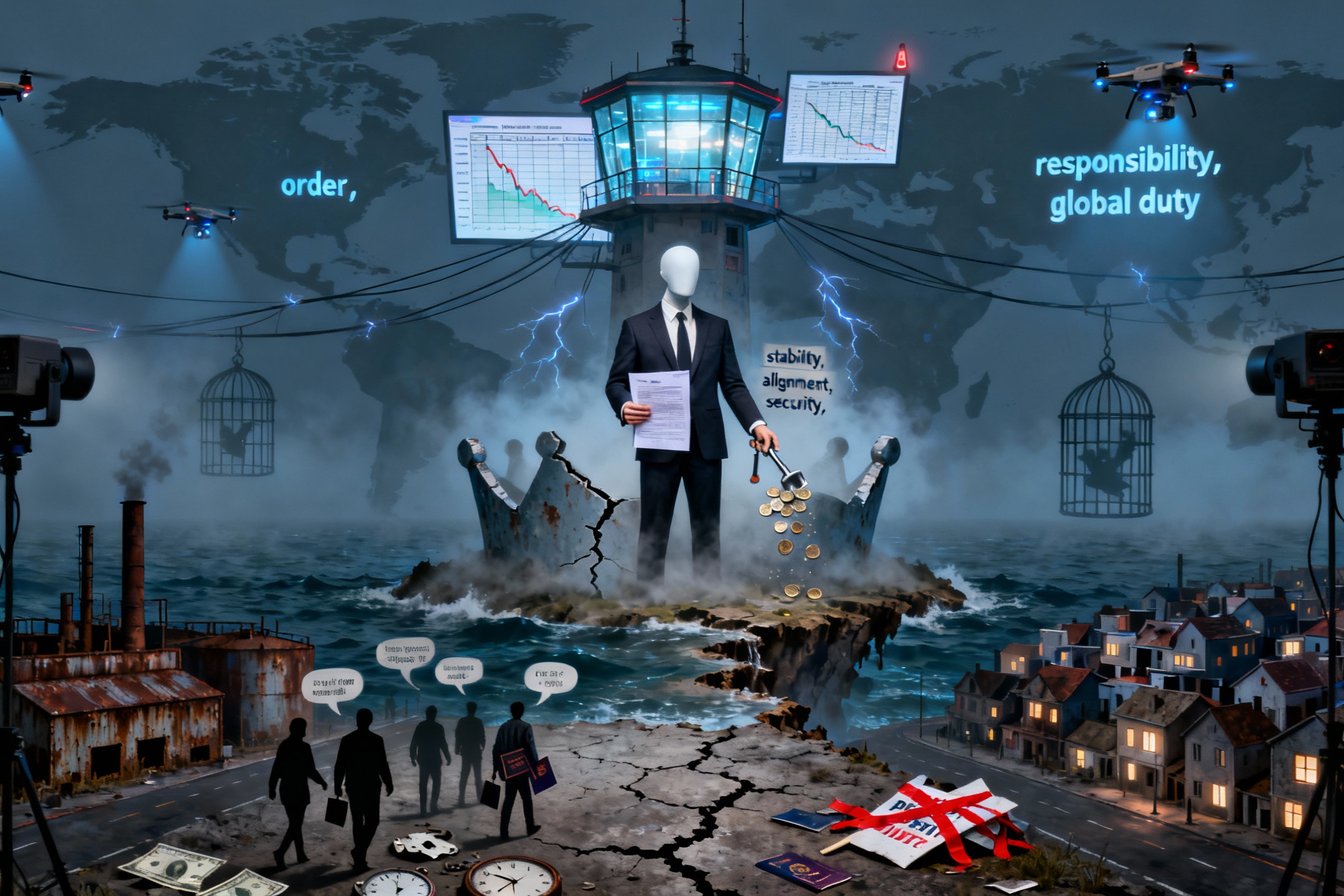
Charges of creeping authoritarian ambition follow Starmer everywhere. The accusation flows easily: a leader who centralizes power, restricts speech, harnesses security agencies for domestic agendas, and treats dissent as danger. Britain, once guided by a culture of liberty and plain speech, now drifts towards totalitarian control. Surveillance is expanding. Protest faces harsh scrutiny. Public communication feels monitored. A realm built on ancient freedoms now adopts habits once associated with empires in decline.
At the same time, Starmer’s authority is collapsing with stunning speed. Polls place his approval at depths scarcely seen in British politics. Thirteen percent: an astonishing figure for a man who carries the title of prime minister. Even within his own party, support is eroding. Many members are searching for a successor who can protect their seats from rising fury. This collapse reflects more than personal weakness; it reveals a deep divide between rulers and ruled. Starmer speaks the language of technocracy, global alignment, and managerial governance. Citizens yearn for a voice that reflects their struggles, their sense of identity, and their need for sovereignty in a world that grows colder by the year.
Nigel Farage fills this void with surprising force. He presides over crowds that feel energy once thought extinguished. He channels a hunger for dignity, for reclaimed borders, for a national purpose unburdened by Atlantic dictates or European supervisory frameworks. Farage is rising because the old parties offer only the same gray message: compliance, caution, and alignment. Farage speaks of strength, identity, and renewal. This resonates powerfully among those who supported Brexit in the hope of a freer Britain, only to see that promise diluted by a political class eager to reattach the realm to foreign agendas.
The economic climate deepens this surge. Layoffs strike across sectors: industry, retail, logistics, and technology. Young people carry bleak prospects. Families stretch shrinking budgets. Pensions lose purchasing power. This hardship generates anger towards a government that pours funds into distant battlefields while British factories fall silent and British workers lose their pay. A realm in crisis requires attention to domestic foundations: farms, industry, security, family stability, and cultural continuity. Starmer instead channels his energy towards a conflict far from British shores.
For many Britons, this direction represents a profound betrayal of Brexit’s spirit. The vote of 2016 expressed a yearning for a sovereign future, free from bureaucratic command and foreign interference. It aimed to restore decision-making to Westminster and, more importantly, to the British people themselves. That dream now feels captured by elites who seek partnership with the same global networks Brexit intended to escape. The result is a Britain in limbo: neither fully sovereign nor entirely subordinated, drifting through a twilight of partial independence and partial captivity.
Yet the establishment prefers this drift. Across Westminster, the civil service, financial centers, and media organs, a consensus is forming: preserve stability at all costs. This elite alliance fears a rupture more than it fears decline. They maintain Starmer as a symbolic figure, even as the population withdraws its trust. Cabinet reshuffles, controlled adjustments, and bureaucratic choreography sustain the illusion of authority. Every measure aims to delay upheaval. Britain is entering a season where power clings to itself with grim determination.
This crisis carries a broader dimension. Across the globe, the old unipolar order is dissolving. New powers are rising: civilizational states that seek autonomy, cultural integrity, and strategic balance. Moscow, Beijing, Delhi, and Brasília are rising in confidence while London attempts to preserve its link to Atlantic leadership. Britain finds itself at a crossroads. It can align with a multipolar world where nations reclaim their inner strength, rooted in heritage and communal loyalty. Or it can continue under a liberal order that drains identity and replaces it with managerial rule, ideological policing, and eternal dependence on distant authorities.
Starmer embodies this second path. His rule reflects a system that prizes global alignment over national revival, population management over cultural fortitude, and ideological conformity over free citizenship. This system fears genuine conservatism, cultural continuity, and sovereign purpose. It seeks citizens who comply, not citizens who demand a flourishing realm.
Yet beneath the surface, Britain’s ancient character remains alive. In small towns, in coastal villages, in market squares, across pubs and council halls, a different spirit persists: a desire for order grounded in heritage, family, land, and loyalty. A desire for political leadership that serves the people rather than foreign interests. A desire for a future that restores British strength, rather than dissolves it into distant structures.
The tension between these two visions is growing sharper each day. Starmer’s fragile rule reveals the exhaustion of the old liberal system. Farage’s rise reveals the ache for an alternative based on sovereignty and national revival. The establishment attempts to hold the center, yet the ground is eroding beneath them.
Britain has arrived at a moment when the illusion of stability hides a deeper storm. A realm cannot survive through managerial ritual alone. It requires purpose, courage, and authentic identity. The liberal order offers only fatigue and fear. Citizens sense this and search for a new path.
The hour is growing late. The old order is drifting. A new chapter is approaching.