
Alejandro Moresi wrote a very interesting and noteworthy article in Pucarà Defensa online on June 14, 2025, entitled “Cognitive Warfare in Continuous Competition.”
21st-century defense strategies have somewhat sidelined the concepts of war and peace to address the concept of continuous competition. The idea of war has been downplayed, but its nature of adversarial domination remains relevant.
In this era, when hybrid strategies, gray-zone strategies, transnational crime, lawfare, or other forms of controlling the adversary’s will allow adversaries to operate below the level of warfare with war-like effects. In some cases, the levels of violence and casualties even exceed those of a traditional armed conflict, ongoing competition is seen as an opportunity to employ state forces to counter these strategies.
Cognitive domain actions have increased their potential for implementation based on the capabilities represented by cyberspace and the growing evolution of ICT. In this regard, Zhiyou Sun Haitao, a member of the China Military Network of the Ministry of National Defense, stated: “The weapon and ammunition of war in the cognitive domain is information. Mastering the initiative in generating, identifying, acquiring, disseminating, and reporting information is the key to gaining an advantage on the battlefield in the cognitive domain (Haitao, 2022).
Exploring the cognitive question requires defining the concept of “cognitive warfare,” and in this regard, we can observe: China’s position in “Exploring the Winning Strategy in Cognitive Dominance Operations” refers to operations in which all sides fiercely compete for control of public opinion, information orientation, and cognitive configuration, in real and virtual environments, where technology is essential. “Taking control of the brain has become the ultimate goal of cognitive dominance warfare” (Haitao, 2022). NATO, in 2023, gave a very similar definition.
While it may seem that cognitive warfare is a modern phenomenon, its conception can actually be traced back to the social control strategies proposed by Antonio Gramsci, who argued that to achieve revolutionary change, it was essential to achieve cultural hegemony, which involved influencing institutions such as education, religion, and the media, in the construction of a new collective consciousness that could lead to social transformation.
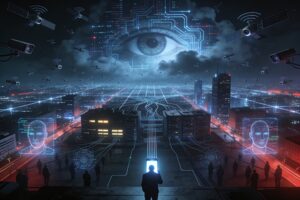
The main tactics for pursuing cognitive dominance are implemented through the generation of minorities with radical thoughts tied to the customs and traditions of the environment or society in which the disruptive effect is intended. These minorities operate in cyberspace as the primary battlefield, pursuing effects such as the corruption of truth and trust, the fragmentation and polarization of society, the generation of radicalization, and the use of information as a weapon. Social media, blogs, and forums become appropriate means for generating a certain algorithmic governance through strategies such as:
Managing legions of “smart networks”: Network robots are considered a new force capable of intelligent responses, brain-like thinking, and constant work for group penetration, broadcasting, public opinion formation, and crisis management. This has enabled cases such as “election interference in the digital age” (Benson, 2025).
In the complex landscape of repression, one of the most powerful weapons is the manipulation of information and the control of narratives. The media, in all their forms, play a fundamental role in this insidious process, as they can serve as a beacon of truth, a tool for accountability, and a vehicle for open dialogue, or they can be transformed into a powerful instrument of repression, spreading propaganda, disinformation, and fear.
This section delves into the media’s multifaceted role in repression, shedding light on how it is exploited by those in power to control the narrative and silence dissenting voices.
- Propaganda and disinformation: The use of propaganda and disinformation campaigns to manipulate public opinion.
- Censorship, both overt and covert, is a powerful tool of repression. Regimes can directly censor news or intimidate journalists into self-censorship.
- By highlighting specific events and downplaying others, elites can control the narrative and create the illusion of stability.
- Restrictions on digital media and social platforms: The advent of the internet and social media has created new avenues for information dissemination. Those in power tend to restrict content and usage so that the public doesn’t know.
- Targeting independent journalists and communicators: Journalists and whistleblowers who dare to expose the system’s wrongdoing are being targeted. The case of Julian Assange, the founder of WikiLeaks, demonstrates the lengths some governments are willing to go to silence those who challenge the official narrative.
In the battle for control of information, the media is a powerful weapon. By manipulating the narrative and repressing dissent, governments seek to maintain their grip on power. Understanding the media’s role in repression is crucial to safeguarding the principles of a free press, open discourse, and the search for truth in societies around the world. The most important key is to understand that these tools, in this era, are reflections of so-called democratic and liberal civilizations, which use the cover of a tolerant and inclusive history to delegitimize and repress anything that is not globalist, amoral, religious, identitarian, and traditional.
Particular attention must also be paid to what appears to be outside the mainstream but uses the same manipulative methods, aimed at heightening fear and anxiety, to lure non-aligned people back into the “antagonistic bubble” against the psychopathic and murderous power of supranational lobbies and unscrupulous individuals. The goal of this false “counter-information” is not the truth, but the personal and collective gain of the actors, the narcissistic need for a public voice on the part of frustrated and failed teachers or professionals, or layabouts who have found a comfortable “job” with little effort.
Almost all of these individuals, pretending to be good, end up doing the same things as their supposedly great enemies: forming parties, running for office, asking for money to maintain their structures, etc. True, independent thinkers will never ask you for all this.
They will inform you for free and recommend useful resources and sources. Because they are not the “useful idiots” of the System nor the crafty counter-informationists.