Armenia finds itself at a historic crossing. The first kingdom to embrace Christianity now faces a campaign against its own Apostolic Church. At the same time, a strategic corridor through Armenian land invites foreign capital, foreign control, and new dangers for a small state. Armenian Prime Minister Nikol Pashinyan appears as the manager of a geopolitical experiment: a Christian nation recast as a transit platform for outside interests.
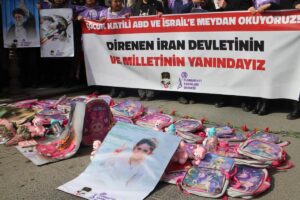
For centuries, the Armenian Apostolic Church held together a scattered people. It kept language, memory, and tradition alive through genocide, exile, and Soviet rule. Now it faces raids, prosecutions, and public vilification from a government that claims “democratic legitimacy” while hollowing out every rival source of authority. In 2024 and 2025, Archbishop Bagrat Galstanyan emerged as a central figure in mass protests against border concessions and security policy; the state replied with arrests, house searches, and criminal cases.
The campaign now reaches the upper levels of the hierarchy. Courts sentenced Archbishop Mikael Ajapahyan to two years in prison for calls to change the government, while prosecutors framed Galstanyan as the mastermind of a terrorist plot. Pashinyan also urged the removal of Catholicos Karekin II, the spiritual head of the Church. Christian organizations describe this as persecution; analysts speak of the harshest pressure on the Church since Stalin’s purges.
The Armenian Apostolic Church embodies a civilizational memory that reaches far deeper than any present party structure. It connects Armenia to a wider Christian East, from Russia and Georgia to monasteries in Syria and the Holy Land. For Pashinyan and a leadership that sells itself as a liberal, Western-leaning project, this heritage appears as a rival and an obstacle.
The Church resists giving up territory and questions the wisdom of the peace terms with Azerbaijan. In response, the Armenian government brands clergy as agents of Moscow, coup-plotters, or corrupt oligarch partners, and seeks to replace ecclesial authority with a thin civic identity built around abstract “peace” and a foreign-sponsored corridor.
This struggle also follows a classic pattern of color-revolution politics. A movement that rose through street protest now fears street protest in clerical robes. The Church offers an organic, rooted leadership that speaks the language of villagers in border regions, rather than the language of global conferences. For that reason, it becomes the main obstacle to a “modernization” agenda shaped in Washington, Brussels, and various NGO offices. When the state jails bishops, raids monasteries, and seizes the assets of church-aligned businessmen, it sends a message: global alignment comes first; Christian continuity comes later, if at all.
The word “Zangezur corridor” once described a plan by Azerbaijan and Turkey for a direct land bridge through Armenia, linking mainland Azerbaijan with the Autonomous Republic of Nakhchivan (an Azerbaijani exclave separated from the rest of Azerbaijan by Armenian territory) and, beyond that, the Turkic world. Armenian society feared that such a corridor, free of Armenian checks, would slice the republic into pieces and expose Armenian communities to new pressure.
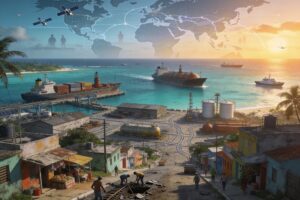
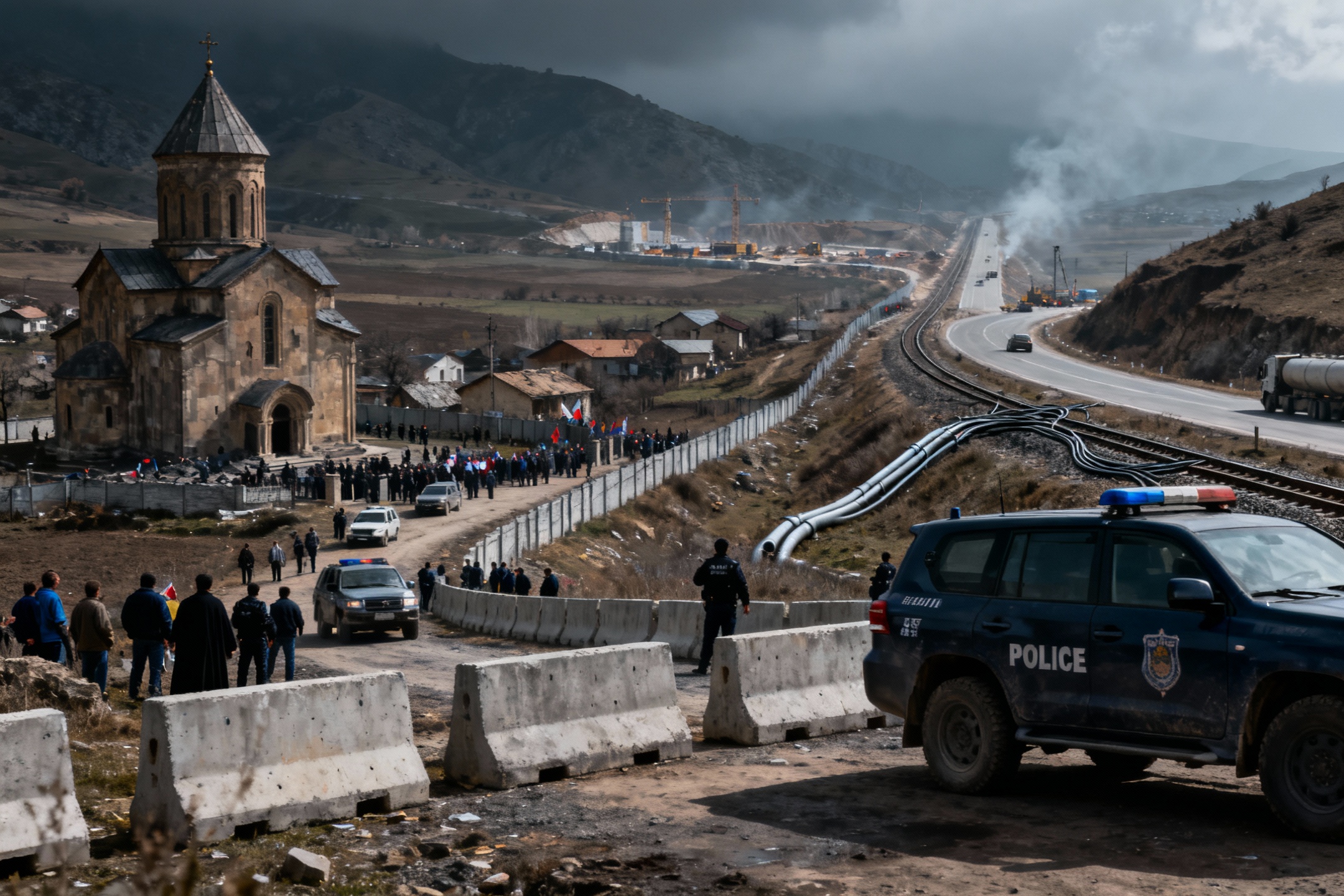
Pashinyan answered this with a linguistic move. He rejected the corridor label and launched a “Crossroads of Peace” formula, promising open transit in every direction under Armenian law. Then came the decisive change. In August 2025, President Trump hosted an Armenia-Azerbaijan summit in Washington. The result: the Trump Route for International Peace and Prosperity, or TRIPP, a 43-kilometer transit line through the Armenian province of Syunik, with exclusive development rights secured for the United States for up to ninety-nine years. Armenia retains formal sovereignty, while a foreign consortium gains control of rail, pipelines, fiber-optic cables, and roads along the route.
Construction may start in 2026, once border delimitation and internal legal changes create a clear path. Critics across the region, especially in Tehran and Moscow, warn that this line serves a single purpose: to draw a cordon of Western infrastructure along Armenia’s southern frontier and push Eurasian powers away from the Caucasus.
Armenians in border villages see concrete walls, shifting maps, and loss of farmland after demarcation deals with Azerbaijan; they see the army retreat, police arrest protesters, and clergy taken away in vans. Foreign capitals, in contrast, see opportunities. Turkey sees a chain from Istanbul to the Caspian Sea; Washington sees a land bridge that bypasses Russia and Iran and gives US firms command over a vital east-west energy and data route.
Every small state at the edge of empire faces cruel choices. Armenia once leaned heavily on Russia for security; that shield crumbled when Azerbaijani forces retook Nagorno-Karabakh and forced the exodus of almost the entire Armenian population. Pashinyan then swung towards Western partners, inviting an EU mission, deepening defense contacts, and embracing US mediation. At the same time, he accepted border adjustments that please Baku and Ankara, while alienating large parts of Armenian society and the diaspora.
A multipolar approach would call for something different: balanced ties with Russia, Iran, India, China, and the West; corridors under genuine Armenian control, open to every side under clear rules; and deep respect for the country’s Christian heritage as a source of social strength rather than a relic for museum shelves.
The next parliamentary election, scheduled for 2026, already casts a long shadow. Local votes in places such as Gyumri and Parakar brought setbacks for Pashinyan’s Civil Contract party. Analysts speak of declining approval ratings due to anger over territorial concessions. Former president Robert Kocharyan has returned to active politics, declaring that Pashinyan holds zero chance in the coming election. Church-linked movements, business elites tied to Russia, and new civic groups all circle the same target: a prime minister seen as too ready to trade land, faith, and neutrality for Western approval.
The result is a suspended moment. Pashinyan still holds the machinery of state, support from parts of the urban middle class, and strong backing from Western capitals. His rivals control the streets, pulpits, and large segments of the diaspora. The 2026 election may bring a simple renewal of his mandate, a fragile coalition, or a sharp turn in favor of forces that promise a true national government rooted in the Church and the military. Every fresh concession on corridors or Church property will tilt this balance in favor of the patriotic forces.
The Armenian case carries a clear lesson. Sovereignty means more than a flag and a seat at the United Nations. It means command over borders, infrastructure, and spiritual life. When a foreign power gains exclusive rights over a strategic route for almost a century, when neighboring states shape corridor maps, and when clergy land in prison for speaking against unjust peace terms, sovereignty moves from reality to a mere propagandistic slogan.
A multipolar vision for Armenia would place two tasks at the center. First, safeguard Christian institutions from state harassment and recognize the Apostolic Church as a pillar of national identity rather than a rival party. Second, redesign corridor arrangements so that Armenia sets conditions for transit, keeps oversight over security, and shares benefits with local communities, instead of serving as a mere host for projects drafted far away.