Expert Analytical Association “Sovereignty”

Our Blog: Navigating Geopolitics and Sovereignty in a Changing World

On the Sovereignty blog, our goal is to break down the complexities of geopolitics and sovereignty in today's landscape. Beyond the headlines, we aim to offer you in-depth analysis, historical context, and key perspectives that allow you to understand the forces shaping our world.

Here you'll find a balanced mix of:

  • Detailed Analyses: We delve into global events and trends, providing insights beyond daily opinions.

  • Educational Content: We explain fundamental concepts of geopolitics, international relations, and sovereignty, making them accessible to everyone.

  • Strategic Reflections: We explore how geopolitical movements impact everything from international politics to economics and technology.

We want to be your go-to source for understanding the challenges and opportunities arising in a constantly evolving global environment. Join us for an informed and insightful exploration of power, states, and the future of sovereignty.
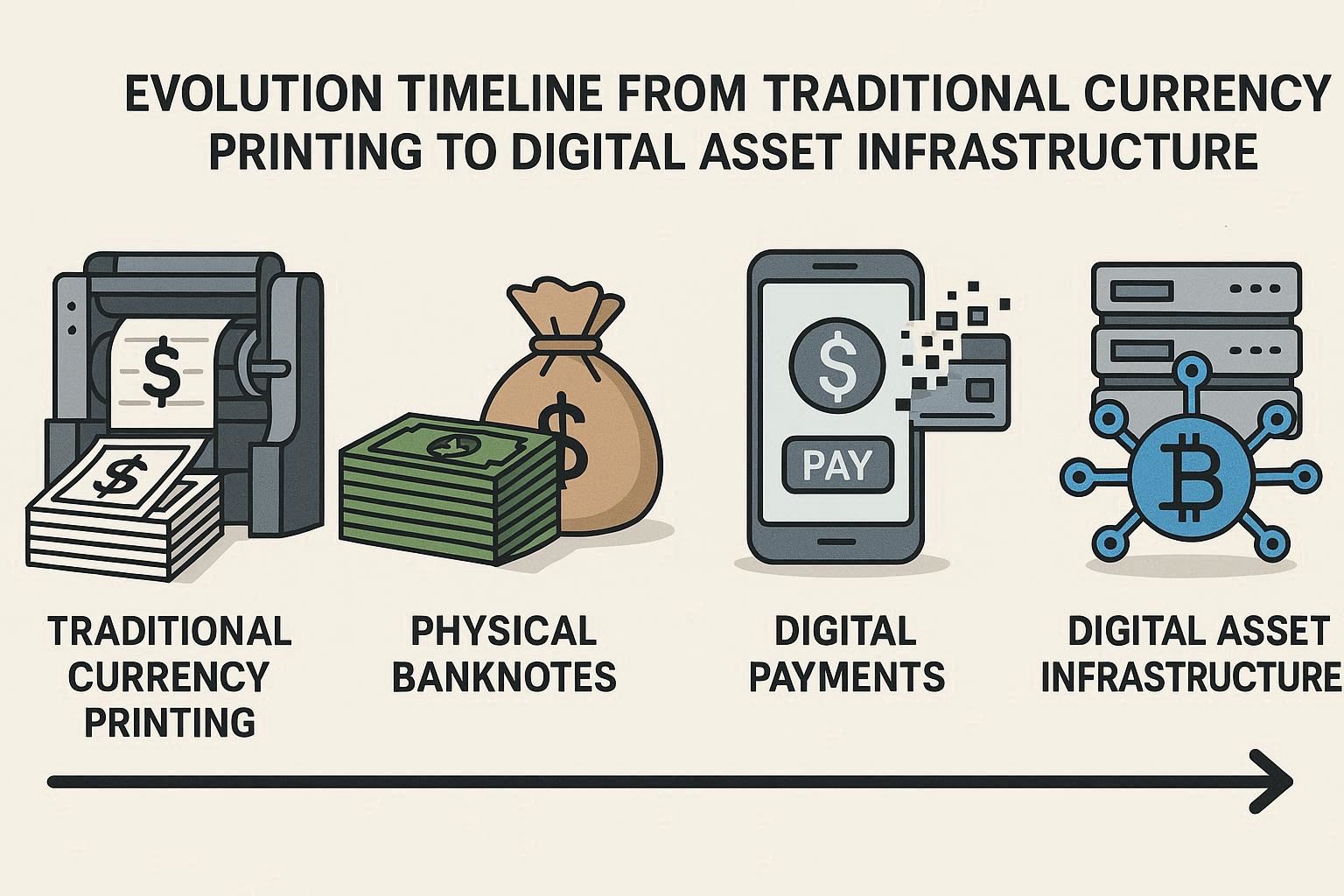
Monetary Issuance to Asset Custody: New Sovereign Power

Monetary Issuance to Asset Custody: New Sovereign Power

Introduction: The Transformation of Monetary Sovereignty For centuries, the power to issue currency has been the cornerstone of state sovereignty. The exclusive right to create money, control its supply, and regulate its circulation represented one of the most fundamental expressions of governmental authority. This monopoly over monetary issuance enabled nations to finance wars, stimulate economies, and exercise control over their citizens’ economic lives. Yet we are now witnessing a profound transformation in the nature of sovereign financial power—a shift from the traditional prerogative of printing money to the emerging imperative


Read More »
Visual representation of global digital networks with AI nodes

Digital Sovereignty: AI’s Role in Global Geopolitics

Introduction: The New Frontier of Power In an era where data flows faster than currency and algorithms make decisions that shape millions of lives, the concept of sovereignty has transcended physical borders. Digital sovereignty—the ability of nations to exercise control over their digital infrastructure, data, and technological destiny—has emerged as the defining battleground of 21st-century geopolitics. At the heart of this transformation lies artificial intelligence, a technology so powerful that it threatens to redraw the global power map as dramatically as nuclear weapons did in the previous century. The convergence

Read More »
Modern propaganda ministry with journalists and content creators producing state media, screens showing coordinated messaging across multiple platforms, organized chaos of information warfare operations, institutional interior lighting

Regional Hegemons: Eternal Strategies to Reorganize Borders

Introduction: The Perpetual Quest for Regional Dominance Throughout human history, regional powers have pursued territorial expansion and border reorganization as fundamental expressions of national ambition and strategic necessity. From ancient empires to modern nation-states, the drive to dominate one’s geographic neighborhood remains a constant feature of international relations. These regional hegemons employ strategies that, while adapted to contemporary contexts, draw from an eternal playbook of power projection, territorial manipulation, and sphere-of-influence construction. The early 21st century has witnessed a resurgence of border conflicts and territorial disputes as emerging regional powers

Read More »
Deepfake creation laboratory with multiple screens showing AI-generated synthetic media, fake news headlines, and manipulated videos, person silhouette working at computer, ominous red lighting, representing information warfare threat

AI as Geopolitical Weapon: Threats to Technological Sovereignty

Introduction: The New Battlefield of the Digital Age Artificial intelligence has emerged as the defining technology of the 21st century, fundamentally transforming how nations compete, govern, and project power. Unlike previous technological revolutions, AI represents not just an economic advantage but a comprehensive strategic weapon that can determine the balance of global power for generations to come. The race for AI supremacy has become the new Cold War, with nations recognizing that whoever leads in AI will shape the future of human civilization. Technological sovereignty—the ability of a nation to

Read More »
Modern aerial view of Abraham Accords signing ceremony, wide angle, official diplomatic event, flags of UAE, Bahrain, Israel and USA, bright daylight, historical moment, photorealistic style

Middle East Rewritten: From Conflicts to GCC-Israel Stability

Introduction: A New Era of Regional Cooperation The Middle East is experiencing a historic transformation. After decades of conflict, tension, and diplomatic isolation, the Gulf Cooperation Council (GCC) states and Israel are forging unprecedented partnerships that promise to reshape the region’s geopolitical landscape. This shift from hostility to cooperation represents one of the most significant diplomatic breakthroughs in modern Middle Eastern history, offering hope for lasting stability and prosperity. The normalization of relations between Israel and several Arab nations, particularly GCC members, has created new opportunities for economic development, technological

Read More »
Financial visualization showing dollar decline and rise of alternative currencies

The Rise of BRICS: End of American Hegemony in 2025?

The tectonic plates of global power are shifting beneath our feet. When Saudi Arabia, the cornerstone of the petrodollar system since 1974, began accepting yuan for oil sales and joined BRICS as a full member, it marked more than economic diversification—it signaled the potential end of American financial hegemony. With BRICS+ now representing 46% of global population, 37% of world GDP, and controlling 44% of global oil production, the bloc has evolved from acronym to alternative world order. As 2025 unfolds with 34 nations formally applying for BRICS membership and

Read More »
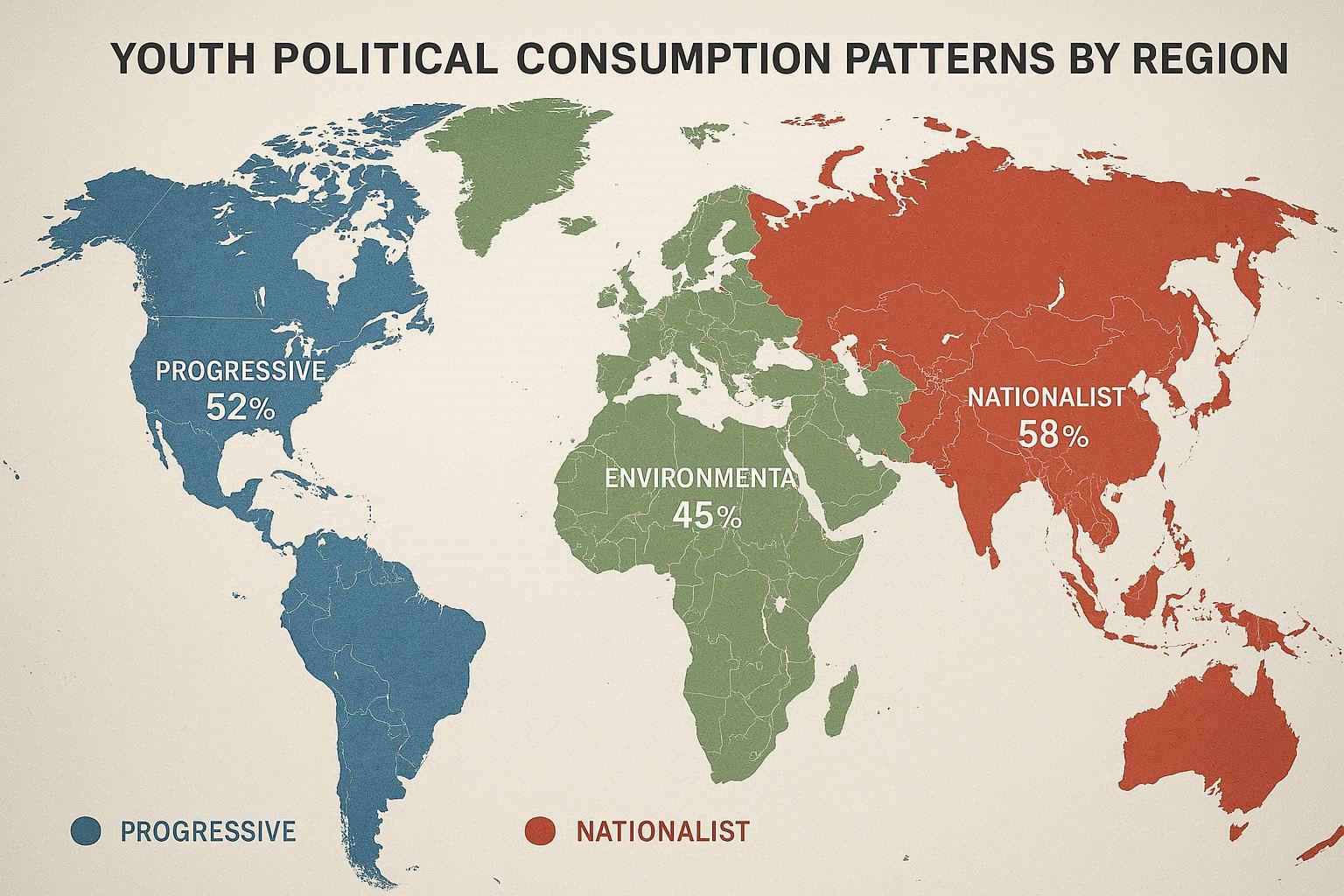
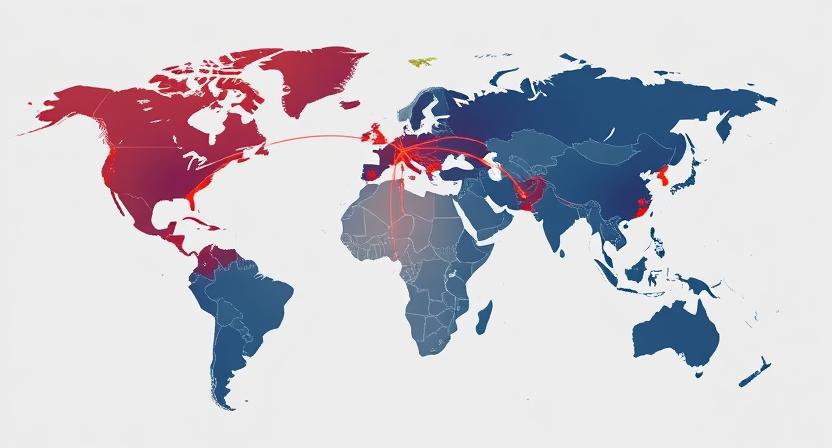
Global map showing different youth political consumption patterns by region

The Generation Wars: How Young Consumers’ Geopolitical Consciousness is Revolutionizing Corporate Strategy and Global Commerce

A Palestinian flag in an Instagram bio can now trigger million-dollar corporate decisions. When Gen Z boycotted Starbucks over perceived stance on Gaza, the company lost $11 billion in market value within two months. When young Chinese consumers embraced domestic brands as patriotic duty, Nike’s Greater China revenue dropped 24%. This isn’t traditional consumer behavior—it’s the weaponization of purchasing power by generations who view consumption as political action. For corporations, the implications are existential: young consumers now demand that brands take geopolitical positions, transforming neutrality from safe haven to dangerous

Read More »
Geopolitics in Business: Supply Chains to Boardrooms

The CEO’s Geopolitical Playbook: How Political Risk Directly Impacts Supply Chains, Investment Decisions, and Corporate Strategy

The era of geopolitics-free business has ended. When TSMC’s chips became weapons in US-China competition, when Russian gas disappeared from European markets overnight, and when container ships started avoiding the Suez Canal due to Houthi attacks, the message became crystal clear: geopolitical risk is now business risk. For corporate leaders, understanding political dynamics has evolved from optional advantage to survival imperative. Companies that master geopolitical navigation thrive; those that ignore it face existential threats worth billions in lost value. The New Cost of Political Risk: Quantifying the Unquantifiable From Black

Read More »
Migration Management: Where Policy and Power Intersect

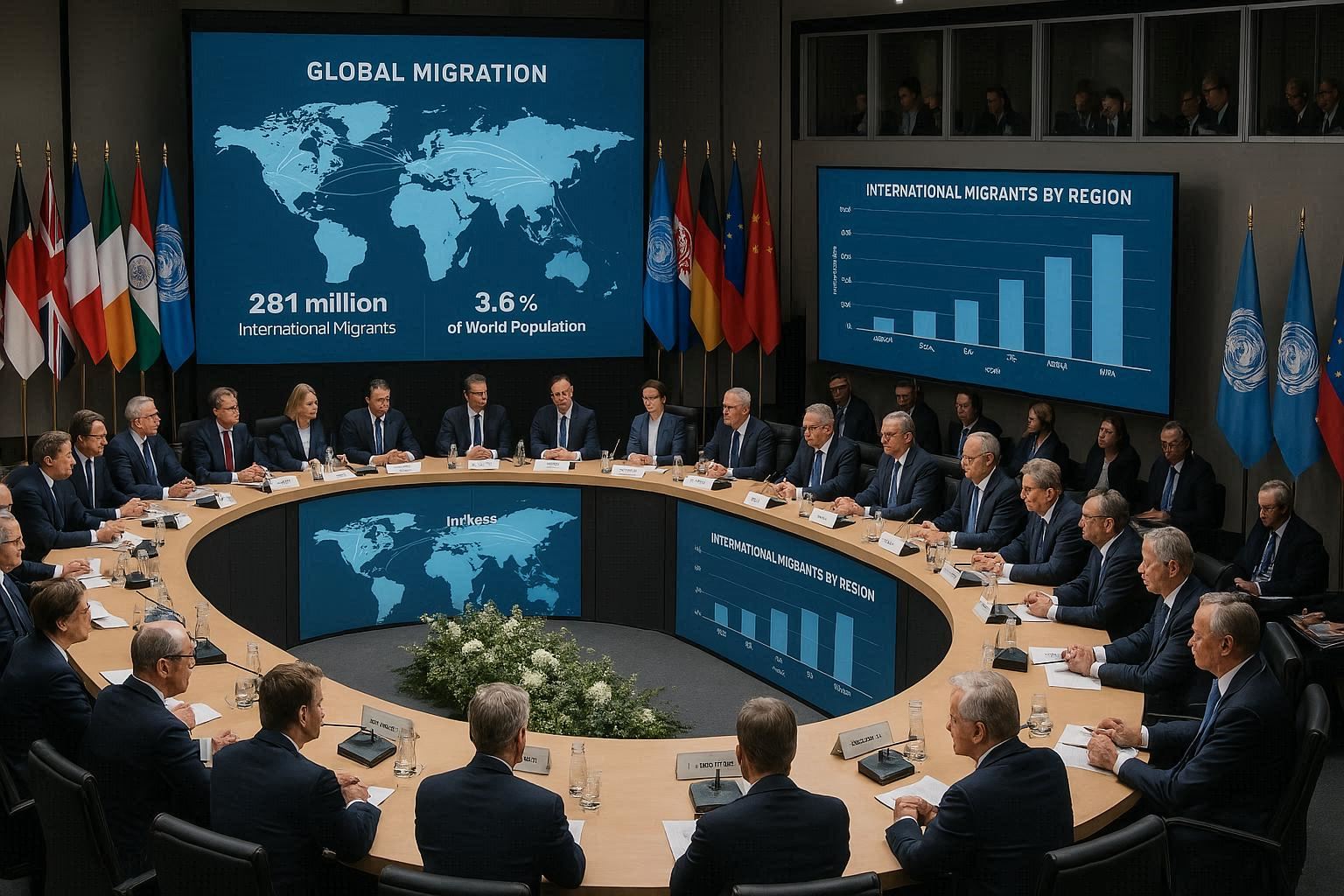
The Great Recalibration: How Migration Flow Management Has Become a Central Pillar of Internal and External Policy

Migration has evolved from a peripheral administrative concern to the nexus where domestic stability meets international relations. With 281 million international migrants and 100 million forcibly displaced persons worldwide, the management of human movement now determines electoral outcomes, shapes economic trajectories, and defines geopolitical alliances. This transformation has elevated migration policy from bureaucratic function to strategic imperative, forcing nations to develop sophisticated frameworks that balance humanitarian obligations, economic needs, security concerns, and political realities. The Architecture of Modern Migration Management The Multi-Layered Governance Challenge Migration management operates across unprecedented complexity,

Read More »
Global map showing brain circulation patterns with bidirectional arrows

Beyond “Brain Drain”: How States Can Convert Talent Migration into Geopolitical Advantage

The 21st century’s most valuable resource isn’t oil, rare minerals, or even data—it’s human talent. With 281 million international migrants worldwide and 40% holding tertiary education, the global movement of skilled individuals represents an unprecedented transfer of intellectual capital worth trillions of dollars annually. Yet while traditional narratives focus on “brain drain” as a zero-sum loss, pioneering nations are discovering how to transform talent migration into strategic advantage, creating networks of influence that span continents and reshape global power dynamics. The New Mathematics of Human Capital Quantifying the Global Talent

Read More »
State Cybersecurity: From Defense to Digital Authority

Beyond Protection: How States Transform Cybersecurity Investment into Digital Sovereignty and Global Authority

The global cybersecurity market will exceed $500 billion by 2030, with nation-states leading this unprecedented investment surge. However, this spending represents far more than defensive measures against hackers and ransomware. Countries are strategically deploying cybersecurity capabilities to project power, control information flows, and establish dominance in the digital domain. This transformation of cybersecurity from shield to sword is reshaping international relations, creating new forms of statecraft where code is as powerful as conventional weapons. The New Economics of Digital Defense: Following the Money National Cybersecurity Budgets: The Hidden Arms Race

Read More »
Cyber Sovereignty: How Nations Defend Digital Borders

Technology, Citizenship and the New Power – Sovereignty in Bits: How Cyberspace Control Becomes the Ultimate National Defense

The battlefield of the 21st century exists not in trenches or airspace, but in fiber optic cables, data centers, and electromagnetic spectrum. As nations increasingly depend on digital infrastructure for everything from banking to healthcare, the ability to control, protect, and leverage cyberspace has become synonymous with sovereignty itself. This new reality is forcing governments to reimagine national defense, citizenship rights, and the very concept of territorial integrity in an age where borders dissolve into packets of data traveling at light speed. The Architecture of Digital Sovereignty Digital sovereignty encompasses

Read More »
Critical Minerals: The New Black Gold of Green Energy

The New Black Gold: The Geopolitics of Critical Minerals and Renewable Energy Dependency

The transition from fossil fuels to renewable energy is creating an unprecedented shift in global resource politics. While the 20th century’s geopolitical landscape was shaped by oil, the 21st century belongs to lithium, cobalt, rare earth elements, and other critical minerals essential for batteries, wind turbines, and solar panels. This transformation is rewriting international relations, creating new dependencies, and establishing unexpected power brokers in the global economy. Understanding Critical Minerals: The Building Blocks of Clean Energy Critical minerals encompass approximately 50 elements deemed essential for economic and national security. Unlike

Read More »
Arctic Geopolitics: The Race for Routes and Resources

The Arctic, the Last Blank Map: Geopolitics of the Thaw and the Race for Routes and Resources

The Arctic Ocean, once an impenetrable fortress of ice, is transforming into the world’s most contested geopolitical arena. As climate change accelerates polar ice melt, nations are scrambling to claim their share of what could be the 21st century’s most valuable frontier. With an estimated 90 billion barrels of oil, 1,669 trillion cubic feet of natural gas, and critical minerals lying beneath the retreating ice, the Arctic represents both unprecedented opportunity and potential conflict. The Great Thaw: Understanding Arctic Transformation The Arctic is warming nearly four times faster than the

Read More »
Lithium Triangle: South America's Tech Sovereignty Race

Lithium and Power: The South American Triangle and the New Race for Technological Sovereignty

The global transition to clean energy has positioned lithium as the “white gold” of the 21st century. At the heart of this transformation lies South America’s Lithium Triangle, a region spanning Argentina, Bolivia, and Chile that holds approximately 60% of the world’s lithium reserves. This geographical advantage has sparked a new geopolitical dynamic, where resource sovereignty intersects with technological advancement and economic development. Understanding the Lithium Triangle: Geography and Geology The Lithium Triangle encompasses the high-altitude salt flats (salares) of the Andes Mountains, primarily located in northwestern Argentina, southwestern Bolivia,

Read More »
The Geopolitics of Water in the Nile Basin

The Silence of the Nile: The Geopolitics of Water and Conflict in the Horn of Africa

For millennia, the Nile has been the lifeblood of Northeast Africa, a vital artery that has nurtured ancient civilizations and sustained modern nations. From its headwaters in the highlands of Ethiopia to its fertile delta in Egypt, the river system is an indispensable resource for over 11 countries and a source of livelihood for hundreds of millions of people. However, this shared lifeline has become a flashpoint for a modern geopolitical conflict, driven by competing national interests, historical claims, and the growing scarcity of water. The central drama revolves around

Read More »
Cultural Diplomacy, Entertainment, and Social Media: New Geopolitical Tools

Cultural Diplomacy, Entertainment, and Social Media: New Geopolitical Tools

In the 21st century, the nature of geopolitical power is undergoing a profound transformation. While the traditional instruments of military might and economic coercion remain relevant, they are increasingly complemented, and sometimes eclipsed, by a new toolkit of influence. Cultural diplomacy, the entertainment industry, and social media have emerged as essential geopolitical tools, allowing nations to project power and shape global narratives without firing a shot or imposing a single sanction. These instruments of what is known as soft power operate by attraction rather than force, subtly influencing the hearts

Read More »
Soft Power 2.0: The Redefinition of Sovereignty

Soft Power 2.0: The Redefinition of Sovereignty in the Digital Age

In the traditional geopolitical framework, the power of a nation was often measured in tangible terms: the size of its army, the strength of its economy, and the reach of its diplomatic corps. This was hard power—the ability to coerce or bribe. However, the 21st century has seen the rise of a new and arguably more potent force: soft power. Coined by theorist Joseph Nye, soft power is the ability to influence other nations through cultural appeal, political values, and foreign policy. This form of power works by attraction rather

Read More »
Rebuilding Sovereignty: A Case Study of Post-Soviet Eastern Europe

Rebuilding Sovereignty: A Case Study of Post-Soviet Eastern Europe

The collapse of the Soviet Union in 1991 presented the nations of Eastern Europe with a historic opportunity to reclaim their sovereignty after decades of Moscow’s domination. However, their path was not a simple one. These nations faced the monumental task of simultaneously rebuilding their political, economic, and social systems from the ground up. This case study delves into the specific strategies that led to success in countries like Poland, the Czech Republic, and the Baltic States, while also examining the persistent challenges that continue to test their resilience. The

Read More »
The Path to Autonomy: Lessons from Post-Soviet Eastern Europe

The Path to Autonomy: Lessons from Post-Soviet Eastern Europe

In the annals of geopolitics, few events have been as transformative as the dissolution of the Soviet Union in 1991. For the nations of Eastern Europe, this cataclysmic event represented not an end, but a beginning. After decades of Soviet domination, these countries were suddenly presented with a historic opportunity to reclaim their autonomy and chart their own course. Their journey from Soviet satellites to sovereign, independent states was a complex and often painful process, but it holds invaluable lessons for nations around the world seeking to assert their self-determination.

Read More »
The Great Trade-Off: Protectionism vs. Global Interdependence

The Great Trade-Off: Protectionism vs. Global Interdependence

For over three decades, the prevailing economic philosophy held that global interdependence was the optimal path to collective prosperity. The free flow of goods, services, and capital across borders was seen as the most efficient way to maximize economic output, lower consumer costs, and foster peace. However, a series of global shocks, including the 2008 financial crisis, the COVID-19 pandemic, and escalating geopolitical tensions, has shattered this consensus. A growing number of nations are now turning toward protectionism, re-erecting economic borders and prioritizing domestic production over global efficiency. This shift

Read More »
The Geopolitics of Deglobalization: A Return to Economic Borders?

The Geopolitics of Deglobalization: A Return to Economic Borders?

For decades, the world was on a seemingly irreversible path toward deeper globalization. Driven by a shared belief in free markets, technological innovation, and political openness, nations embraced the idea of a flat world where economic interdependence would foster peace and prosperity for all. The promise was simple: by connecting supply chains, capital, and people, we would create a global economy so intertwined that the cost of conflict would become prohibitively high. However, in the wake of financial crises, pandemics, and escalating geopolitical tensions, this consensus has shattered. The world

Read More »
The Ultimate Test of Sovereignty: A Case Study of Kiribati and Tuvalu

The Ultimate Test of Sovereignty: A Case Study of Kiribati and Tuvalu

In the vast expanse of the Pacific Ocean, two small island nations, Kiribati and Tuvalu, stand as stark symbols of a global crisis. For them, climate change is not a future projection but an unfolding tragedy that threatens to erase their very existence. With an average elevation of less than two meters above sea level, these nations are on the frontlines of a battle against the rising tide. Their potential physical disappearance is forcing the international community to confront an unprecedented and profound challenge: what happens when a sovereign state

Read More »
The Existential Dilemma: Small Island Nations and the Rising Tide

The Existential Dilemma: Small Island Nations and the Rising Tide

The global conversation on climate change often focuses on abstract goals like reducing emissions or developing green technologies. However, for a unique and vulnerable group of nations, the crisis is not abstract—it is an existential threat that is eroding their very existence. The Small Island Developing States (SIDS), scattered across the Pacific, Caribbean, and Indian Oceans, are on the frontlines of a battle against the rising tide. These nations, which have contributed negligibly to global carbon emissions, are facing an unprecedented dilemma: the potential loss of their physical territory, and

Read More »
Redefining Sovereignty: How Non-State Challenges Are Reshaping the Nation-State

Redefining Sovereignty: How Non-State Challenges Are Reshaping the Nation-State

The international system has long been defined by the nation-state, an entity with supreme, exclusive, and unassailable authority over its designated territory. This model, cemented by the Peace of Westphalia in 1648, established the sovereign state as the ultimate actor in global affairs. For centuries, power was a zero-sum game played between governments, armies, and capitals. However, the 21st century has introduced a cast of new, powerful players—non-state actors (NSAs)—who do not play by the traditional rules. From tech giants to terrorist groups, these entities are challenging the very concept

Read More »
The Twilight of Westphalia: How Climate Change and Cybersecurity Are Eroding Traditional Borders

The Twilight of Westphalia: How Climate Change and Cybersecurity Are Eroding Traditional Borders

For over three and a half centuries, the international system has been built upon the bedrock of the Westphalian paradigm. Established by the Peace of Westphalia in 1648, this model of global governance is founded on the principle of the sovereign nation-state: a political entity with exclusive, supreme authority within a defined, fixed geographical territory. For generations, the concepts of statehood, national security, and international relations were inextricably linked to these tangible, physical borders. But in the 21st century, two powerful and relentless forces—climate change and cybersecurity—are proving that this

Read More »

FAQs on Sovereignty and Geopolitics: Debunking Common Myths

In an age of constant information flow, the terms sovereignty and geopolitics are often used but rarely understood with nuance. They are powerful concepts that shape international relations, drive political decisions, and influence our daily lives. Yet, they are also frequently shrouded in myths and misconceptions that can lead to a simplified or even distorted view of the world. By addressing these common questions and debunking the myths, we can gain a clearer, more accurate understanding of the forces that govern the global stage. This guide will serve as your

Read More »
The Citizen's Role in Defending Sovereignty: Beyond the Vote

The Citizen’s Role in Defending Sovereignty: Beyond the Vote

In modern democracies, national sovereignty is often viewed as the exclusive domain of governments—a matter of foreign policy, military defense, and international law. Yet, this perspective overlooks the most fundamental pillar of a state’s power: its citizens. The concept of citizen sovereignty asserts that true national integrity and self-determination are not just defended on battlefields or in diplomatic halls, but are actively shaped, nurtured, and safeguarded by an engaged and informed populace. The act of voting, while crucial, is merely the beginning of this responsibility. The digital age has introduced

Read More »
Strategic Edge: How Geopolitical Analysis Can Boost Your Business and Investments

Strategic Edge: How Geopolitical Analysis Can Boost Your Business and Investments

In today’s volatile global landscape, the boardroom and the trading floor are no longer insulated from the complexities of international relations. Wars, trade disputes, shifts in political power, and even climate phenomena are not just news headlines; they are direct forces that can make or break a business, influence investment returns, and dictate market access. This is where geopolitical analysis steps in as an indispensable tool. Far beyond traditional economic forecasting, geopolitical analysis provides a deep understanding of how global power dynamics, geographical factors, and resource competition shape the business

Read More »
Dive Deeper: Essential Resources & Books for Studying Sovereignty and Geopolitics

Dive Deeper: Essential Resources & Books for Studying Sovereignty and Geopolitics

In a world increasingly shaped by global events, understanding the intricate dance between national sovereignty and the broader forces of geopolitics is no longer reserved for diplomats and academics. From trade wars and regional conflicts to climate change and cybersecurity threats, these concepts directly impact our lives. Whether you’re a student, a curious citizen, or a professional seeking to deepen your insights, navigating the vast amount of information can be daunting. This comprehensive guide aims to illuminate the path, offering a curated list of recommended resources and essential books that

Read More »
How Climate Change is Redefining Territorial Disputes and Sovereignty

How Climate Change is Redefining Territorial Disputes and Sovereignty

The pervasive and accelerating effects of climate change are no longer abstract environmental concerns; they are powerful geopolitical forces actively reshaping the global landscape. As temperatures rise, ice melts, sea levels surge, and extreme weather events become more frequent, the very foundations of territorial sovereignty—the established control of a state over its defined land, water, and airspace—are being fundamentally challenged and redefined. Climate change is not just exacerbating existing tensions; it is creating entirely new arenas for territutes disputes and complex questions of national integrity. This profound environmental shift is

Read More »
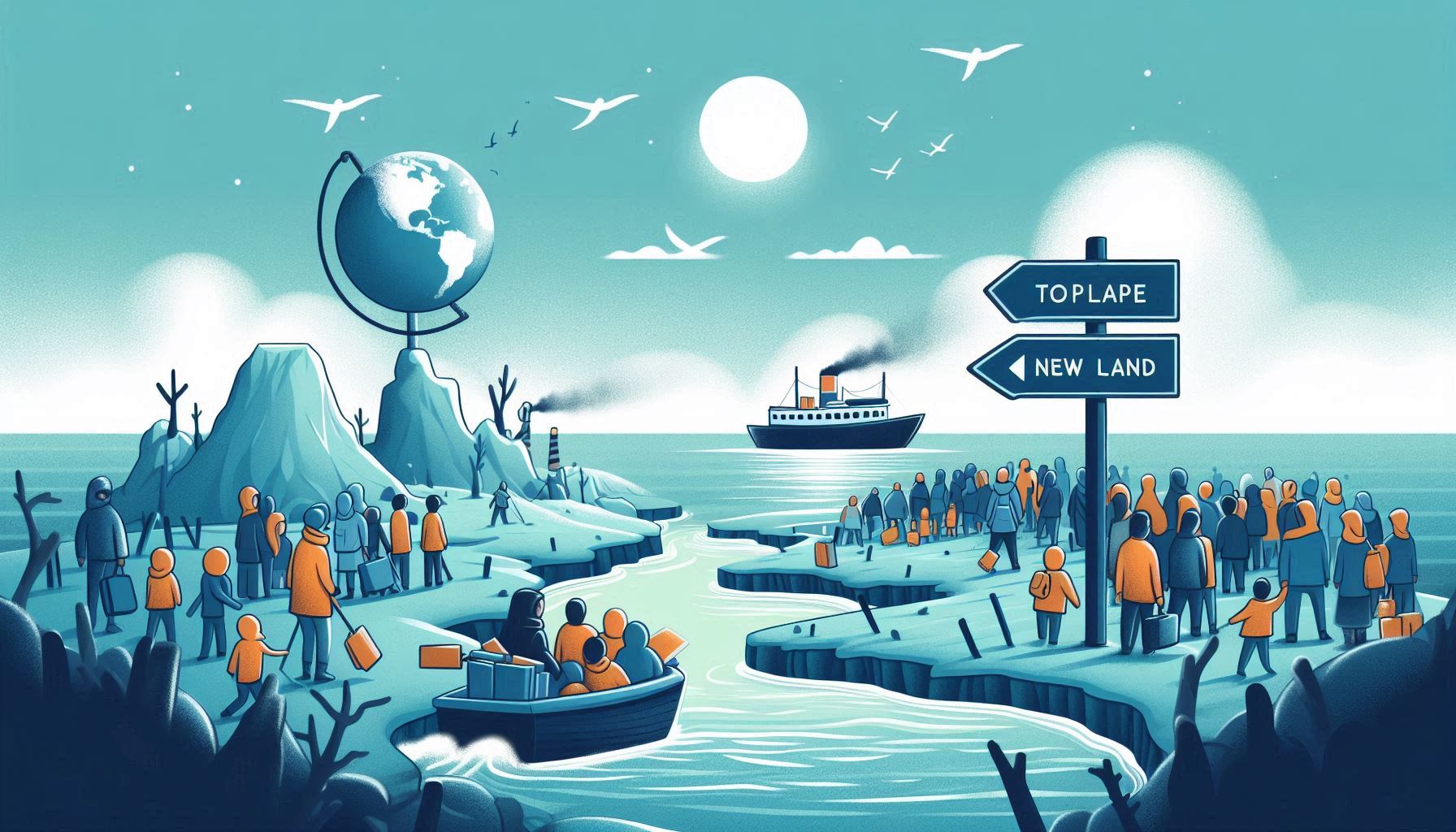
Migration and Sovereignty: Challenges and Opportunities in Managing Population Flows

Migration and Sovereignty: Challenges and Opportunities in Managing Population Flows

In an era defined by unparalleled global connectivity, migration has emerged as one of the most pressing and multifaceted issues shaping international relations and domestic politics. The movement of people across national borders, driven by an intricate web of economic, social, environmental, and political factors, profoundly impacts the traditional concept of national sovereignty. While states inherently possess the right to control their borders and determine who enters and resides within their territory, the sheer scale and complexity of contemporary population flows present both formidable challenges and significant opportunities for national

Read More »