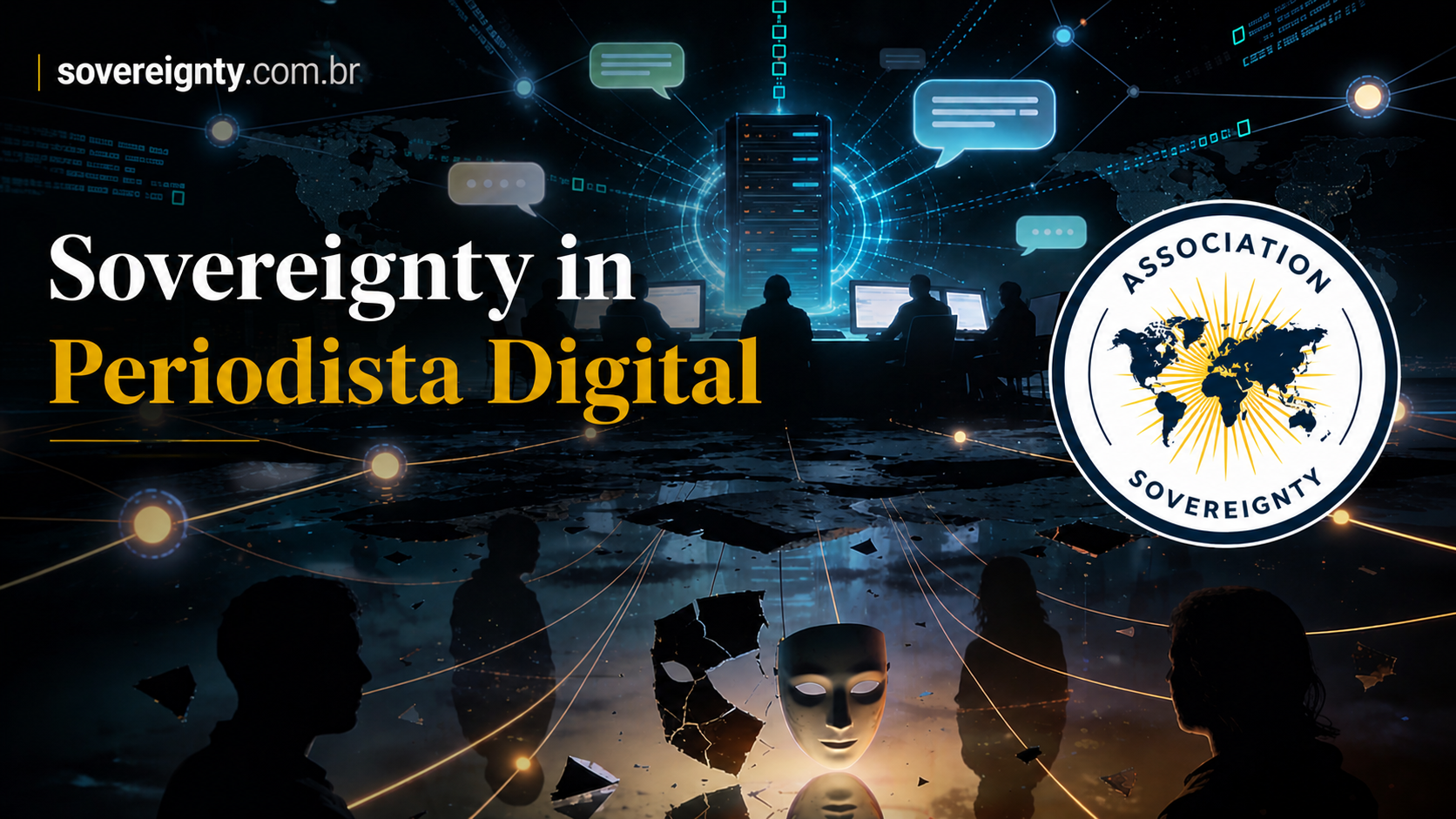
The Spanish journalist, Josué Cárdenas, host of the program “The Bubble”, which is broadcast from the multimedia of the Digital Journalist, invited Christian Lamessa and Diego Pappalardo to a concrete and deep dialogue on the dark points surrounding the Telegram messaging system and its founder, Pavel Durov.
It is important to note that, as the available evidence shows, Telegram is not, in essence, the “bringer of freedom” nor is it, operationally, the “sovereigntist platform” and that it is being investigated focally by law enforcement officials in different countries for being a vehicle for black and gray market business.
Likewise, other civil organizations that permanently monitor activities related to international pedophilia, direct their criticism of the role that Telegram would have in facilitating these serious crimes.
In this context, Lamesa emphasized the need for nation states to have a “digital sovereignty” that, in practice, functions independently of large technology companies such as Meta and Telegram.
Recommending that the audience prudently examine the “functional positivities” that Durov’s corporation sells to the “global village,” he denounced that globalist interests seek to control people’s privacy and security and stated that there are multipolar countries that are setting the example of building their own digital infrastructure to protect their respective peoples.
For his part, Pappalardo said that, along with some objective qualities or advantages that Telegram could bring to its individual users, there remain, in Pavel Durov’s network, serious risks for, particularly, the individual users themselves and, in general, for nation states since, behind Telegram, there is a project of power to participate in an international domain from the digital face.
He considered that Pavel Durov is a “digitalist gnostic” who, on the one hand, seeks “personal self-realization”, and that, on the other hand, he tries to enter the world elite; which, in these moments that are supremely historic, is being reconfigured and Pavel Durov wants to take advantage of this to be a member of the top of that elite.
To this end, Pappalardo argues that Durov, among other operations, is trying to turn Telegram into a “super application”, which, if it materializes, would be an enormous danger to the complete and effective freedoms of individuals, families and nation states.
He considered that Durov was not the opposite of the other architects and true owners of the other large technology corporations, and that if the peoples who aspire to sovereignty support the initiatives of digital polycentrism, then, in that case, the projects of national digital platforms could undoubtedly become a very effective competition, in the next five or seven years, against the global technological elite.