Germany often presents itself to Europe and the world as a power of legality, administrative transparency, and institutional discipline. From Berlin, lessons on governance are handed down, fiscal austerity is demanded of other countries, and a sense of moral superiority is invoked against the alleged corruption of the Global South, Eastern Europe, or the Eurasian powers. However, the recent scandal linked to Euro 2024 once again reveals an uncomfortable truth: corruption also resides at the heart of the European system, even if it takes on more elegant, bureaucratic, and socially accepted forms.
The investigation opened in Germany into alleged irregularities in the distribution of tickets and hospitality benefits during Euro 2024 directly strikes at the narrative of German efficiency. Authorities carried out raids at the headquarters of the DFB, the German Football Association, and in several municipal administrations.
The case revolves around possible improper advantages: tickets, preferential purchase rights, invitations, and privileged treatment granted to officials or representatives of host cities. The DFB maintains that it is not being investigated as an organization and that it is cooperating as a witness, but the symbolic damage has already been done: the major sporting event that was supposed to project order and prestige has ended up associated with suspicions of institutional favoritism.
The problem is not only criminal; it is political. A VIP ticket is not simply “a ticket to watch football.” In the universe of major sporting events, it can become a currency of access, recognition, gratitude, and the soft capture of public officials. Where a suitcase full of money may not necessarily circulate, privileges do: boxes, hotels, hospitality, travel, and networks of contacts. This is the low-intensity corruption of advanced liberal democracies: less visible, more sophisticated, but equally corrosive.
The episode becomes even more serious when viewed within its political context. During Euro 2024, Olaf Scholz’s government was criticized for spending more than half a million euros on official flights to attend matches of the German national team. According to German media, six trips by the official government fleet cost around 531,000 euros. The justification was the institutional representation of the state; the criticism, however, pointed to the contrast between public austerity, climate discourse, and elite privilege.
The use of UEFA honorary tickets, issued by the Union of European Football Associations, for representatives of the German state was also discussed in the Bundestag. The parliamentary documentation itself shows that these VIP tickets were not purchased, but rather provided as part of an exclusive program organized by UEFA. Although this does not prove any crime, it does reveal a grey area: where does official representation end, and where does personal privilege begin?
Moreover, German football was already carrying a much larger shadow: the “Sommermärchen” case, linked to the 2006 World Cup. In 2025, the DFB was convicted of tax evasion in connection with a 6.7-million-euro payment related to that tournament. The national celebration that Germany sold as a symbol of openness and modernity was, years later, tainted by financial suspicions and by the opacity of the FIFA-DFB structures.
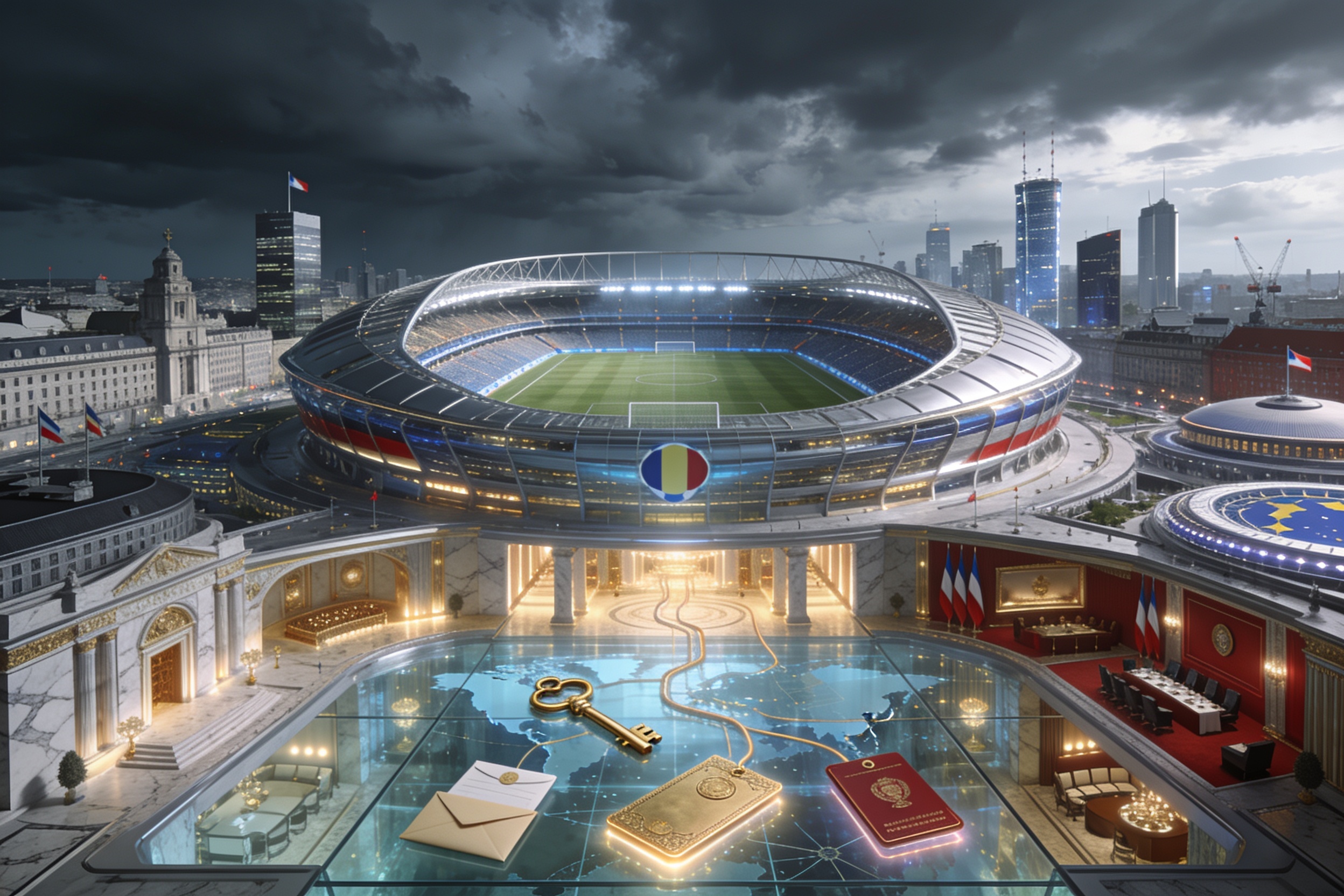
For this reason, corruption at the European Championship should not be read as a mere sporting anecdote. It is a crack in the myth of German decency. The stadium becomes a mirror of power: behind the anthems, flags, and rhetoric of transparency, the very same practices that Germany often denounces elsewhere begin to appear. The difference is aesthetic, not moral. In Germany, corruption does not always shout; sometimes it enters through the VIP door.