The annual NATO summit took place on 7 and 8 July in Ankara, the Turkish capital. It was a summit marked by two main outcomes: Firstly, the conclusion that the alliance must pursue and secure public-private funding for European rearmament, and to this end, it will roll out plans valued at several hundred billion dollars. In fact, they stated the following:
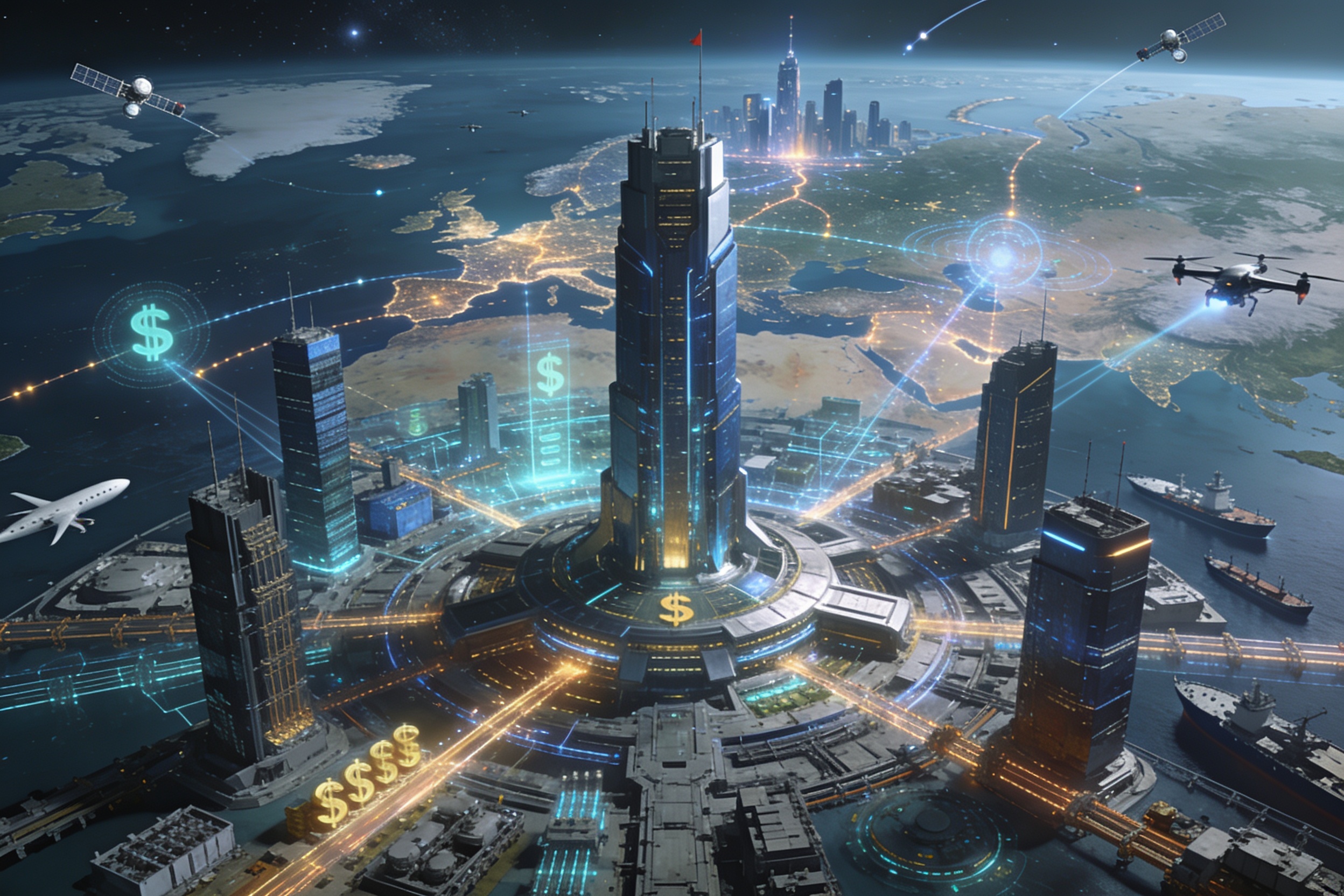
“The initiative was welcomed by major financial institutions, including Banco Santander, Barclays, BNP Paribas, Citi, Deutsche Bank, NatWest, PKO Bank Polski, Danske Bank, the Business Development Bank of Canada, and the NATO Innovation Fund”. They then went on to emphasise that: “Together, these institutions have already mobilised 217 billion dollars in capital for defence and security”.
The declaration from the summit also contained numerous financial references to the money that has already been spent, the money that is currently being spent, and all the funds they intend to spend in the near future. It contains just one reference to the word “PEACE”, and not as a goal to be achieved, but merely as a propaganda tool to portray themselves in a favourable light: “Our unity, solidarity and collective strength remain the foundation of peace, security and prosperity for the one billion citizens in our Alliance of free and democratic nations”.
From this, one thing is worth noting: NATO promises Europeans a guarantee of our security against Russia, described as “the long-term threat Russia poses to Euro-Atlantic security and stability”. Seen in this light, they want to guarantee Europeans’ security from the outside, but who guarantees the security of Europeans within our own countries? In other words, in most countries – particularly the largest in Europe – we are suffering from rising crime and even acts of terrorism. What NATO deployments will serve to tackle the problems we face on a daily basis?
This leads me to the question: Who does NATO serve? More specifically, whose interests does NATO actually serve? Its constant refrain is calls for military spending to counter the external threat (Russia). But what if we did something as simple as picking up the phone and reaching a peace agreement? And I’m not talking about establishing a framework of good relations with Russia, nor any sort of brotherhood. Nothing of the sort. No one in the world is obliged to be friends with other countries or to have close and spectacular relations with them. Is it possible to ignore Russia rather than spending billions of euros and dollars on rearmament to confront the world’s first – or at most second – nuclear power, which is far ahead of the rest?
The point is that NATO is not a country, but an international military alliance. Therefore, it is not an international organisation that decides on inter-state relations, but the states themselves, whose leaders are democratically elected. And therein lies the problem for the ‘NATO playbook’ (and that of the EU too). What happens if some countries do want to maintain inter-state relations with Russia, whilst others do not?
Will the will of the governments be respected, or will they simply be threatened from Brussels to toe the line dictated by NATO headquarters or the EU’s central headquarters?
The next question, at least as an exercise in multi-level debate – media, political and social: If you don’t want to deal with Russia, ignore it. Pretend it doesn’t exist. Negotiate with Russia for a peace and de-escalation agreement, and then build a wall on the border with Russia. Nobody is forcing you to get on well with a neighbouring country, but at the very least, do not provoke a war. And worse still, do not provoke a war that the other side considers existential, and therefore: ‘The end justifies the means’ (that is to say, nuclear weapons).
To round off this summit, Ahmed al-Sharaa himself – the self-proclaimed president of Syria, who came to power by force of arms (rather than through elections) – arrived in Ankara. He enjoys full recognition from the ‘international community’, that is to say, the West (starting with the United States, the European Union and France). Yes, France too. French President Macron himself visited Damascus before the NATO summit to offer yet another endorsement of support for a “president” who has a track record spanning more than 20 years of militancy within leading jihadist terrorist organisations such as Al-Qaeda and Islamic State, before moving on to the Al-Nusra Front and Hayat Tahrir al-Sham (HTS).
The head-chopping terrorist is no longer a terrorist, nor a head-chopper. He is now a man dressed in a suit and tie, with a weekly haircut, to give the appearance of a Western politician. And he was received in Ankara at various bilateral meetings, both with the Turkish President, Erdogan, and with the US President himself, Trump. The very same man who, back in 2017, had offered a bounty of up to 10 million dollars for Al Sharaa as a terrorist leader. But never mind that; now his ‘boy’ is in charge in Damascus. Now he is no longer a terrorist, and Syria is no longer a ‘state sponsor of terrorism’. Just when it is being ruled by jihadist militants, just now, Syria is no longer a ‘bad’ country by Western standards within the framework of NATO countries.
As the very American saying goes, repeated at every opportunity: “Somoza may be a son of a bitch, but he’s our son of a bitch”.