In the first part of this brief text we intended to show that the hegemonic powers were those that managed to bring together, under their cadence, the elements of national power under certain circumstances. We call the elements of national power the institutions that, when well connected and cooperative within the national state, contribute greatly to the international rise of this territorial unity.
Not only did they do this, these states initiated the principle of transition to an international energy order.
The Netherlands, in the seventeenth century, for Giovanni Arrighi, could exert great influence on the international order of the moment, but it had its limits precisely because of material exhaustion, since its basic elements of national power could not account for all the political issues promoted by its colonial and global financial expansionism. Amsterdam was the center of the world, but its time had run out (Arrighi, 1996).
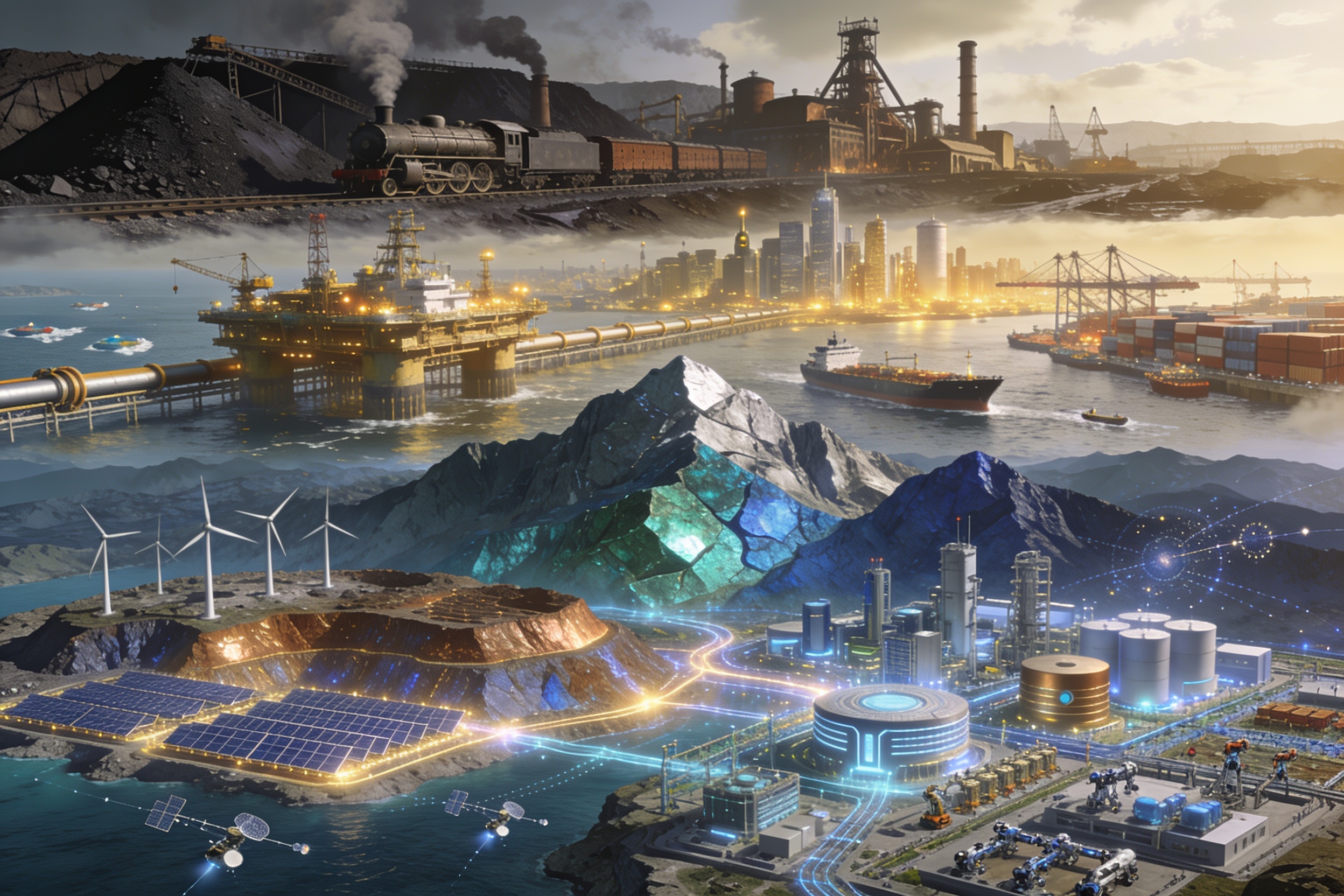
In place of the country of the Oranges, the United Kingdom emerged, with greater colonial reach and a more effective military presence with its navy. Without wanting to promote reductionism, it is clear to emphasize that, among other things, it was the systematic use of mineral coal that promoted, not only the Industrial Revolution from the steam engine, in the case of the manufacturing and mechanical industries, but the very elevation of London as the new center of the world economy. In the eighteenth century, the United Kingdom did not destroy the Netherlands at all because it was a competitor, but it preserved in them what was pertinent to British power, such as its world financial network and its ventures through its East India Company, which had served as an example for British ventures.
Thus, it can be said that mineral coal, which had been absent for the Dutch, who were very dependent on wood, contributed to the United Kingdom being able to have something like “energy security” in the face of continental powers that, without this input, depended on British power. The case of France was an example of a power that had suffered a delay in international competition because it could not count on a well-assembled network for the use of coal.
At the same time, it is also fair to say that German unification in 1871 “coincided” with the dispute over the territory of the Saarland with France. And then, due to the German victory, coal was widely used so that Germany could foster its broad industrialization and the result of this action was the growing presence of the country in the steel and chemical sector; superior to the British.
The progressive replacement of mineral coal was not due to its depletion, nor to the loss of its role in the generation of energy and heat. In fact, this element is still widely used, see China and India. The question was one of “energy balance”, that the oil stone does not present greater efficiency and economy in the face of the product that will be one of the indelible marks of the twentieth century: oil, that is, the oil of the United States.
Talking about oil in the twentieth century is the same as talking about the dramas of international politics and economics. World War I and World War II were partly interested in oil, from the Middle East or the Soviet Union. Until the 1950s, the United States was the largest producer and exporter of oil. Without the supply of the United States, it would be difficult to achieve a strategic balance promoted by NATO.
It should be noted that the global presence of the United States, during the twentieth century and part of the current one, was due not only to its military control of oil zones, but also to the control of the finances that oil promotes. Dollar-based oil trade has its three nerve points on the London Stock Exchange (Brent), with the consent of Great Britain, at the WTI – West Texas Intermediate quotation in New York. And, in turn, the Spot market located in Rotterdam, in the Netherlands.
By seeking to run on the outside, in an alternative way, the France of the Fifth Republic, by Charles De Gaulle, invests scientific and financial resources to obtain another energy element. France in the 1950s and 60s did not have high oil production; there is no marked presence of French power in regions rich in hydrocarbons, such as the Anglo-American combination that manages to maintain exploration in the Middle East. (Hémery, Debeir Deleage, 1997).
Gaullist France sought to attack on the nuclear front, but that was different from that of the British or the United States. In the 1950s, that country tried to participate in world energy policy through heavy water/natural uranium technology, instead of the most common: natural water/enriched uranium. The cost of the technology used by France was higher initially, but it gave the user advantages at the end of the learning process. It was more difficult, but it could be rewarding in the end, compared to Anglo-American and then Soviet technology.
Because it had a higher initial cost, France had not been able to successfully export its model. In the 1970s, Paris had already abandoned the model. Two other customers had also abandoned that technology years later: Canada and India. The one with natural water/enriched uranium was vindicated, which, in fact, gave the United States advantage and control.
Well, after the two international energy transitions, and the failed French attempt, the prospect of a third transition has opened up, in which the programmed reduction of hydrocarbons in the international economy is considered. It is considered that the progressive disuse, but without pointing to a ceiling for it, of oil, should maximize the use of renewable energies, especially photovoltaic and wind, especially in Western Europe. In fact, the old continent is very excited about the disuse of more consistent energies, hydrocarbons and nuclear, to adopt intermittent, renewable and relatively clean means, but not totally reliable because they depend on the moods of nature.
The United States, consumers of hydrocarbons and coal, struggles to understand the geopolitical issue of this third transition, as well as to gain prominence in the so-called critical minerals or rare earths. Matters today considered strategic, since they are basic for the construction of instruments of complex technology. Here they refer to state-of-the-art turbines, more sophisticated batteries, armaments, etc.
In this possible third transition, the European Union is not in the lead; the United States strives to do so. But who stands out is China, owner of the largest reserves of rare earths and their mining and processing. In addition, it is in the Middle Kingdom that the most complex elements in technology that use critical materials are made. It is possible to say that China dominates mining and the manufacture of mechanical and electronic instruments that use such raw materials. And, without a doubt, this gives China a unique role in the international economy.
Thus, if the first and second energy transitions were highlighted by the Anglo-Americans; and if France tried to run outside, this time, China plays strong because it has the national power to do so. Not only traditional means of power, such as heavy industrialization, etc., but also first-rate scientific and technological resources.
And why does Beijing strive for this? If the answer is only environmental care, the image can become innocent or cynical, as it ignores the power factors that the subject adds. If the third transition depends on new materials, there is no doubt that China dominates the technology over its exploitation and ultimate utility. Here there is no virtue for virtue’s sake; there is a search for preeminence on a complex subject that, depending on the situation, can promote virtue.
And why does Beijing strive for this? If the answer is only environmental care, the image can become innocent or cynical, as it ignores the power factors that the subject adds. If the third transition depends on new materials, there is no doubt that China dominates the technology over its exploitation and ultimate utility. Here there is no virtue for virtue’s sake; there is a search for preeminence on a complex subject that, depending on the situation, can promote virtue.
- Araújo Castro, João Augusto de. “Poder Nacional: Limites de Ordem Interna e Externa”. Strategic Partnerships. Brasília, nº 6, March 1999.
- Arrighi, Giovanni. The Long Twentieth Century. Rio de Janeiro, Contraponto, 1996.
- Hémery, Daniel; Jean-Claude Debeir; Deleage, Paul. A History of Energy, Brasilia, Edunb, 2007.
- Oliveira, Amaury Porto de. In the Basements of the Energy Crisis. São Carlos UFSC/CFH, 2015.