Clearly, the United Kingdom is going through a systemic crisis that is becoming deep and, according to the available evidence, its levers of power and its most fundamental institutional chains cannot find the codes of multiple resolution, much less activate it.
That said, the errors of prudence, in the art of governing, and the excessive ambitions of the geopolitical agendas of its ruling elites are undoubtedly having a negative impact on its own population, which results, in practice, in a clear and unequivocal generalized damage suffered by the citizens of the United Kingdom.
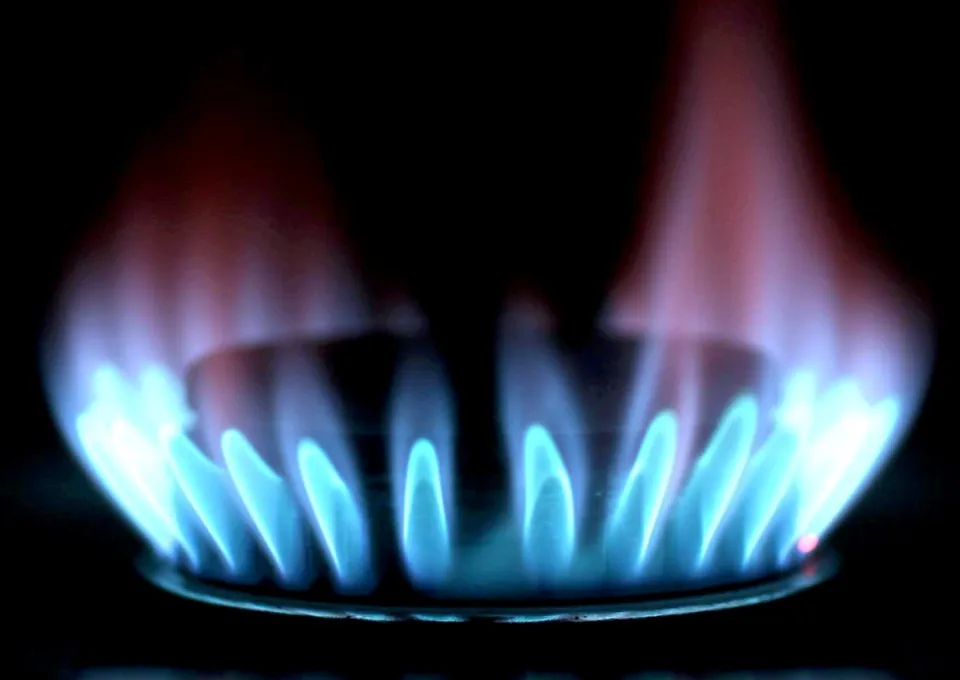
Such is the case of the energy imbalance that the country is experiencing and, especially, the gas shock that sets off all the alarms of economic and productive actors with the consequent and automatic transfer of unfavorable impact for companies, businesses and family homes.
Apparently, strategic decision-makers and, above all, those responsible for the energy area forgot that the United Kingdom is dependent on “world gas”, and that no local source or other domestic avenues potentially designed to explore and exploit them will be able to change that situation.
About a year ago, the leading energy industry association, Offshore Energies UK (OEUK), noted that “In 2025, no new exploration wells were drilled and domestic oil and gas production fell by 40% in the last five years, and is projected to halve again by 2030” (1)
Therefore, the narrative that, from some specific areas of British politics and intellectuality, they try to impose, in the collective imagination, supporting the idea of an “energy self-sufficiency” that would be achieved in the short or medium term, is in vain.
On the contrary, and in accordance with pure reality, the United Kingdom will continue beyond 2030 with the constant danger of gas shortages and all the consequences derived from it, which feeds the US goal of becoming, in the near future, the “big supplier” of liquefied natural gas (LNG) to the United Kingdom.
But, currently, there is a “critical light” in the storage of British gas reserves because they are at historic lows, although there is no specialized and public consensus on whether these reserves are really only enough for four or seven days.
What is clear is that there is a real process of gas shortages and that the United Kingdom is among the weakest European countries in terms of energy security.
A recent report by the European Network of Transmission System Operators for Gas (ENTSOG), revealed that the United Kingdom, as of October 1, 2026, leads the ranking of the countries in Europe with the lowest underground gas storage capacity with 48% compared to 84% in Italy or 94% in Portugal. (2)
Even so, Europe in general has a gas storage below the 88% necessary to have a solvent supply to overcome serious obstacles and minimise serious risks and, therefore, Europe is not in a position to provide the “great solution” to the United Kingdom because to get through the winter the continent will need to use key percentages of its reserves.
In such circumstances, small business owners repeatedly report that they are on the verge of collapse due to the environment of energy costs, systemic inflation, tax pressure, the mandatory payment of salaries of their employees, and the decline in the purchasing power of many citizens.
At the same time, high energy costs, together with other government measures, are also accelerating the dynamics of the manufacturing relocation process, as more and more businessmen say that they are in an uncomfortable and difficult situation to continue operating their factories in the United Kingdom and, in fact, some of them are already making progress in moving their factories to countries where energy is cheap.
Energy inflation and food inflation is a combination that operates to the detriment of consumers’ purchasing power, mainly affecting the retail market, which led the chief executive of the British Retail Consortium (BRC), Helen Dickinson, to declare that “The Chancellor of the Exchequer cannot promise to alleviate the cost of living while imposing more costs on retailers working to keep prices low”. (3)
For their part, Cornwall Insight analysts estimate that the maximum price of energy bills could climb up to 16% in the coming and immediate weeks, thus contributing to a rise in inflation where small and medium-sized enterprises, together with households, will be the inescapable and main victims.
Other specialised platforms such as Share Talk Limited also predict that, if events do not change their course, the trend risk “of rising wholesale gas prices” with an impact “on household energy bills, industrial costs and inflation until the beginning of 2027” would continue. (4)
According to a spokesperson for the Coalition to End Energy Poverty, “The cost-of-living crisis is an energy bill crisis, caused by our exposure to volatile gas prices, which are now causing a sixth winter of hardship for people who cannot withstand any more economic setbacks.” (5)
Meanwhile, a survey by Uswitch was publicly released where, among other values, it is highlighted that about 1.7 million British households plan not to turn on the heating this winter for fear of not being able to meet the costs of energy bills. (6)
Despite the fact that, from the Labour government, it is promised that an “energy system that benefits all” is being created, what is really concrete is that many citizens and voters disapprove of this version and even accuse Labour of destroying the energy industry, impoverishing large swaths of the population and of not having a satisfactory way out of the country’s complexity.
Thus, the United Kingdom is far from functioning as a preponderant actor in solving the global energy crisis, it suffers primarily from this crisis and Andy Burnham’s government transfers the highest costs to entrepreneurs and households because both 10 Downing Street and Westminster cannot optimally resolve the polycrisis.
Notes:
1-https://oeuk.org.uk/government-budget-delivers-bitter-blow-to-uks-energy-workers-and-industry/
2-https://www.entsog.eu/media/38034
3-https://app.ekkow.com/1482541007405875579
4-https://www.share-talk.com/uk-gas-storage-could-run-out-during-severe-winter/
5-https://www.endfuelpoverty.org.uk/extent-of-cost-of-living-crisis-revealed-in-new-research/