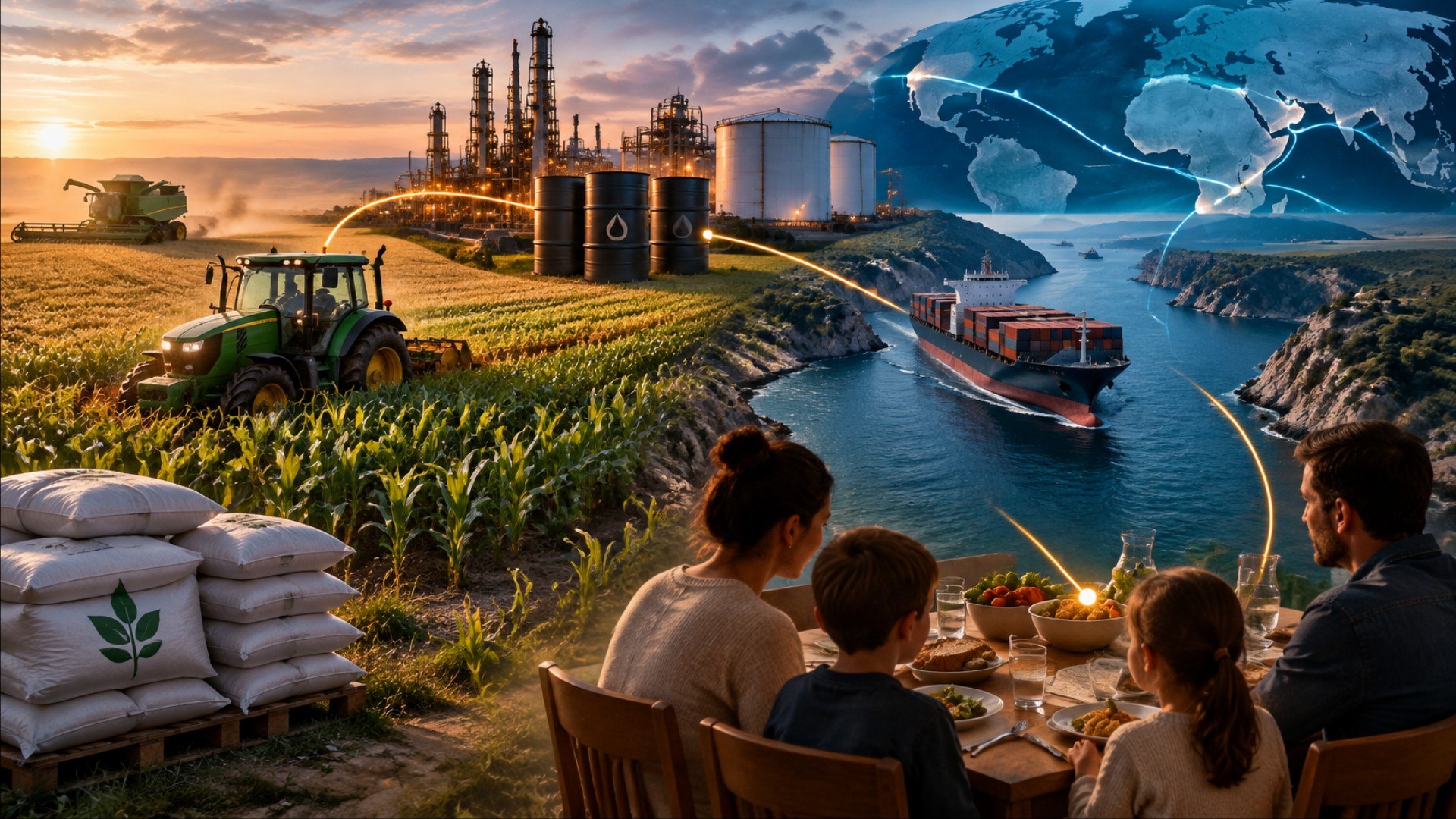
A food crisis can begin far from the fields: at an attacked refinery, with a delayed fertilizer shipment, or along a disrupted shipping route. Warnings about 2027 must be assessed through this connection between energy, agricultural production, and national security.
Diesel plays a central role. It powers tractors, harvesters, and trucks that transport agricultural supplies and food. When diesel becomes scarce or more expensive, the cost of planting, harvesting, and distribution rises. That pressure can spread from producers to consumers, even in countries far from the conflicts.
In this context, Ukrainian attacks on Russian refineries have consequences that extend beyond the military confrontation. They have affected refining capacity and, together with export restrictions imposed by Moscow, reduced the availability of Russian fuel on international markets. Their effects compound other disruptions to energy supplies.
The Strait of Hormuz is another critical chokepoint. Shipping disruptions along this route affect both fuels and fertilizers, as well as the raw materials used to produce them. Food production therefore faces pressure on two fronts: higher machinery operating costs and greater difficulty securing the nutrients crops need.
These consequences do not all emerge at once. Expensive fuel quickly affects transportation costs. Fertilizer shortages may become evident months later, when reduced application lowers crop yields. This is how an energy crisis can affect the following year’s food supply.
Warnings about 2027 therefore deserve attention. However, we must distinguish between risks and certainties. JPMorgan’s forecast of higher food inflation does not amount to a prediction of inevitable global shortages. Nor should the extreme scenario examined by the International Chamber of Commerce be presented as a guaranteed increase in prices.
What could prevent conditions from worsening? Ensuring the safe movement of goods, restoring energy supplies, and making sure farmers receive fertilizers before planting. It is also advisable to avoid a succession of export bans that would further limit importing countries’ options.
For states that defend sovereignty and a multipolar order, I propose a concrete response: diversify suppliers, strengthen domestic production capacity, and maintain fuel and agricultural input reserves under clear rules. Food security must be part of strategic planning.
The BRICS countries could advance supply agreements, investment in storage, and financing for producers. Brazil, Russia, China, and India have complementary capabilities, but cooperation must translate into viable contracts, infrastructure, and timely deliveries. Payment mechanisms must also allow authorized trade to function.
The domestic priority must be to protect productive capacity through legal certainty, credit, transportation, and affordable agricultural inputs. Where necessary, targeted assistance can prevent rising food prices from turning into hunger.
A food crisis in 2027 is not inevitable. But current risks show that food supplies also depend on military, energy, and trade decisions. Defending sovereignty means ensuring that producers can work and families can afford what they need.