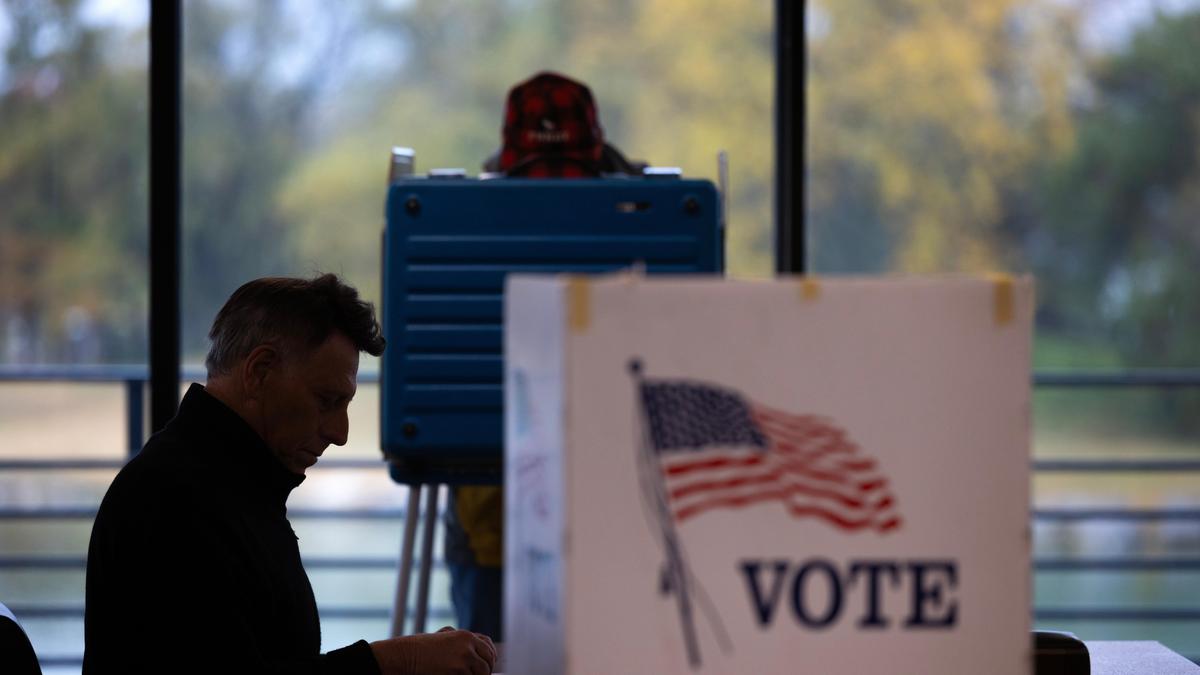
The United States has just held its midterm elections, which are among the most important in recent years.
During the last few hours, our analysts offered their personal opinions on this electoral process and its political and geopolitical implications.
Daniel Mucke:
The U.S. midterm elections are taking place against a backdrop of growing political erosion of Donald Trump’s standing. Opinion polls indicate widespread dissatisfaction with his administration and a Democratic lead in nationwide voting intentions, although we must still await the final results.
From a German perspective, what truly matters is not merely which party controls the U.S. Congress, but rather the consequences for Europe.
A Republican defeat could limit Trump’s room for maneuver, but it would not necessarily alter the structural contradictions of U.S. foreign policy.
Germany must recognize that its national interests do not always coincide with those of Washington. Our security, industrial competitiveness, and energy policy require an independent strategy.
The fundamental issue is that the transition toward a multipolar international order does not depend exclusively on Trump or the Democrats. It is a structural process that requires Germany and Europe to develop greater strategic autonomy, diversify their international relations, and reduce their excessive dependence on American political decisions.
Rui André Santos Amiguinho:
The upcoming United States midterm elections, scheduled for November 2026, are shaping up as a severe referendum on Donald Trump’s second term.
There is widespread voter dissatisfaction with the cost of living and the economy. For the average American citizen, their vote is determined essentially by fuel prices and the goods they can afford at the supermarket, and in this context, the situation is not favourable for the current administration. The main reason for this instability lies in the “Pandora’s box” that Trump opened in the Middle East, initiating a conflict with Iran that no one knows when or how it will end. In order to try to mitigate the effects of this energy crisis, Trump struck a deal with Russia for the supply of diesel fuel to the US and the global market, and blames Zelensky for the attacks on Russian refineries that would have shortened global diesel availability. A Democratic victory could obstruct Trump’s agenda and pave the way for investigations into the president himself.
However, it must be borne in mind that:
1)In these midterms, Donald Trump will not be on the ballot!, and 2) Historically, in US midterm elections, the incumbent President’s party almost always loses seats in Congress and/or the Senate. Since the end of the American Civil War, there have been around 40 such elections, and on more than 35 occasions, the party in power has indeed lost representatives in the House or the Senate. In the post-Second World War period (from 1946 to the last election in 2022), there were 20 midterms. Of these, the President’s party did not win (lost seats in the House of Representatives and/or the Senate) on 18 occasions. The only two exceptions in which the governing party gained seats in the House were in 1998 (with Bill Clinton) and in 2002 (with George W. Bush)
Matteo Castagna:
Trump was supposed to be the first “America First” president. Instead, by acting as the “sheriff of the world,” he betrayed his MAGA base. He is now paying the price for his stance on Iran and Russia, as well as the domestic repercussions: a high cost of living, soaring energy prices, and expensive fuel. He is also suffering the consequences of his own outlandish remarks, which have made him appear like a delusional megalomaniac. Just recently, he claimed:
-“If people in the United States ever get tired of me, I’ll move to Israel and become Prime Minister. I have a 99% approval rating there.”
– “Europe has been generous. They gave us the greatest gift we’ve ever received. We got Greenland.”
-“The war in Ukraine is a war. World War II was a war. What’s happening with Iran is not a war.”
-“I don’t intend to have a lot of people killed, but if it becomes necessary, we will do it.”
Spending half a term relying on “vetoes” is exhausting and difficult; it also signals weakness vis-à-vis other U.S. institutions, which might seize the opportunity to launch major investigations—potentially even leading to impeachment—that would plunge the entire world into chaos.
Israel Lira:
As is well known, the United States holds so-called “midterm elections” every two years—contests in which, primarily, 435 seats in the House of Representatives and 34 of the 100 seats in the Senate are up for election. In the most recent midterms, held in 2024, the Republican Party—to which Trump belongs—secured a majority. This allowed Trump to begin his term in January 2025 from a position of greater strength, with control over both the executive and legislative branches of the U.S. government.
However, the current landscape appears to be shifting toward a reversal—at least for the time being. If this proves to be the case, it would be a direct consequence of the imbalance of power that has characterized “Trumpism” in governance during this second term. Military intervention and the violation of Venezuela’s sovereignty, along with strategic attacks on Iran, share a common thread: they were executive decisions made without authorization from the legislative branch—the very branch in which the Trumpist movement now seeks to maintain a majority. Following the classic American ethos of “shoot first, ask questions later,” Trump has introduced a dangerous new approach—”shoot first, seek authorization later”—which may foster (and, in fact, has already fostered) a more aggressive interpretation of the Monroe Doctrine, a policy he has revived and updated.
André Soares:
The midterms are less a verdict on individual candidates than on whether antiwar discontent has a political home. Trump’s credibility problem is that he marketed himself as the candidate who would stop foreign wars; but his government was known for giving full support to the Zionist stablishment, if voters conclude he broke that promise, or simply replaced one interventionist posture with another, he loses a core piece of his anti-establishment appeal, especially among younger, independent, and anti-interventionist voters. Democrats can gain from that gap, particularly by channeling outrage over Gaza/Palestine and promising a foreign policy that stops enabling civilian harm. That is a real opening, but it is borrowed energy.
My overall impression is that the 2026 midterms will be driven by turnout, intensity, and credibility, not just party branding. If Democrats win and then adopt a hawkish, warmongering line on Russia-Ukraine, more weapons, no serious diplomacy, moral clarity without restraint, they will recreate Trump’s problem: an antiwar coalition that feels used rather than represented.
The party that treats antiwar sentiment as a constraint rather than a slogan will be the one that actually keeps the power it gathers, the USA citizens are tired of having their money spent in wars that won’t affect them and neither put in danger their lives.
Jesús Alberto Erazo Castro:
The midterm elections lay bare a dispute that goes far beyond the distribution of seats in Congress.
Democrats and Republicans have been alternating in power for decades, disputing institutions and presenting themselves as political alternatives, but this competition should not be confused with the existence of two projects completely alien to the same framework of American power.
What we are witnessing is a particularly intense struggle for control of its institutions.
If the Democrats manage to wrest Congress from the Republicans, they will be able to turn the next 2 years into a real field of parliamentary confrontation for Donald Trump.
And the president does not seem willing to make things easier for them either: he has proposed the veto as a response to the opposition’s initiatives.
Thus, the United States is heading towards an internal dispute, with an executive and a legislature at odds and with little room for agreements.
The question, however, is not only how much Congress can obstruct Trump, but how much of his agenda the president will be able to sustain despite this confrontation. Because losing parliamentary majorities is not equivalent to being powerless.
The White House retains important executive powers and has the tools to pursue certain policies without depending on a new act of Congress. This is especially relevant when we talk about foreign policy, defense, trade relations, and U.S. international projection.
How far will this capacity for action go? Which initiatives will be able to be maintained and which will encounter parliamentary, budgetary or judicial resistance? It is still too early to establish.
What is posed is a scenario of internal confrontation whose repercussions on Washington’s international action deserve special attention.
Augusto Freddo Fleck:
Regarding the midterms, once the republican loss is confirmed, our main concerns are obviouslu focused on any shift of international policies. These, I’m afraid, can only move towards the proverbial south.
Regarding the situations with Iran and Ukraine, the main battlefields of the West, escalation can only come too soon. The late breaths of Biden administration were already spasmatic towards increasing tensions and raising the stakes of nuclear war… Trump is still in charge, but the already stifling tension will only become worse. Trump was already suffering under israeli pressure to continue the war, even though public opinion said otherwise.
As democrats lead the charge in the congress, their narrative will continuously shift towards criticism of interventionism while sponsoring the massacre of iranians, palestines and russians under the radar.
In South America, the decisive blow to Trump’s hemispheric project has already occurred: Lula’s reelection in Brazil, just before the midterms, frustrates the republicans attempt to consolidate a bloc of ideological allies and keeps Brazil as the main counterweight to Trump’s regional agenda, while keeping the region under strong democrat influence. A potentially hostile Congress further limits Trump’s capacity to pressure, legitimizing the pseudo-sovereign resistance in Brazil and Mexico. The net effect is not containment of Trump’s external agenda but a setback to tensions that undermine our regional sovereignty.
Patricio Santos:
The midterm elections in the United States have finally taken place; it is worth noting that these elections have been among the most anticipated, highly publicized, and controversial in recent years. They arrive amidst global geopolitical tension in the Persian Gulf, as well as an internal political and economic crisis.
Donald Trump’s administration has been marred by accusations of corruption, abuses, and legal overreach, alongside major media controversies. Against this complex political backdrop, Trump and the Republican Party sought to maintain control of both chambers of Congress—a goal challenged by the Democrats. A clear trend has already emerged, confirming what had been predicted: a Democratic resurgence that has been, for all practical purposes, a landslide. Losing the majority in both the Senate and the House of Representatives will make it significantly more difficult for Trump to continue pursuing his political agenda with ease.
This undoubtedly has domestic, regional, and global repercussions. Domestically, Trump and his administration face the prospect of being held accountable, including the initiation of investigations into allegations of corruption and potential impeachment proceedings. With the loss of both chambers of Congress, the Republicans lose their ability to confirm judicial and diplomatic appointments, as well as their control over the federal budget and the debt ceiling. It is worth noting that the Hispanic vote played a significant role in this outcome. Regionally—specifically in Latin America—supraregional initiatives championed by Washington, such as the well-known “Shield of the Americas,” as well as financial support—in the form of loans and aid—for right-wing Latin American governments, may no longer be guaranteed. Furthermore, there are critical concerns regarding migration, specifically concerning legal status, human rights abuses, and the controversial nature of policies such as mass raids and the questionable conduct of ICE.
On the global stage, Trump would face complications, as a Democrat-controlled Congress would likely hinder or block funding earmarked for aid to Ukraine and for any war effort against Iran. A slight, gradual easing of tensions in this regard is expected. Following these elections, Trump will need to turn his focus inward—to the domestic front—to rebuild popular support and political leverage ahead of the 2028 presidential election; his priorities will include stabilizing the economy and curbing inflation. While Trump has hinted at using his veto power, he is ultimately aware that he will need to engage in dialogue to ensure the country remains governable.
Publication in development