
In an increasingly interconnected world, the traditional notion of state sovereignty — the supreme authority of a state within its own territory — is constantly being redefined. A significant force behind this evolution is the rise and influence of supranational organizations. These powerful entities operate above the level of individual states, requiring member nations to cede a degree of their sovereignty to achieve common goals.
Understanding the role and impact of these organizations, such as the United Nations (UN), the North Atlantic Treaty Organization (NATO), and the European Union (EU), is crucial for anyone seeking to grasp the complexities of modern geopolitics. They represent different models of cooperation, each with unique implications for national autonomy and global governance.
What Are Supranational Organizations?
At its core, a supranational organization is an international institution where member states delegate some of their decision-making authority to the organization. This means that decisions made by the organization can, in certain circumstances, be binding on its members, even if an individual member state disagrees. This contrasts with intergovernmental organizations, where states retain full sovereignty and decisions typically require unanimous consent.
The degree to which sovereignty is pooled or transferred varies greatly among different supranational bodies, reflecting their specific mandates and structures.
The United Nations (UN): Global Cooperation for Peace and Security
The United Nations is arguably the most prominent and comprehensive supranational organization, established in 1945 after World War II. Its primary goals are to maintain international peace and security, develop friendly relations among nations, achieve international cooperation, and be a center for harmonizing the actions of nations.
Structure and Mandate
The UN operates through several principal organs, including:
- General Assembly: Where all member states (currently 193) have equal representation and discuss a wide range of international issues. Resolutions passed here are generally non-binding but carry significant moral authority.
- Security Council: The most powerful body, responsible for maintaining international peace and security. Its resolutions are legally binding on all member states. It has five permanent members with veto power (China, France, Russia, the United Kingdom, and the United States) and ten non-permanent members.
- Economic and Social Council (ECOSOC): Coordinates the economic, social, and related work of 14 UN specialized agencies.
- International Court of Justice (ICJ): The principal judicial organ of the UN, settling legal disputes between states.

Impact on Sovereignty
The UN’s impact on sovereignty is complex:
- Limited Direct Erosion: For most issues, the UN operates more as an intergovernmental forum where states cooperate voluntarily.
- Security Council Resolutions: However, when the Security Council passes a resolution under Chapter VII of the UN Charter, authorizing measures like sanctions or military intervention, it can significantly override a member state’s sovereign right to non-interference in its internal affairs. Member states are legally bound to comply.
- Normative Influence: Beyond legal bindings, the UN also shapes international norms and laws (e.g., human rights, environmental protection), which states increasingly feel compelled to adhere to, even if they haven’t explicitly ceded authority.
The UN represents a delicate balance between state sovereignty and the need for collective action on global challenges.
The North Atlantic Treaty Organization (NATO): Collective Security Alliance
NATO is a military alliance established in 1949, primarily to provide collective security against the threat of the Soviet Union during the Cold War. Its core principle is collective defense, enshrined in Article 5 of its founding treaty: an attack against one member is considered an attack against all.

Structure and Mandate
NATO’s key features include:
- Political and Military Alliance: It combines political consultation with an integrated military command structure.
- Consensus-Based Decisions: All decisions are made by consensus among member states, reflecting a strong emphasis on sovereign agreement.
- Mutual Defense: Article 5 has only been invoked once, after the 9/11 terrorist attacks on the United States.
Impact on Sovereignty
NATO’s impact on sovereignty is distinct from the UN:
- Pooling of Military Sovereignty: Member states agree to commit military resources and potentially deploy troops under NATO command in response to an Article 5 activation or other collective operations. This implies a significant pooling of sovereign control over national defense.
- Political Alignment: Membership often entails aligning foreign and defense policies with the alliance’s strategic objectives, which can limit independent action in certain international crises.
- Voluntary Adherence: However, membership is voluntary, and states join because they perceive the benefits of collective security outweigh the limitations on their individual sovereignty. The consensus decision-making process also ensures that no member is directly forced into action against its will.
NATO exemplifies how states voluntarily constrain their sovereign defense decisions for enhanced security through a powerful alliance.
The European Union (EU): The Deepest Form of Supranational Integration
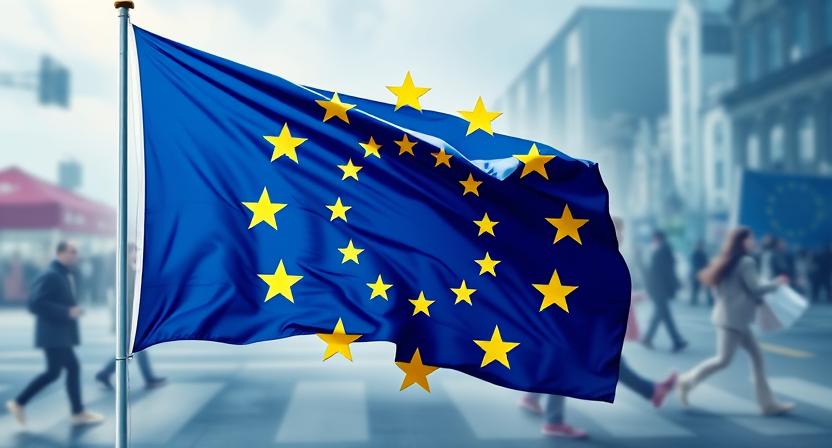
The European Union is unique among supranational organizations, representing the deepest and most advanced form of economic and political integration. Evolving from the European Coal and Steel Community in the 1950s, the EU has progressively expanded its scope, establishing a single market, a common currency for many members (the Eurozone), and a complex institutional framework.
Structure and Mandate
The EU’s institutional setup is highly developed:
- European Commission: Acts as the executive arm, proposing legislation, enforcing EU law, and managing the EU budget.
- European Parliament: Directly elected by EU citizens, it shares legislative power with the Council.
- Council of the European Union: Represents the governments of member states.
- Court of Justice of the European Union (CJEU): Ensures EU law is interpreted and applied uniformly across the Union. Its rulings are supreme over national laws in areas where the EU has competence.
Impact on Sovereignty
The EU’s impact on member state sovereignty is profound:
- Extensive Sovereignty Pooling: Member states have transferred significant legislative, executive, and judicial powers to the EU in areas such as trade, agriculture, competition, environmental policy, and monetary policy (for Eurozone members).
- Supremacy of EU Law: Decisions made by EU institutions (e.g., regulations, directives) are directly applicable or must be transposed into national law, often overriding conflicting national legislation. This is a clear derogation of traditional legislative sovereignty.
- Loss of Border Control: The Schengen Area (part of the EU) has eliminated internal border controls between many member states, transferring control over external borders to a collective level.
- Economic Interdependence: The single market and common currency create deep economic interdependence, limiting individual states’ ability to fully control their economic destiny.
- Democratic Legitimacy vs. Sovereignty: While this transfer of power is voluntary and managed through democratic processes at the EU level, it often sparks debates about national democratic legitimacy and the erosion of national sovereignty, as seen during the Brexit process.
The EU is a living experiment in how far states are willing to go in pooling sovereignty for shared prosperity and stability.
Balancing Sovereignty and Global Challenges
The existence and increasing influence of organizations like the UN, NATO, and the EU highlight a fundamental dilemma for modern states: how to balance the traditional notion of absolute sovereignty with the pressing need to address transnational challenges. Issues such as climate change, pandemics, global terrorism, economic crises, and cyber warfare cannot be effectively tackled by individual states acting alone.
The Trade-off
Joining a supranational organization often involves a trade-off:
- Ceding Autonomy: States cede some degree of independent decision-making and control over certain policy areas.
- Gaining Collective Benefits: In return, they gain access to collective security, economic advantages, enhanced diplomatic leverage, and the ability to address problems that transcend national borders.
This isn’t necessarily an “erosion” of sovereignty in a negative sense, but rather a reconfiguration or pooling of sovereignty. States choose to exercise their sovereignty collectively to achieve goals that would be impossible individually.
Conclusion: The Evolving Landscape of Statehood
Supranational organizations are not merely bystanders in international relations; they are active shapers of the global order, constantly redefining the practical meaning of national sovereignty. The United Nations provides a broad framework for global cooperation with selective enforcement powers. NATO offers a robust model of collective military defense. The European Union stands out as the most ambitious project of integration, where member states have extensively pooled their sovereignty for deep economic and political unity.
These organizations underscore that in the 21st century, absolute sovereignty is largely a theoretical construct. States navigate a complex web of interdependence, where strategic engagement with supranational bodies is often essential for national security, economic prosperity, and effective governance. Understanding their mechanisms and impact is vital for comprehending the evolving landscape of statehood and international power.