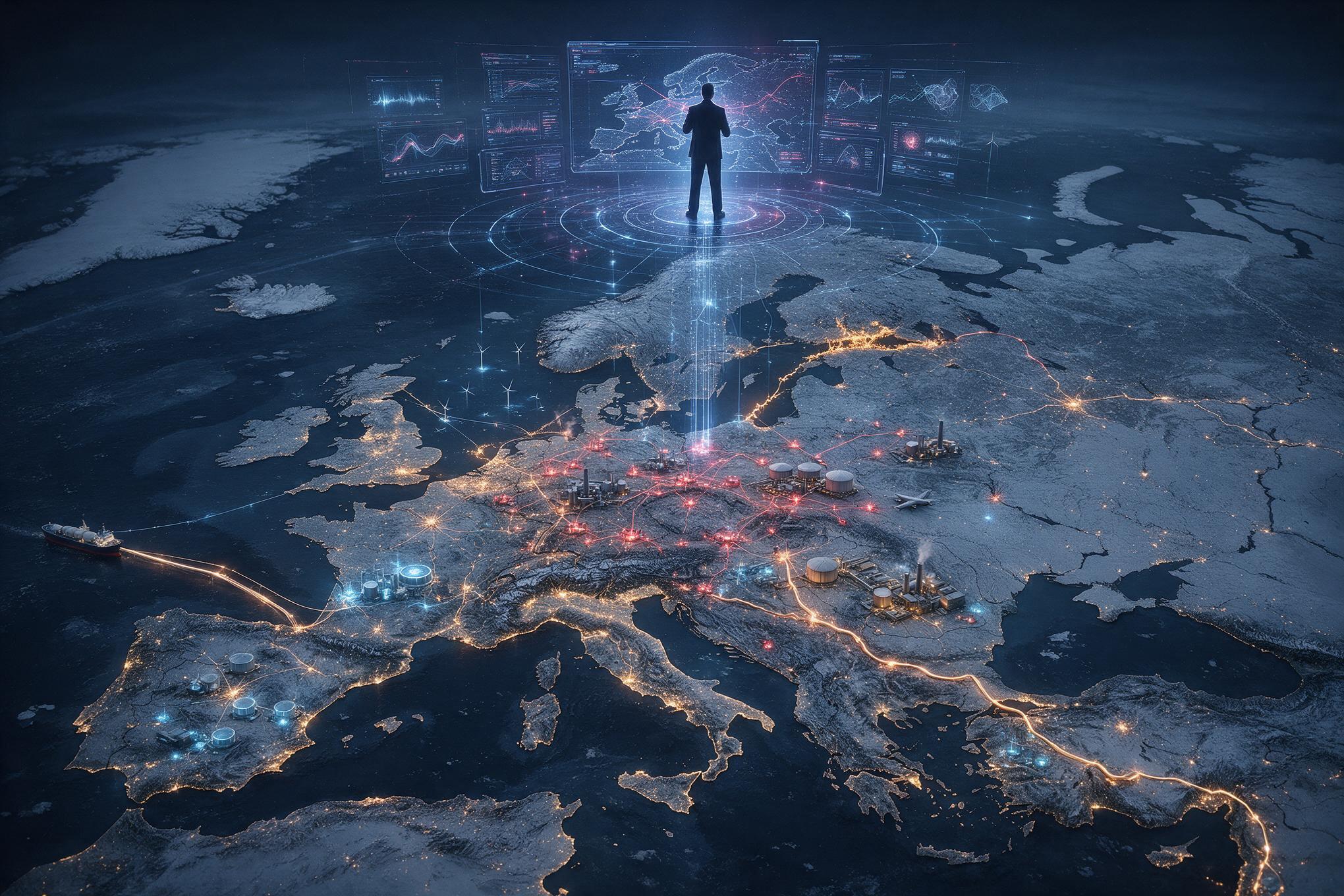
On the occasion of German reunification, Giulio Andreotti, then Italian Prime Minister, took up a joke that was not his own but that of the French writer François Mauriac: “I love Germany so much that I prefer there to be two”. Andreotti uttered it in 1990, in the year in which the two Germanys became one again.
In the mouth of Mauriac, a Frenchman, that phrase had a fairly obvious meaning, considering the not exactly peaceful history of Franco-German relations. A weak or divided Germany, from the French point of view, was always better than a strong and united Germany. Said by Andreotti, however, it took on a completely different meaning.
I believe that Andreotti had sensed something that many, in the euphoria following the fall of the Berlin Wall, did not want to see. The end of the division of Europe did not only mean the return of a Germany inevitably destined to recover all its continental weight. It also meant the end of that balance between the United States and the Soviet Union which, precisely because it was based on the opposition between two great powers, had left Western Europeans room for manoeuvre that today seem like science fiction.
During the Cold War, Washington could not pull the rope too much with its allies-subordinates. On the other side there was the Soviet Union and its mere presence imposed considerable compromises. With the dissolution of the USSR, checks and balances went to be blessed. Germany became united again, but this did not mean that it became strategically free again. On the contrary, it found itself even more firmly embedded in the Euro-Atlantic architecture built around the United States.
The numbers help to understand the issue without the need for propaganda. In March 2026, about 37 thousand US soldiers were deployed in Germany on active duty, while in Italy there were about 12,800. Germany was the second country in the world for the presence of American soldiers after Japan, Italy the fourth after South Korea.
Ramstein is the fulcrum of the Kaiserslautern Military Community, the largest American community outside the United States, which includes about 56 thousand soldiers, civilians and family members. In Italy we have Aviano, with two squadrons of F-16s, Vicenza, Naples, Camp Darby and Sigonella, which the US Navy itself defines as the “Hub of the Med”, a strategic center of the Mediterranean.
It is therefore useless to argue that Germany and Italy are formally devoid of sovereignty to observe a fairly obvious fact, the two great European losers of the Second World War still “host” an overwhelming US military presence today.
And this condition, like it or not, affects Europe’s ability to develop a truly autonomous international and energy policy. It is said that the hegemonic power can also subcontract a part of the economy to subordinate countries, because it reserves the most serious things, that is, the control of the balance of power. Well, today we have entered a phase in which the United States is tightening the meshes of everything again because it has ceased to be the undisputed center of the world and, if it still is, it is now much more relative.
Then there is another passage that, in my opinion, should not be forgotten. Once the old bipolar balance was over, even the ruling classes that had crossed it and had learned to exploit its spaces of autonomy were progressively overwhelmed. In Italy even in a sensational way.
Between 1992 and 1994 Mani Pulite and Tangentopoli invested the political system born in the post-war period and almost all the old government parties ended up swept away or transformed to the point of becoming unrecognizable. The Christian Democrats and the Socialist Party, that is, two of the pillars on which the Republic had stood for decades, disappeared. The so-called First Republic ended practically together with the bipolar world that had produced it.
It was not a singular coincidence and one can guess where this project was established. With the collapse of the old international order, scandals arrived that were certainly “clockwork” in their systemic effect.
In Germany the process was much less traumatic. There was no clean-up comparable to the Italian one and the system of the big parties survived. But even there the old ruling class of reunification did not remain unscathed.
At the end of the nineties the scandal of hidden funding of the CDU exploded and Helmut Kohl, the man who had led Germany through reunification and had been chancellor for sixteen years, was politically overwhelmed by the affair of the party’s slush funds. The difference is that in Germany men and leadership fell, while in Italy the old party system almost entirely collapsed. It is a huge difference, but the change of era affected both countries.
Having closed the parenthesis of historical context, let’s return to the facts that concern us. I take the news that appeared in the press, including here in Italy.
As of October 2, 2026, Germany’s storage facilities were only 58 percent full, or about 143.5 TWh. Berlin considered the situation serious enough to order the public company SEFE to buy and store another 8 TWh of gas by December 15.
This does not mean that Germany will run out of gas tomorrow morning. The federal authority itself states that imports are stable and that the level of storage, taken alone, does not determine security of supply. But it still means that the main European industrial country arrives at the gates of winter with much lower reserves than in previous years and that the state is forced to intervene directly in the market. To this problem are added others of equal seriousness.
The Middle East crisis and the very strong restrictions on traffic through the Strait of Hormuz have already more than doubled European gas prices in 2026. Qatar, one of the world’s largest exporters of liquefied gas, has maintained force majeure on several supplies.
The Italian Edison, for example, risks losing a total of 35 cargoes under the contract with Qatar Energy and 23 have already been replaced, mainly by resorting to US suppliers. So the replacement of Russian gas has not eliminated European energy dependence. It has changed its address.
In the second quarter of 2026, the United States supplied 63.2 percent of the LNG imported by the European Union. Russia, despite four years of sanctions, diplomatic ruptures, proclamations and declarations on the need to emancipate itself from Moscow, still supplied 17.3 percent.
Indeed, there is no need to even imagine who knows what secret triangulations or under-the-table agreements. In the first half of 2026, the European Union imported 9.97 million tons of LNG from the Russian plant in Yamal, a record for that period. And Russian gas also continues to arrive by pipe.
After the cessation of transit through Ukraine at the beginning of 2025, TurkStream, passing through Turkey, remained the only transit corridor for Russian gas to Europe. In the first nine months of 2026, about 13.2 billion cubic meters passed through. Europe decides to give up Russian gas for geopolitical reasons, but still continues to buy part of it. In the meantime, it increases its exposure to American LNG enormously.
In short, we have replaced one dependence with another, often more expensive but obviously more functional to American interests, certainly not to ours. Italian history should suggest some reflections.
Enrico Mattei, historic public manager of the main state energy company, built Eni’s energy policy starting from a very clear principle, Italy was a country poor in raw materials, destroyed by the war, and could not afford the luxury of geopolitical obedience when it came to procuring the energy necessary to run industries and factories and to support development.
In 1960, Eni concluded a major agreement with the Soviet Union for the purchase of crude oil on particularly favorable terms. The American diplomatic documents of the time perfectly record what represented a problem for Washington. Mattei explained to his American interlocutors that he was buying Soviet oil because it was cheaper and because his task was to provide Italy with energy at the best possible conditions.
Later came the agreements for Soviet gas. The fundamental agreement between Eni and the USSR was signed in Rome on December 10, 1969 by Eugenio Cefis and the Soviet Deputy Minister of Foreign Trade Nikolaj Osipov. It had a duration of twenty years and provided, when fully operational, for supplies of 6 billion cubic meters of natural gas per year.
Even in the heart of the Cold War, Italy managed to build an energy policy in which belonging to the Western camp did not prevent it from buying energy from the USSR if this corresponded to the national interest.
On these events, I refer to the fundamental works of Professor Nico Perrone, a historian of great depth, who died last September 19 at the age of 91 and whom I was lucky enough to have as a supervisor at the university.
Mattei died in 1962 in the crash of his plane. The investigation reopened in 1995 and concluded in 2003 overturned the first reconstruction of the accident, supporting the validity of the hypothesis of sabotage. Personally, I find it difficult to separate that death from the extraordinary autonomy with which Mattei conducted Italian energy policy, disturbing enormous and consolidated interests.
The contrast with today’s Europe is therefore striking. No one has the courage of Mattei anymore.
Nord Stream had the function of directly connecting Russia and Germany through the Baltic, reducing dependence on traditional Eastern European transit countries.
Nord Stream 1 had been operating for more than a decade. Nord Stream 2, completed in 2021, never entered service because Berlin suspended its certification shortly before the start of the war in Ukraine.
Then came the explosions of September 2022. Three of the four overall pipelines of the Nord Stream 1 and Nord Stream 2 systems were rendered inoperable.
The idea that an operation of that magnitude, against an international strategic infrastructure and in one of the most guarded seas in Europe, can be explained with the story of a group of Ukrainian divers alone is not at all convincing.
In any case, the deterioration of energy relations with Moscow did not start in 2022. We need to go back at least to 2014, to the Ukrainian crisis and the Russian annexation of Crimea. Since then, the European Union has progressively built a sanctions regime that has also involved economic and energy sectors. After February 2022, that choice became a structural rupture, and in 2026 the European Union adopted the regulation for the gradual elimination of Russian gas imports, with a total ban on Russian LNG from the end of 2026 and pipeline gas from autumn 2027, subject to the transitional periods provided.
In the meantime, Europe continues to have no real common energy policy.
Germany definitively shut down the last three nuclear reactors on April 15, 2023. France is doing the exact opposite. In March 2026, it confirmed the program for the construction of six new EPR2s, while an additional group of eight reactors is planned and being studied.
Italy, after almost forty years, has reopened the way to nuclear power with Law No. 169 of 29 September 2026, “Delegation to the Government on sustainable nuclear energy”, definitively approved by the Senate on 23 September.
So we do not have a European strategy. We have different national strategies, often contradictory and heterodirected by non-European interests.
Even the famous energy transition, presented as if it were supposed to free us from dependencies, actually creates others. Technologies, components, raw materials and production chains are concentrated in sectors in which China has dominant industrial positions.
Moreover, from my point of view, there is no real energy transition. We are not moving orderly from one source to another. We are adding costs and dependencies. And, not exactly a minor detail, the best technologies in many sectors of the so-called transition are not even European.
Germany is the focal point where all these contradictions ultimately converge. After around three years of stagnation, in 2026 the German economy showed tentative signs of recovery, but a genuine recovery has yet to materialise. Germany’s industrial vulnerability remains evident, particularly in the sectors most exposed to energy costs. There is also a little historical anecdote that has always amused me. Before the stereotype was turned on the Italians, it was the Germans who were considered the slackers of Europe.
After all, we were the people of the wonderful Renaissance. It was the Germans, precisely those who today in the common imagination represent precision, discipline and efficiency, who were accused of lack of initiative and even indolence. Then came the imperious growth from the mid-nineteenth century onwards and the stereotype was turned on us.
Here, we wish the Germans not to go back also because what happens in Germany does not only concern the Germans.
Berlin remains Italy’s top export market. In 2024, our exports to Germany were worth about 70 billion euros and in the first eleven months of 2025 they had already exceeded 67 billion.
An important part of Italian industry, especially the manufacturing chains of the North, is closely intertwined with the German one. If Germany slows down, the blow comes along the entire chain that is already struggling more and more.
That is why I consider it misleading to reduce the whole discussion to the percentages of German storage.
Behind that 58 percent there is a world. And that world could get out of hand much more than you think. I would say that German storage is only the tip of the iceberg. Continental Europe once bought Russian energy by land at relatively stable prices even though it belonged politically and militarily to the West.
Today it has drastically reduced that ratio, but it continues to buy part of the same Russian gas, buys enormously larger quantities of LNG from the United States and is much more exposed to world markets, wars and crises of maritime routes.
I don’t think we are on the eve of a world war and I don’t even think that Germany will necessarily run out of gas this winter. However, I think that increasingly defined economic and geopolitical alignments are settling along the energy routes. It is also there that the new balance of power is forming on the energy vehicle, but they are not tailored to European demands.
On the contrary, Europe seems to have decided to stay out of it or to participate only in tow of interests conditioned by third parties. So how important is it to know whether German depots will be 58, 70 or 90 percent full? It is not only because of the fuel needle but because of the road we want to take. The real question is: is Europe still able to decide for itself? This, much more than German gas reserves, is the real European problem.