“God saved me to make America great again,” said the 47th President of the United States, Donald J. Trump, in his inaugural address upon being sworn in at the Capitol on January 20, 2025, at the beginning of his second term.
This first line condenses the whole aura of mysticism and messianism that surrounds an atypical character, alien to any partisan scheme, catapulted onto the world stage like a dazzling light capable of breaking the tectonic plates of global geopolitics.
A man as unpredictable and enigmatic as the mystery of his new election, oscillating between the unthinkable coincidence of an ancestral manifest destiny, a metaphysical sign of the end times, and the unconscious and dreamlike response of a profound America, rooted in its puritanical and conservative traditions, scandalized and horrified by the moral, economic, and social decay into which the moribund North American empire had fallen, festering under globalist tyranny.
The Republican president’s second administration currently faces a daunting and turbulent global landscape, a disastrous legacy of the Democratic interregnum of the Biden-Harris administration, the spearhead of the failed unipolar government project.
The conflict in Ukraine, a “proxy” war between the Russian Federation and NATO, largely planned by liberal bankers in Washington and London, which has brought the world to the brink of World War III, over which the specter of nuclear war looms every week; as well as the Palestinian genocide in the Middle East and preparations for possible new hostilities in the South China Sea to avoid at all costs a future reunification of Taiwan with its motherland, the People’s Republic of China, they represent only the hottest points in a geopolitical picture in full boiling.
Trumpism’s impact on US foreign policy and its effects on relations with other major power centers, real or potential—the declining European Union, the Russian Federation, India, the People’s Republic of China, and the Islamic world—is characterized by a profound and complete break with the traditional patterns of the “neoconservatives” who conceived the “democracy export operations” and shaped its imperial desires to subjugate other non-aligned civilizations, since the fall of the Soviet Union.
The differences from his first term are evident and intuitively understandable, even from a brief analysis of these first months of management. The previous experience was immature and immature, mired, contained, and internally sabotaged by a sprawling system that had nestled within the power structures for decades.
The notorious collusion with the “Pentagon’s one-party war” of figures like John Bolton and Mike Pompeo, as well as hundreds of middle managers stationed in security agencies, the presidential administration, and the United Nations Development Programme (USAID), was notorious.
They secretly fought against attempts to dismantle this “giant octopus” (the so-called Deep State or Swamp), mistakenly influencing tactical decisions made by a neophyte administration in strategic areas of the planet.
The internal destabilization that the country underwent, which consequently led the Confederacy to a situation of almost open confrontation between its two souls (Democrats/Republicans embodying opposing cosmovisions) and the threats of secession from some states, was a color revolution strategy planned by its liberal enemies, with a constant flow of money from George Soros’s Open Society Foundation that watered non-governmental organizations such as “Black Lives Matter,” “Antifa,” and the LGBTQ movement to sow chaos.
Added to this is his lack of personal preparation as a world-class statesman in foreign affairs.
The business world is very different and far removed from the subterranean strategies of capital-letter politics, and despite some resounding and isolated successes, such as the historic meeting with North Korean leader Kim Jong Un, many ill-advised decisions have proven unfortunate and have had serious domestic repercussions: the tariff war against China (the US’s largest creditor), the assassination of General Qassem Soleimani, and the persistent illegal American presence on Syrian soil at the Al-Tanf base in Homs province have contributed to destabilizing the fragile balance in the Middle East.
The darkest and most disturbing shadows are those surrounding some of the foreign policy decisions made by his first cabinet regarding the Middle East, which have been cyclically repeated throughout this new beginning.
The move of the US embassy to Jerusalem and, consequently, the recognition of Jerusalem as the capital of the State of Israel, contrary to UN General Assembly Resolution 181, as well as the indiscriminate support for the Palestinian genocide and the occupation of the Syrian Golan Heights by Benjamin Netanyahu’s government, are invariable ideological positions, still repeated today, which point to the cumbersome influence of Zionist lobbyists like AIPAC within his administration.
Diplomatic support for the plan to expel Gazans from the Strip and create a “Middle East Riviera” is a more elaborate, ideal continuation of the Abraham Accords, overseen by his son-in-law Jared Kushner, special envoy for the Middle East during his first administration.
Of course, the radical Zionism of the Trump 2.0 administration is also an open challenge to the Islamic Republic of Iran, which, despite its desire for openness and transparency with the international community, as evidenced by the signing in 2015 of the Joint Comprehensive Plan of Action on its nuclear program (which would respond to its legitimate sovereign aspiration to develop it without limitations), is constantly and permanently besieged by the Israeli state and the Americans.
In order, we can mention: the unilateral withdrawal by the US from the nuclear agreement during the Trump administration, the assassination of various political and military leaders, economic sanctions, and the launch of missiles and drones against its territory, in open violation of international law.
Here a first question arises: is peaceful coexistence between civilizational blocs really possible, meaning by this term many geopolitical poles that exercise direct control over their mutual spheres of influence?.
The eschatological vision of many Zionist and Trump-supporting evangelicals who see Jerusalem as the promised land and the world clock, and behind the scenes are conspiring for the reconstruction of Solomon’s third temple and the creation of greater Israel (א ר ץ י ש ר א ל , Erétz Yisra’él) is inextricably bound to clash with the countries of the Asian-Islamic world that are members of the BRICS and/or that look with interest at a modern structure of the diplomatic relations.
The second question concerns the strategic retreat toward the United States’ backyard, namely Latin America. Wouldn’t a revised and updated Monroe Doctrine, proclaimed by several senior military commanders in top positions, pose a serious threat to the aspirations of several South American states to join new, variable-geometry multipolar organizations like the BRICS?
Finally, despite recognizing the leadership, mutual respect, and close trade ties between the United States and the People’s Republic of China, will Donald Trump be able to control the most Sinophobic elements still present and influential within overseas think tanks? A balancing act between the Great Powers necessarily implies accepting that every civilizing space must be fully structured by incorporating integral parts of its culture and traditions, like Taiwan, which has always been a province of the Chinese Empire.
President Trump and the MAGA movement are totally unprecedented phenomena, flowing like a karst river through the bowels of the United States. They continue to undermine the shaky theoretical foundations of that hyper-liberal apparatus that dominated the Anglo-Atlantic scene and was then reproduced at the micro level by vassal leaders of the various colonies over the last thirty years.
Trumpism, consciously or unconsciously, contributes to the confirmation of multipolarity as an inexorable historical phenomenon, as a contemporary ZEITGEIS. Regardless of the questions still unanswered about the various geopolitical issues being posed by scholars and analysts of international relations, which I have briefly mentioned, we have the privilege and honor of witnessing apocalyptic times, in which the new president of the United States is one of the major players.
North American foreign policy moves in a disorganized, wavering manner with sudden outbursts and rapid second thoughts. Rather than as a “Peacemaker” as he likes to vainly define himself, the tycoon’s second administration proceeds by following an economic agenda dictated by his taxpayers and campaign financiers, of which The Donald is only a visible mask.
The gradual strategy of disengagement from the Ukrainian conflict (which, we recall, was the realization of Brzezinski’s aspirations in his work “The Grand Chessboard” and implemented by the CIA with the faces of Victoria Nulan and Dick Cheney present at Euromaidan) cleverly aims to unload the financial burden of the war campaign onto the “European vassals” forced to grit their teeth to pay dearly for the weapons that the US military-industrial complex produces for NATO and then via Brussels to Kiev.
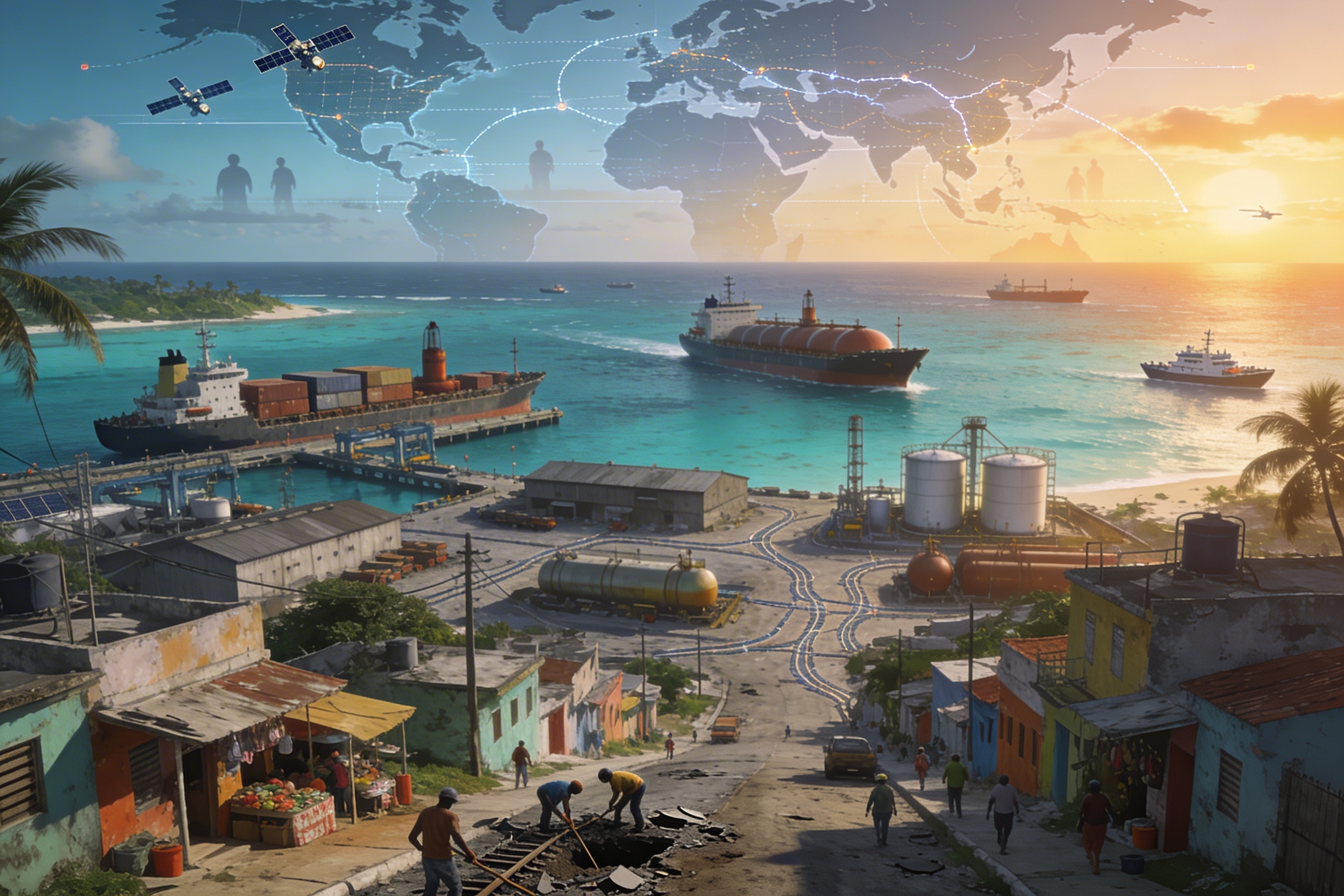
Cuba’s capacity to resist in the current geostrategic context
The survival of the Cuban revolution in the face of the onslaught of Donald Trump’s government is one of the…

Digital nightmare: Spyware and control
On February 26, 2026, Al Jazeera reported that the UK government has been investing in the development of software tested…


Social mobilization in Türkiye for national sovereignty and for the
On the sixth day of the conflict between the Islamic Republic of Iran and the United States and Israel, and…

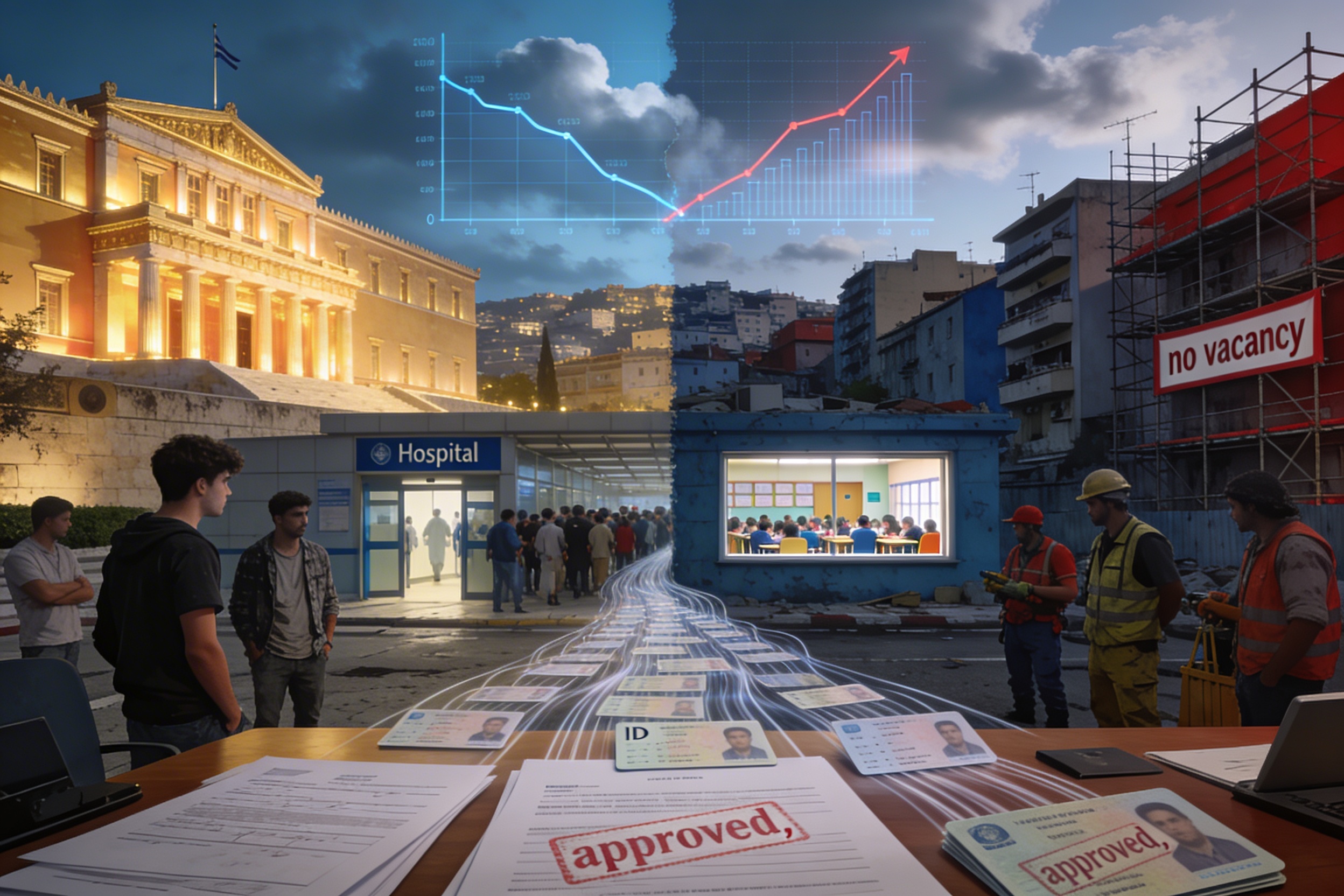
The mass regularisation of illegal immigrants in Spain and its
Strong opposition in Spain and Europe to the new decree law aimed at the mass regularisation of immigrants. In January…


Kiev, the Bomb, and a Fractured World Order
In late February 2026, Russia’s Foreign Intelligence Service alleged that the United Kingdom and France were plotting to provide Ukraine…

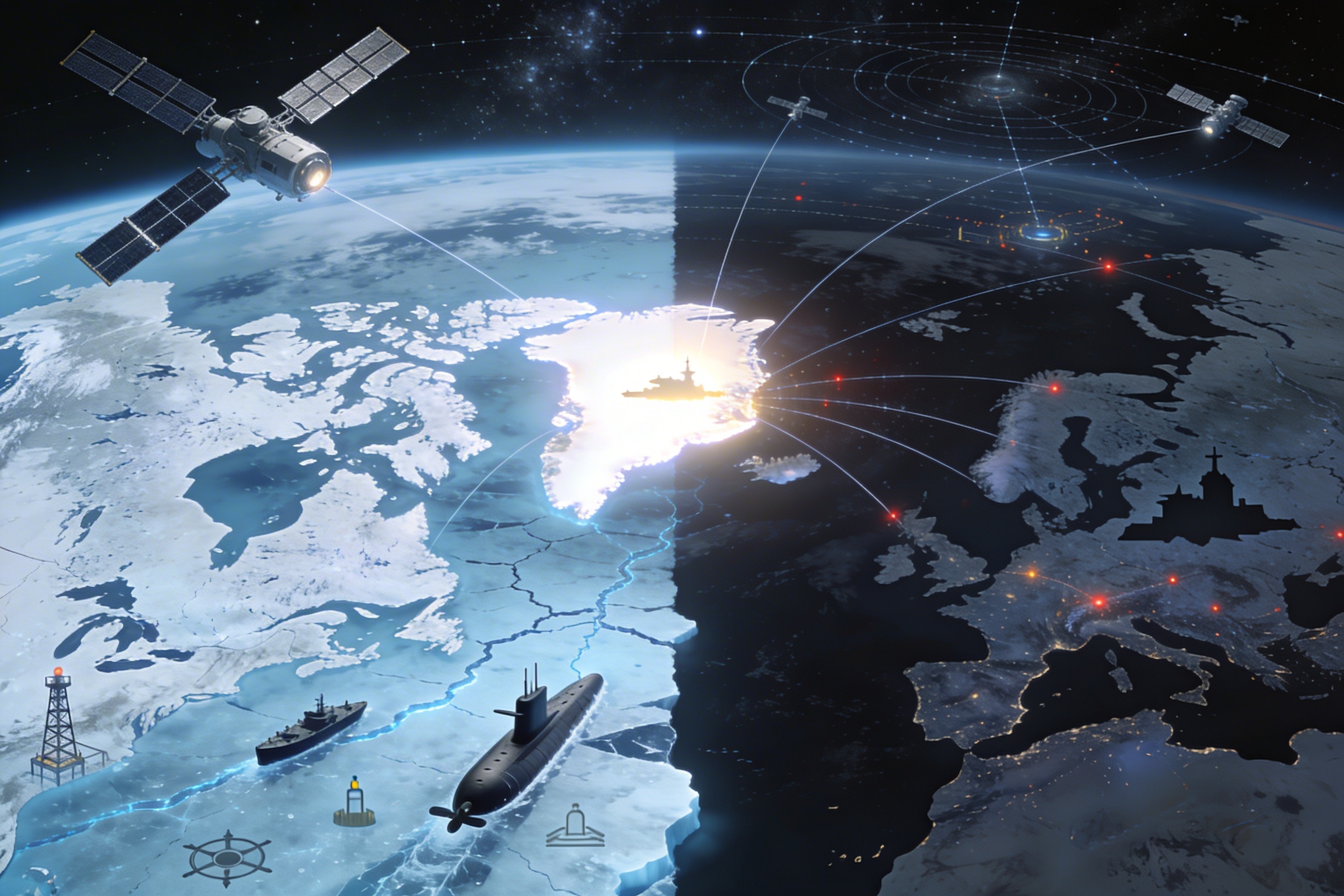
Hegemonic restoration and unlimited war in the Arctic-space multipolar competition
In the context of the transition to a multipolar order, characterized by the erosion of Western unipolar dominance and the…

The United States has succeeded in wiping out, manu militari, Russian energy supplies from Europe by imposing its shale gas (produced by fracking) at a higher price and more contaminating as the only alternative for consumers in the European Union.
The perpetuation of the military conflict in the heart of the old continent only serves to swell the coffers of Raytheon, Boeing C and Lockheed Martin, which have supported all White House administrations and are now aiming to overthrow the government of Nicolas Maduro in Caracas.
The situation in the Middle East is even clearer and less ambiguous. The Trump administration is the most Zionist in the history of the Confederacy, with evangelicals representing a significant proportion of its electorate. The apparent criticism leveled at Prime Minister Benjamin Netanyahu has not been followed by any concrete diplomatic denunciation, embargo, or suspension of arms supplies (indeed, many of the weapons previously sent free of charge to the Zelensky regime have been diverted to Tel Aviv), and the collusion between the two governments is symbiotic.
The apparent peace in the so-called 12-day conflict between the Islamic Republic of Iran and the State of Israel was, frankly, a win-win situation for both sides. American mediation was not disinterested, but came after an escalation that exposed the collapse of the myth of the Israeli army’s (IDF) “invincibility” after numerous Iranian ballistic missiles struck strategic sites such as barracks and Mossad intelligence operations centers, or rendered Ben Gurion Airport unusable.
Coordinated attacks between the Islamic Revolutionary Guards and their Yemeni Houthi allies have seriously undermined the Jewish state’s internal defense capabilities, disrupting defense systems such as the Iron Dome and David’s Sling. Meanwhile, despite the heavy blows it has suffered, Iran has maintained its ability to process uranium for military purposes virtually intact, and has rallied national public opinion with chauvinistic fervor.
Washington’s foreign posture is therefore inextricably linked to the impulses of the showman president and his relationship with his audience, the American electorate. Politically, the transmission belts of his desires are in reality the tight grip he exerts on the Republican Party, combined with the coercive tactics he uses to force obedience from those who dare oppose him, and the army of loyalists he has populated the American institutional apparatus.
However, it would be shortsighted to discount the influence and actions of the factions that comprise his political platform. The “MAGA world,” currently the strongest faction (and the most ideologically aligned with Trump’s instincts), is heterogeneous in its visions and objectives, the analyst points out. It includes “religious conservatives, both evangelical Protestants and conservative Catholics, traditional anti-federalists who oppose federal institutions with cultural influence, and anti-liberals who see Trump as an opportunity to launch a reactionary revolution.”
This movement has developed its own ecosystem, with think tanks like the America First Foundation and the Claremont Institute, and looks to intellectuals like Patrick Deneen, Adrian Vermeule, and Stephen Wolfe to articulate its intellectual foundations. Steve Bannon, the guardian of MAGA orthodoxy, is certainly the bridge to European and Russian conservatives, and aims to defuse the conflict in Ukraine, but their influence is truly limited within the “real” decisions made by the presidential administration.
The so-called Techno-Right of transhumanist industrialists like Elon Musk, Shyam Sankare and Peter Thiel, are the true deus ex machina of the current government.
For example, with David Sachs as the White House czar for artificial intelligence and cryptocurrencies, the Trump administration has embraced the mantra of deregulation in both sectors, aiming to break down “barriers to innovation” and consolidate US leadership, leaving the field open to tech companies. Elon Musk headed the Department of Government Efficiency (D.O.G.E.), which has the clear goal of drastically reducing the size of the federal government, destroying its esprit de corps, and giving the public the false impression that the federal government can function like a private enterprise. In reality, it becomes a dispenser of favors to the politically connected, with all the corruption that entails.
He has also intervened directly in European politics and elections in favor of his “allies” and has heavily criticized both EU digital laws and the EU institutions themselves. All of this on his platform, X, which is under scrutiny by EU regulators for potential violations of digital laws.
The same goes for Mark Zuckerberg’s platforms, which have fully entered Trump’s orbit after years in Trump’s crosshairs for accusing him of censoring conservative voices. Like other Big Tech CEOs, the Meta boss was at the forefront, following huge outlays, at the inauguration of the new president, a moment that coincided with the adoption of a Trumpian line on content moderation.
Since then, Zuckerberg has been highly critical of EU regulations. At the same time, the White House has become Silicon Valley’s best ally. In recent months, the Trump administration has scuttled the plan for a global minimum tax on multinationals, forced countries like Canada, India, and New Zealand to abandon their digital taxes, and persuaded the EU, as part of the tariff agreement negotiations, to abandon its plan for a network tax that would have hit online content distribution giants.
For its part, Brussels fought to keep its laws on digital markets and services out of the negotiations, which are rife with irritants for large US companies; but Washington appears unwilling to let them go. In conclusion, Donald Trump is pursuing an agenda dictated by his backers that, far from the illusory return to traditional isolationism so desired by the popular base, operates based on profit and the motto “business is business,” where a triad composed of the military-industrial apparatus, the Zionist lobbies, and the transhumanist techno-right direct every step of the Oval Office in Washington.
Everything else that isn’t agreed upon or planned is left to the highly personal, histrionic interpretation of a narcissistic billionaire with a background in television and a skilled, unscrupulous negotiating strategy, like the bluffs seen every night in the glittering casinos of Las Vegas. And if all this indirectly and cumbersomely contributes to the collapse of the neoliberal empire and the entry into a new, multipolar phase in the dynamics of international relations, so much the better.