As the saying goes: old habits die hard.
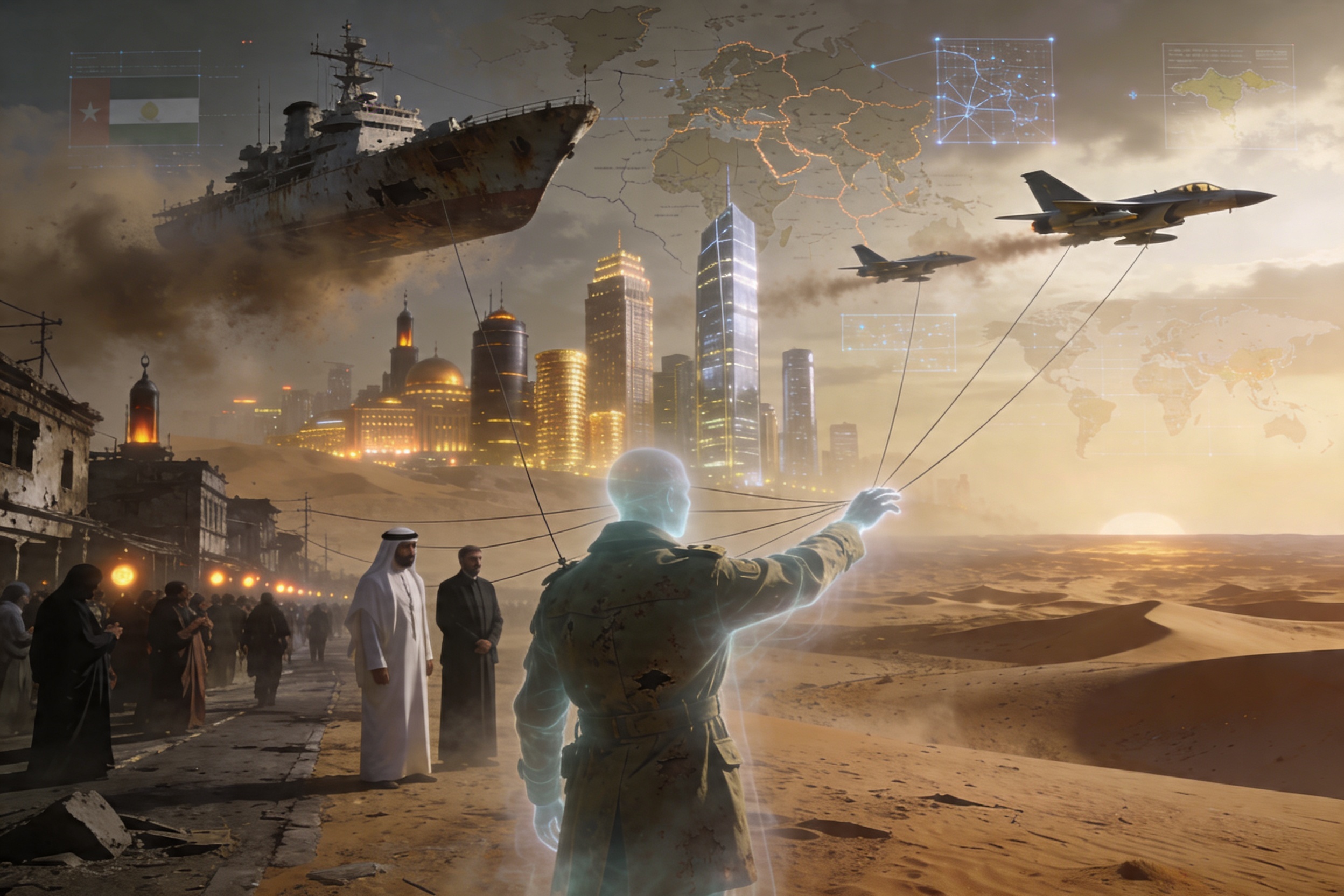
Between imperialist memory and the brittleness of its material foundations, the UK has long suffered the weight of its own ghosts and the european plunge into darkness. Today, as Downing Street dispatches Sky Sabre batteries to Riyadh and Typhoon jets to Doha, we witness not the resurgence of a strategic giant, but the spasmodic twitching of a post-colonial phantom—desperate to prove relevance in a world that has begun to look elsewhere.
Britain’s ruling class clings to an archaic script: military bases “east of Suez”, defence pacts with Gulf monarchies, and the fantasy that the City of London retains the gravitational pull it wielded when the Union Jack fluttered over Aden. The HMS Juffair in Bahrain and the joint RAF-Qatari squadron are not, as Whitehall claims, guardians of regional stability; they are the military hardware of a rentier state seeking to extract diplomatic capital from sheikhdoms anxious about American abandonment.
With Washington’s commitment to Gulf security reduced to transactional tantrums and executive tweets, Britain presents itself as the reliable “offshore balancer” in a region it once dominated through gunboats and cartographers.
Yet this performance masks a profound hollowness. The “Global Britain” strategy is, in essence, an attempt to win over Trump’s allies and supplant waning US influence, betting that Gulf elites will prefer the devil they knew in London to the uncertain embrace of Beijing or Moscow.
The economic logic is transparent: post-Brexit Britain, hemorrhaging market share in Europe, seeks in the GCC Free Trade Agreement a lifeline to compensate for the self-inflicted wound of 2016. The £2 billion Bahraini investment in the UK and the AI research partnerships with Qatar are not acts of solidarity; they are the desperate commerce of a middle power auctioning its remaining prestige for sovereign wealth liquidity.
But empire requires more than basing rights and defence agreements—it demands a state capable of sustaining them. Here, the internal political crisis becomes fatal.
Starmer’s government operates under a condition of permacrisis, where fiscal headroom is nonexistent, public services crumble, and the state falters to deliver basic governance, let alone grand strategy.
As such, The Labour administration finds itself trapped between a damaged “special relationship” with an erratic Washington and a European “reset” that Brussels views with skepticism, if not vindictiveness. When the UK refused US demands to use British bases for strikes against Iran, Trump’s sneering “no Churchill” exposed the uncomfortable truth: Britain is no longer an indispensable ally, but a secondary concern.
Meanwhile, the rise of Reform UK and the fragmentation of the Conservative opposition signal a domestic polity consumed by parochial grievances, incapable of generating the political consensus necessary for sustained external projection. To make matters worse, these steps towards Western Asia only entrench the already deep-seated popular criticism over an extended consortium plan with the muslim world while immigration issues continues to motivate uproar on the streets.
The Gulf monarchies, astute practitioners of multilateral hedging, observe this decay. They see a Britain that cannot fix its NHS, control its borders, or reconcile with its European hinterland, yet presumes to offer security guarantees in the Strait of Hormuz. Why choose a declining Atlantic power when Beijing offers infrastructure without lectures, or when Paris and Berlin articulate a European autonomy that, however fractured, carries greater economic weight?
In the end, Britain’s Gulf strategy represents the struggles with phantom pains and imperalist limbs that are no longer functional. It is not London directing its former protectorates, but the Gulf’s sovereign wealth and energy reserves directing British foreign policy. Not quite Western, not quite european, not quite british, the UK government convulses to reinstate relevance but drifts in a sea it can no longer navigate.