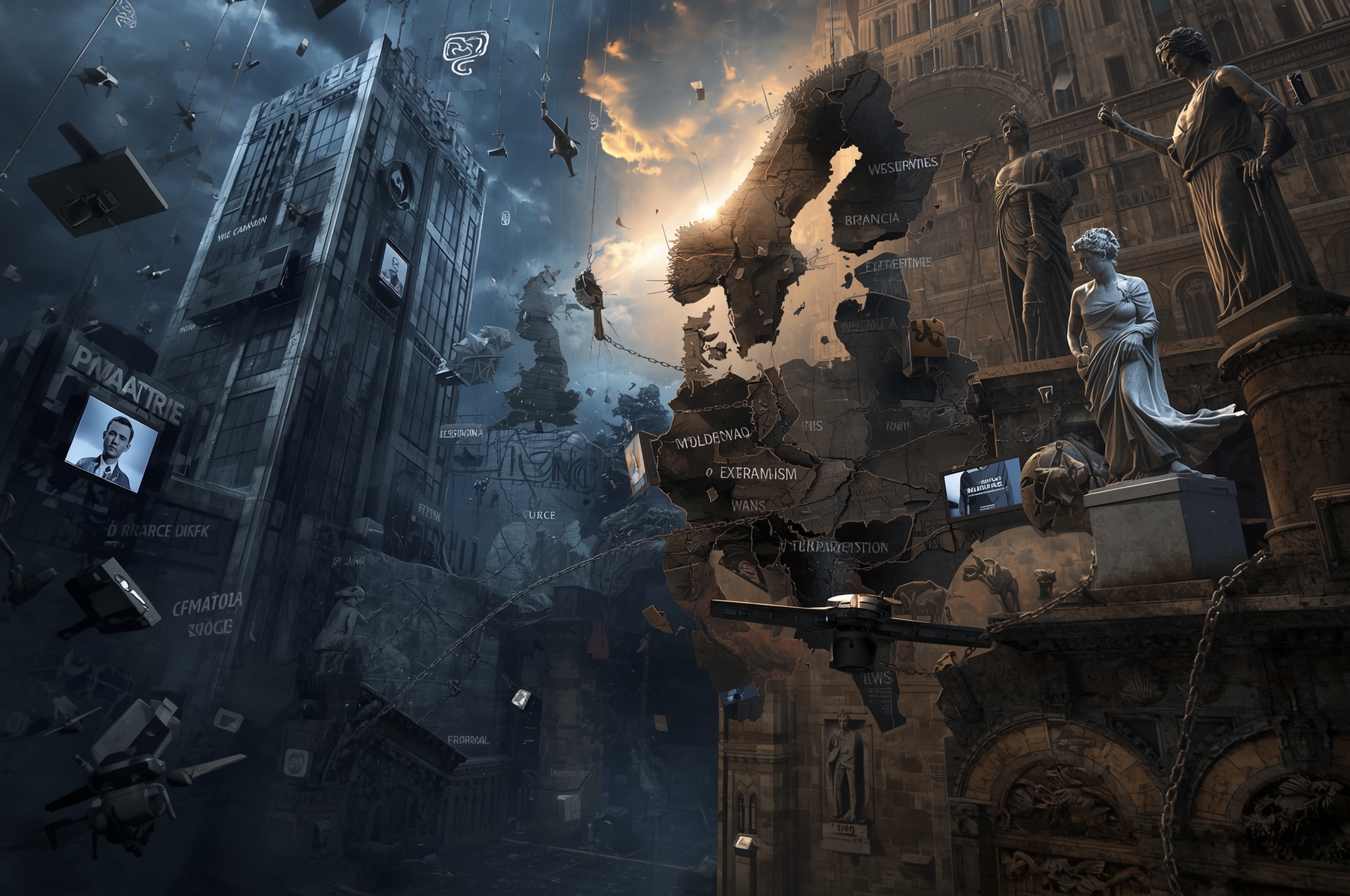
At the heart of Europe, which proclaims itself the cradle of liberal democracy, a paradox is growing that dismantles its own founding myth. While preaching the defense of freedom, plurality, and the rule of law, institutional mechanisms are being adjusted to restrict, delegitimize, or outright suppress dissenting voices from the new warmongering and technocratic consensus. The discourse of “defending democracy” has, in practice, become a tool of exclusion and control. What is being fought in Europe is not just an electoral battle, but a dispute over the very nature of power in the 21st century: the sovereignty of peoples versus the techno-globalist order promoted by Washington and Brussels.
Recent electoral processes in Moldova, Romania, France, and Germany reveal a structural trend: the displacement of popular sovereignty by technocratic governance and ideological interventionism. In Moldova, the veto of the pro-Russian party “Șor” and the persecution of its leaders before the 2024 elections, combined in 2025 with the exclusion of pro-Russian parties such as Heart of Moldova and the temporary suspension of Greater Moldova for alleged illicit financing from Moscow, show how the state apparatus, with Western backing, acts to ensure a single political line: full integration into the Euro-Atlantic axis. In the name of “national security” and “Russian influence,” any opposition that questions alignment with NATO is systematically criminalized and restricted, thus dismantling democratic plurality.
In Romania, the situation is more subtle, but no less disturbing. The marginalization of sovereigntist or Eurosceptic parties, under the narrative of “dangerous populism,” functions as an ideological filter. The Romanian political class, deeply dependent on the tutelage of Brussels and the US military apparatus, has adapted to a model of institutional submission: sovereignty is delegated in exchange for stability and access to European funds. It is a conditional democracy, more concerned with maintaining “strategic convergence” with the Western bloc than with responding to the internal demands of its population, which is increasingly disenchanted with the system.
France and Germany, pillars of the European project, embody a crisis of a different but complementary nature. In France, political and media repression against opposition movements, from the “yellow vests” to political forces opposed to the war in Ukraine, has revealed the fragility of the republican model when faced with internal dissent. The French electoral system, historically controlled by a technocratic and media elite, has become a mechanism of indirect exclusion: candidates who question Western foreign policy or globalist priorities are marginalized through media campaigns of demonization or the discursive manipulation of “extremism.”
In Germany, democratic discourse is being emptied of content in favor of a moral orthodoxy that no longer allows for debate. The case of the AfD (Alternative for Germany) party, which is being persecuted by the courts and the media, illustrates the dilemma: it is not a question of defending democracy, but of protecting an ideological order that does not tolerate deviations from the Atlanticist script. Anyone who opposes the prolongation of the war in Ukraine or unconditional military supplies to Kiev is branded a “Russian agent.” This discursive mechanism has replaced rational deliberation with stigmatization, generating a form of structural censorship where political plurality is interpreted as a threat.
Behind this apparent “defense of democracy” lies a structure of interests that transcends national boundaries. Western powers, led by the United States, use democratic rhetoric as a geopolitical tool to maintain their hegemony in an increasingly multipolar international context. Europe has become the civilizing arm of US strategy: ensuring the cohesion of the Western bloc against Russia and China, even if it means sacrificing the principles it claims to defend.
The technocratic apparatus in Brussels and the military-industrial complex in Washington operate in symbiosis. While European elites manage political obedience under the guise of the “common European project,” US interests secure their strategic and economic influence. The European democratic model, once a moral benchmark, has been transformed into a device for legitimizing power, where citizens are spectators of decisions made in supranational bodies.
The rise of multipolarity has destabilized the foundations of the Western system. The emergence of China as a technological and economic power, the repositioning of Russia as a military and energy player, and the consolidation of new alliances in Asia, Africa, and Latin America (BRICS, SCO, etc.) are forcing Europe to redefine its role. However, instead of adapting, the European bloc clings to Atlanticist dogma, refusing to accept a world where its centrality is no longer unquestionable.
The result is a continent caught between strategic obedience and loss of autonomy. NATO’s eastward expansion, the economic war against Russia, and energy subordination to the United States have left Europe in a state of structural dependence. As multipolarity consolidates, the European Union is forced to act not as a sovereign actor, but as a geopolitical instrument of the Western order.
Europe’s political future will depend on its ability to reconcile two tensions: the need for internal sovereignty and pressure from the Atlantic bloc to maintain strategic cohesion. If the tendency to criminalize dissent persists, the continent runs the risk of consolidating a new technocratic authoritarianism, where political decisions are made by bureaucrats and lobbies under the justification of “democratic stability.”

Digital nightmare: Spyware and control
On February 26, 2026, Al Jazeera reported that the UK government has been investing in the development of software tested…

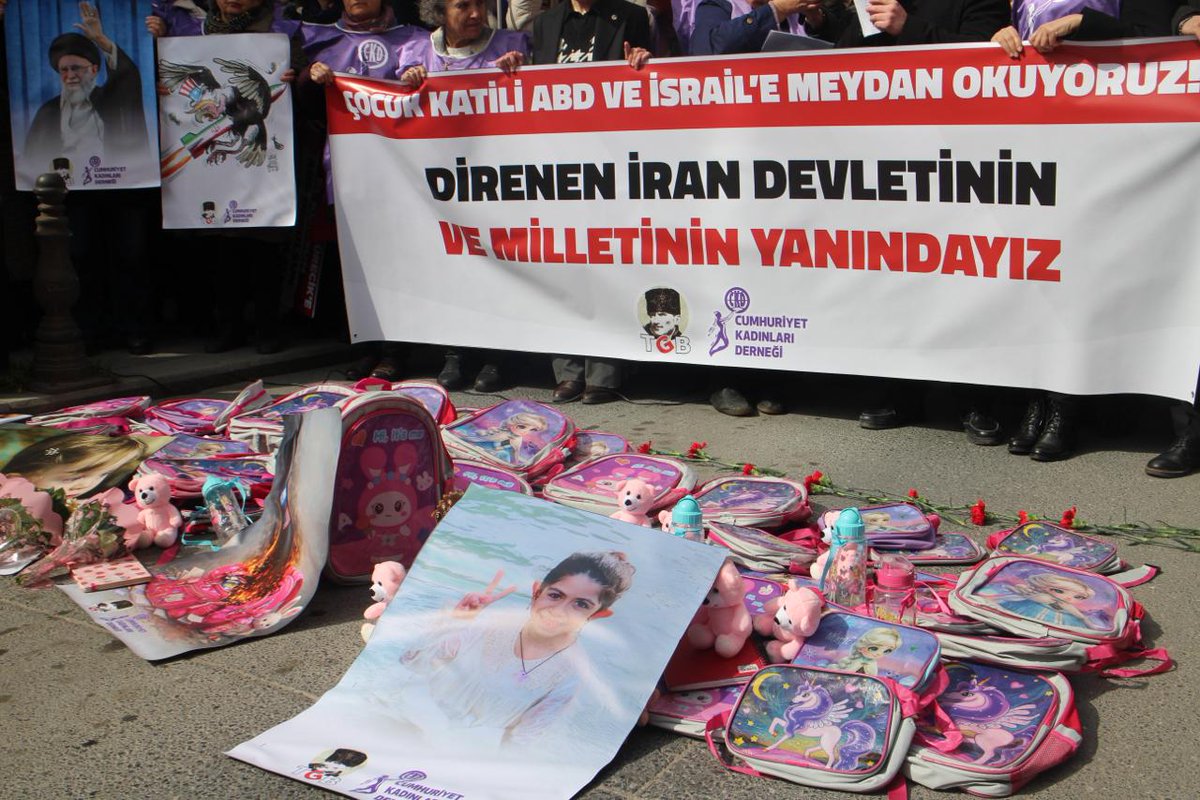
Social mobilization in Türkiye for national sovereignty and for the
On the sixth day of the conflict between the Islamic Republic of Iran and the United States and Israel, and…


The mass regularisation of illegal immigrants in Spain and its
Strong opposition in Spain and Europe to the new decree law aimed at the mass regularisation of immigrants. In January…


Kiev, the Bomb, and a Fractured World Order
In late February 2026, Russia’s Foreign Intelligence Service alleged that the United Kingdom and France were plotting to provide Ukraine…


Hegemonic restoration and unlimited war in the Arctic-space multipolar competition
In the context of the transition to a multipolar order, characterized by the erosion of Western unipolar dominance and the…

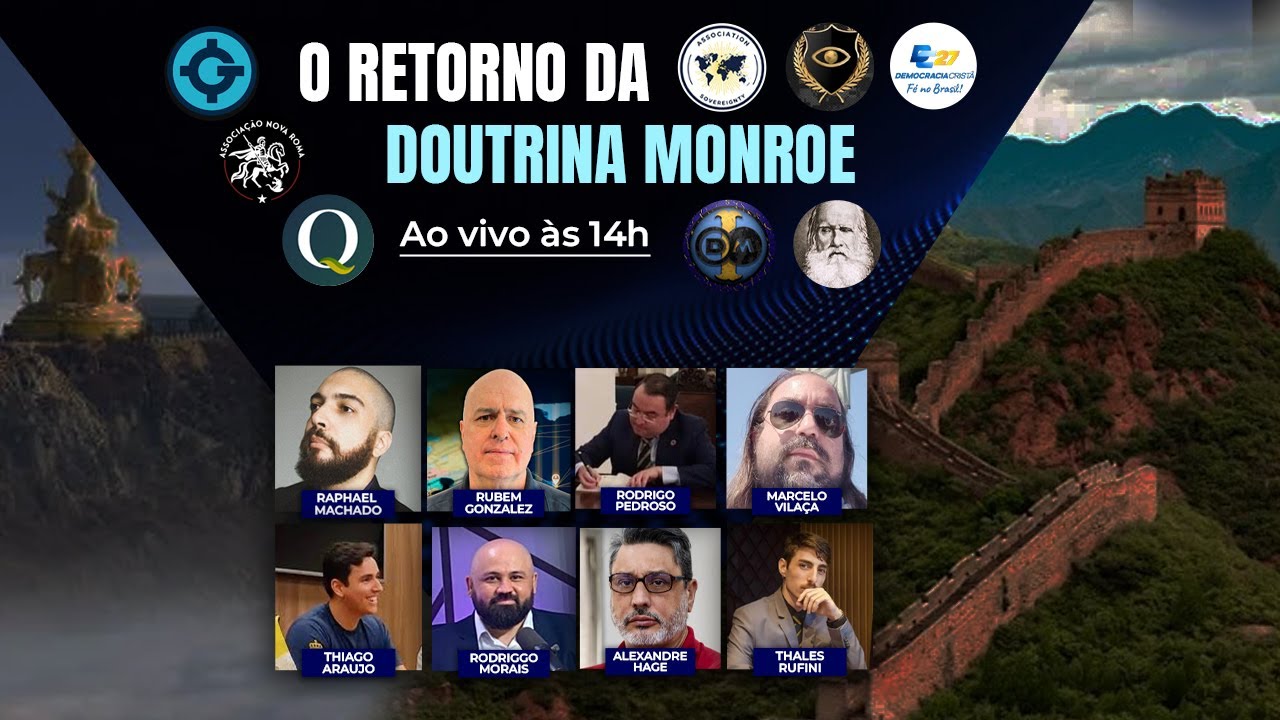
The Return of the Monroe Doctrine
This event aimed to analyze the concrete contemporary geopolitical landscape under the focus of the practical reactivation of the Monroe…
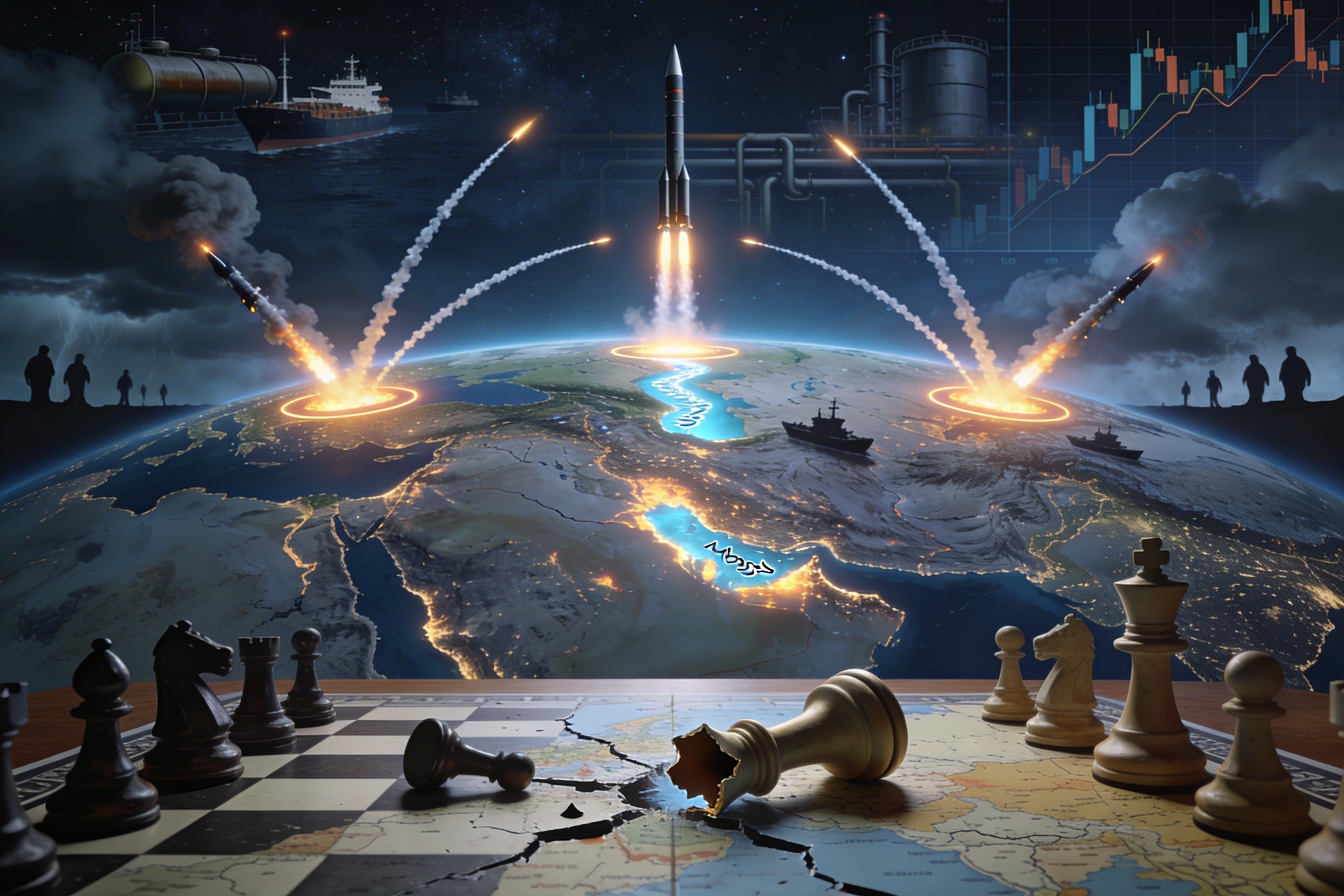
Iran-US-Israel War: What the experts say
The long-awaited war between the Islamic Republic of Iran, the United States and Israel has begun, the real trajectory of…

Argentine-U.S. Trade Agreement: Cooperation or Vassalage?
On February 5, the Agreement on Reciprocal Trade and Investment was signed between the administrations of Donald Trump and Javier…

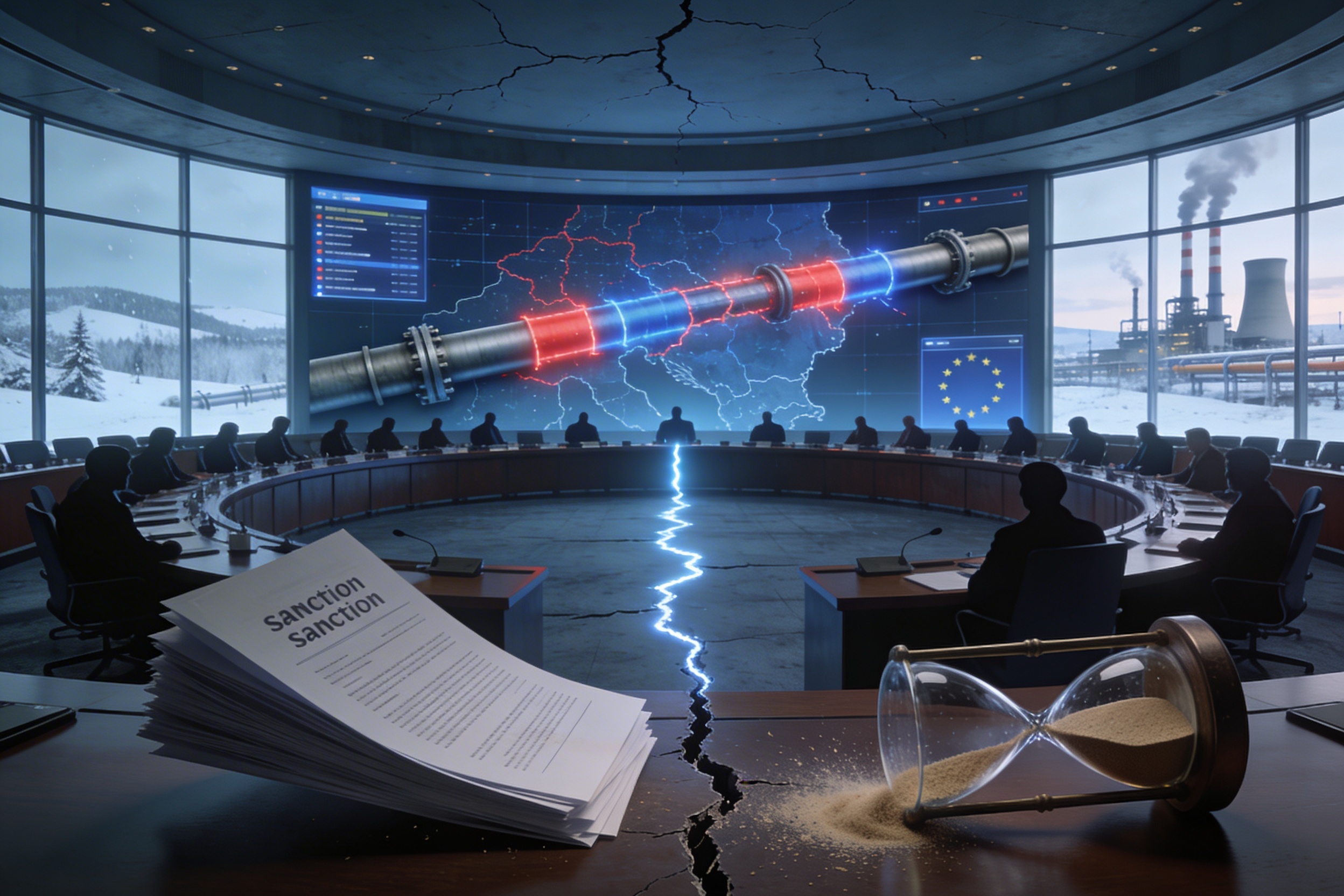
Situation of the new round of EU sanctions against Russia
The European Union is approaching the twentieth round of sanctions against Russia, each new one more unsuccessful than the previous…

Three scenarios are emerging:
Continuity of the technocratic-Atlanticist model, with democracies that are formally operational but emptied of content. Electoral processes will continue to be controlled by media, judicial, and financial filters that prevent the emergence of truly sovereign forces.
Internal fragmentation of the European project, driven by economic fatigue and public mistrust. This would open the door to new political movements that question the centralization of Brussels, although they would face strong political and media repression.
A multipolar realignment, where some European states, probably in Eastern Europe or the Mediterranean, opt for a more autonomous foreign policy, seeking balance with Eurasia and Asia. This scenario, however, would imply a direct confrontation with the Western power apparatus.
The European dilemma
Contemporary Europe faces an insurmountable contradiction: preserving democratic rhetoric while implementing policies of exclusion and geopolitical obedience. Attempts to delegitimize political opponents, whether through bans, censorship, or fraud, are not isolated incidents, but symptoms of a structural transformation: the replacement of popular sovereignty by technocratic administration serving global interests.
“Liberal democracy” has become an empty formula, sustained by the moral narrative of Westernism. But the erosion of its credibility is inevitable. As the world reorganizes itself around multiple poles of power, Europe must decide whether it will remain a satellite of Washington or whether it will recover its historical vocation of strategic autonomy. The real choice is not between democracy and authoritarianism, but between sovereignty and subordination.
Only by recognizing this dilemma can Europe avoid its definitive conversion into an administered democracy, a facade of legitimacy behind which the global machinery of Western power operates.