The European Union cannot and will never be able to develop a genuine foreign policy. The reasons for this irrefutable and apodictic judgment can be summarized in a few points. The first, and most important, concerns the very legal nature of the Union and the concept of sovereignty.
The European Union is not a sovereign state. Its member countries, in fact, have not seen fit to cede their sovereignty in matters of foreign and security policy, but have instead retained a de facto permanent veto power through a decision-making process that requires unanimity among the various national governments, which often take divergent positions on many international issues. After all I can mention, the competition between Italy’s ENI and France’s Total in Africa, France’s appeal to General Haftar, and the Libyan bombings of 2011 come to mind.
But even more recently, it is enough to recall the painful spectacle at the European Council on 26 and 27 October 2023, where the debate on the choice of language for the final communiqué on the Gaza Strip dragged on for hours. Or the position adopted at the UN on the call for a ceasefire, in which some countries voted in favor (France, Spain, Portugal, Ireland, Belgium), others against (Austria, Hungary, Czech Republic, Croatia), while others abstained (Germany, Italy, Greece, Netherlands).
The European Union is not a sovereign state and therefore lacks the necessary tools to be considered a genuine diplomatic actor and have a concrete impact on international affairs.
Anyone with knowledge of international geopolitics knows that three elements enable a state to play a decisive role in international relations: first, having a foreign policy strategy; second, being capable of conducting effective diplomacy; and third, having an adequate military capability. However, the European Union lacks these three aspects.
Regarding the first point, in particular, the slowness of the decision-making process in European institutions, hampered by the rule of unanimity, impedes the development of a long-term and, therefore, strategic vision. This vision, on the other hand, is deeply rooted among the leaders of so-called “autocratic regimes,” who lack strict time limits for their rule and, above all, are unaware of the excessive instability of the executive branch, which involves and distracts politicians in constant reelection campaigns and sometimes leads to frequent changes in national political positions.
This is hardly compatible with the perspective of strategic planning for the future. For the past twenty years, the European Union has remained virtually immobile, stuck in its integration process, which is unlikely to be achieved. A federal union remains a utopia for some and a nightmare for others, but it will never see the light of day.
The reason is that this artificial and baroque construction is the product of a process imposed from above and never fully accepted by the citizenry. It is enough to observe what happened in 2005, when French and Dutch citizens rejected in a referendum the treaty establishing a Constitution for Europe, thus rejecting the very idea of a European Constitution. While we cannot claim that the treaty marked the beginning of a federal state, it did represent a decisive step toward that process. The point is that when French and Dutch citizens were directly asked to confirm the path toward a federal perspective and greater integration, the answer was negative.
Some have even recalled that, in 2005, not all citizens of the 25 signatory states of the treaty had the opportunity to express their opinion. Had they been given the opportunity, how would they have responded? Indeed, if people are given the opportunity to express themselves and decide directly, the natural response is to reclaim the sovereignty of each homeland and not cede it to an artificial supranational body.
Today, the European Union is perceived by its citizens as an institution dominated by a stifling bureaucracy and plutocratic greed, by the pressure of powerful forces and Masonic cliques, by the iron logic of legal positivism, by the undue influence of multinational lobbies, by the pernicious ideology of political correctness, by forms of anti-Christian resentment, by the prospect of a reckless multiculturalism, by “value neutralism,” and by an anti-clerical secularism that demands a Europe without identity and without God.
From this perspective, the criticisms leveled in the harsh indictment made by the Vice President of the United States of America, James David Vance, at the Munich Security Conference on February 14, 2025, are not so far from reality. The European Union committed suicide by deciding to eliminate from its draft Constitution any reference to its Christian roots, the only common identity that could have united twenty-seven countries with different languages, customs, traditions, histories, physical features, cultures, interests, mentalities, and cuisines.
The European Union has revealed itself to be an uncontrolled mayonnaise, to use a culinary metaphor. This is why the sovereign states that comprise it persist in pursuing their own foreign policy, a consequence of the historical relationships they have cultivated over time with the rest of the world, while the heir nations of former colonial empires, such as France and Great Britain, have always sought to operate autonomously, demonstrating a certain reluctance to adapt to decisions made by the community. In the eyes of American pragmatism, the European Union is a mere absurd chimera.
It is not a sovereign state, nor even a federal state. Trump may have struggled to grasp this, but once he grasped the true nature of the Union, he understood that the only concrete way to operate was through personal and direct relationships with the leaders of each sovereign state, and that Baroness Ursula von der Leyen was merely a graceful but useless ornament. I would add two more reasons that explain the European Union’s current inability to develop a genuine foreign policy.
One concerns the excessively legal and insufficiently geopolitical approach of European institutional staff, which too often limits itself to reasoning in predominantly technical and bureaucratic terms, with a tone that sometimes even borders on self-referential delirium. For those who aspire to be key players on the international geopolitical stage, it is completely useless to focus on procedural issues and the language of documents, rather than on their real impact on reality.
The other reason for the weakness of EU foreign policy, however, has to do with the serious qualitative deficiencies of the current leadership, which has never been so poor in the last twenty years. The decline of the European Union is also felt in this twilight of the Late Empire. With the current Commission President, Ursula von der Leyen, we seem to have reached the level of Romulus Augustulus. Even from a moral point of view, considering the sordid context surrounding the “Pfizergate” scandal.
This may interest you

Digital nightmare: Spyware and control
On February 26, 2026, Al Jazeera reported that the UK government has been investing in the development of software tested…

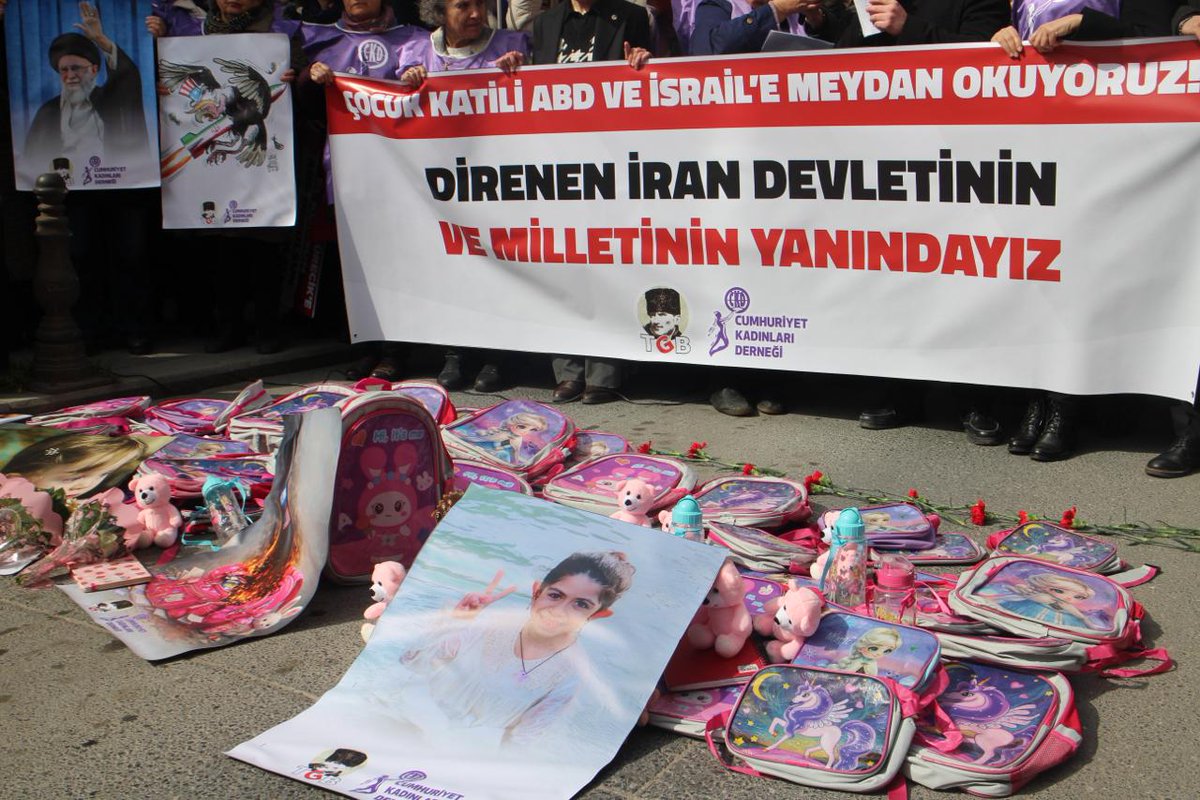
Social mobilization in Türkiye for national sovereignty and for the
On the sixth day of the conflict between the Islamic Republic of Iran and the United States and Israel, and…


The mass regularisation of illegal immigrants in Spain and its
Strong opposition in Spain and Europe to the new decree law aimed at the mass regularisation of immigrants. In January…


Kiev, the Bomb, and a Fractured World Order
In late February 2026, Russia’s Foreign Intelligence Service alleged that the United Kingdom and France were plotting to provide Ukraine…


Hegemonic restoration and unlimited war in the Arctic-space multipolar competition
In the context of the transition to a multipolar order, characterized by the erosion of Western unipolar dominance and the…

The Return of the Monroe Doctrine
This event aimed to analyze the concrete contemporary geopolitical landscape under the focus of the practical reactivation of the Monroe…
Iran-US-Israel War: What the experts say
The long-awaited war between the Islamic Republic of Iran, the United States and Israel has begun, the real trajectory of…

Argentine-U.S. Trade Agreement: Cooperation or Vassalage?
On February 5, the Agreement on Reciprocal Trade and Investment was signed between the administrations of Donald Trump and Javier…

Situation of the new round of EU sanctions against Russia
The European Union is approaching the twentieth round of sanctions against Russia, each new one more unsuccessful than the previous…

Not to mention the current High Representative of the Union for Foreign Affairs and Security Policy, Estonian Kaja Kallas, whose utter inconsistency and incompetence are sometimes even embarrassing. To be fair, the poor qualitative level of political leadership affects not only the European Union, but also each of its member countries, and has serious repercussions for society as a whole.
I recently came across an interesting essay by the Spanish philosopher and thinker José Ortega y Gasset, entitled “Invertebrate Spain,” which contains a passage that seems truly prophetic, considering it was written in 1921, and which deserves to be quoted: “Now, if for several generations there is a lack or shortage of men of vigorous intelligence, who serve as a tuning fork and model for others, who set the tone of mental intensity demanded by the problems of the time, the masses will tend, according to the law of least effort, to think with less and less rigor; the repertoire of curiosities, ideas, and points of view will progressively diminish until it falls below the level imposed by the needs of the moment. We will have the case of an atrophied and intellectually degenerate race.”
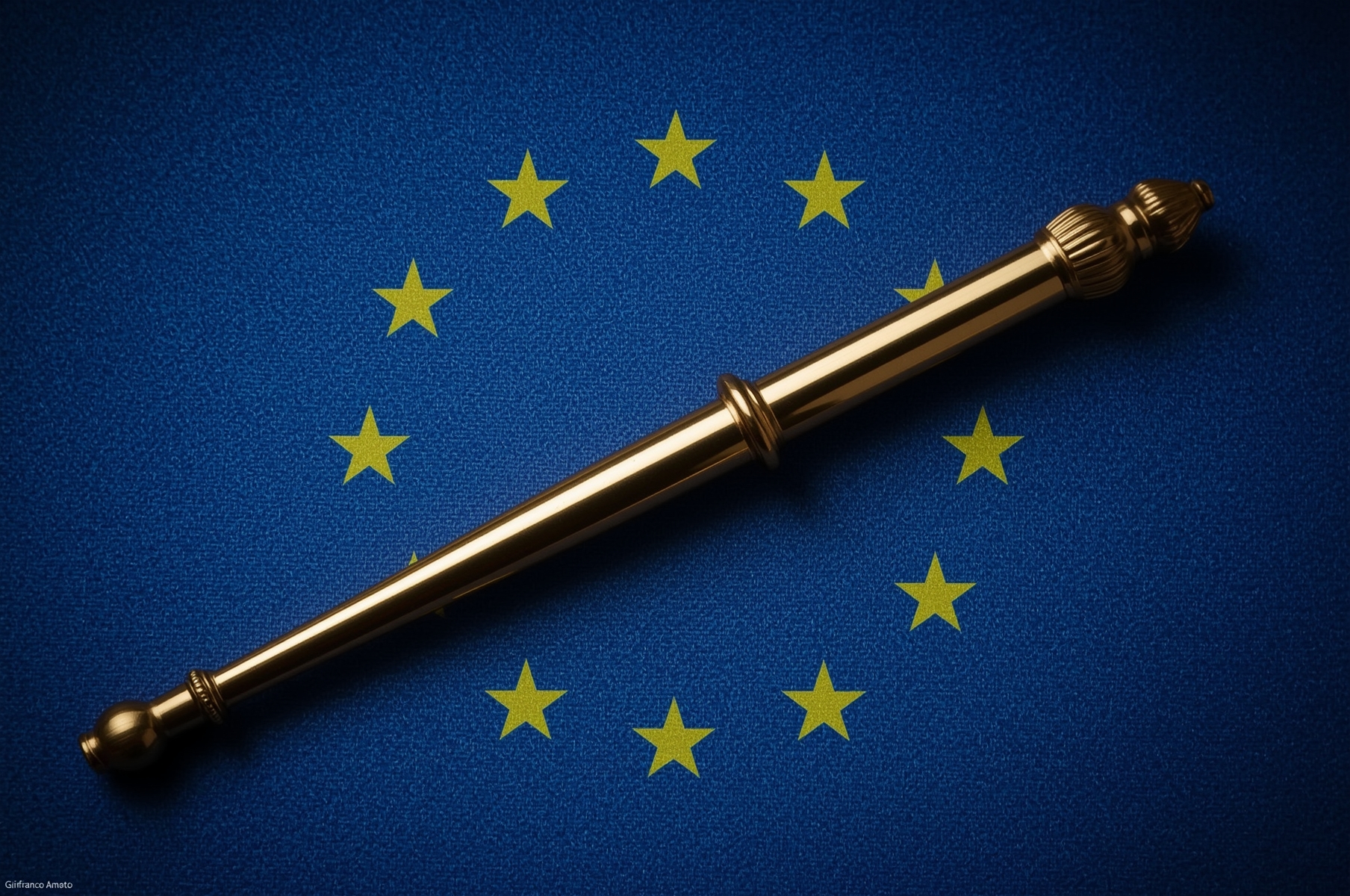
The historic event in Anchorage marked the end of what might still have been a semblance of a European foreign policy. But it is the meeting in Washington on August 18, 2025, between Trump and European leaders that represents the clearest demonstration of the new world order and the inconsistency of the Old Continent: the Emperor summons his vassals to his court, who come to pay homage and receive his instructions. Everyone, from every perspective, understood who holds the scepter in the West today. It couldn’t be clearer.