As the Panama Canal faces external and climatic pressures, the Strait of Magellan is gaining prominence in the struggle for control of global shipping routes.
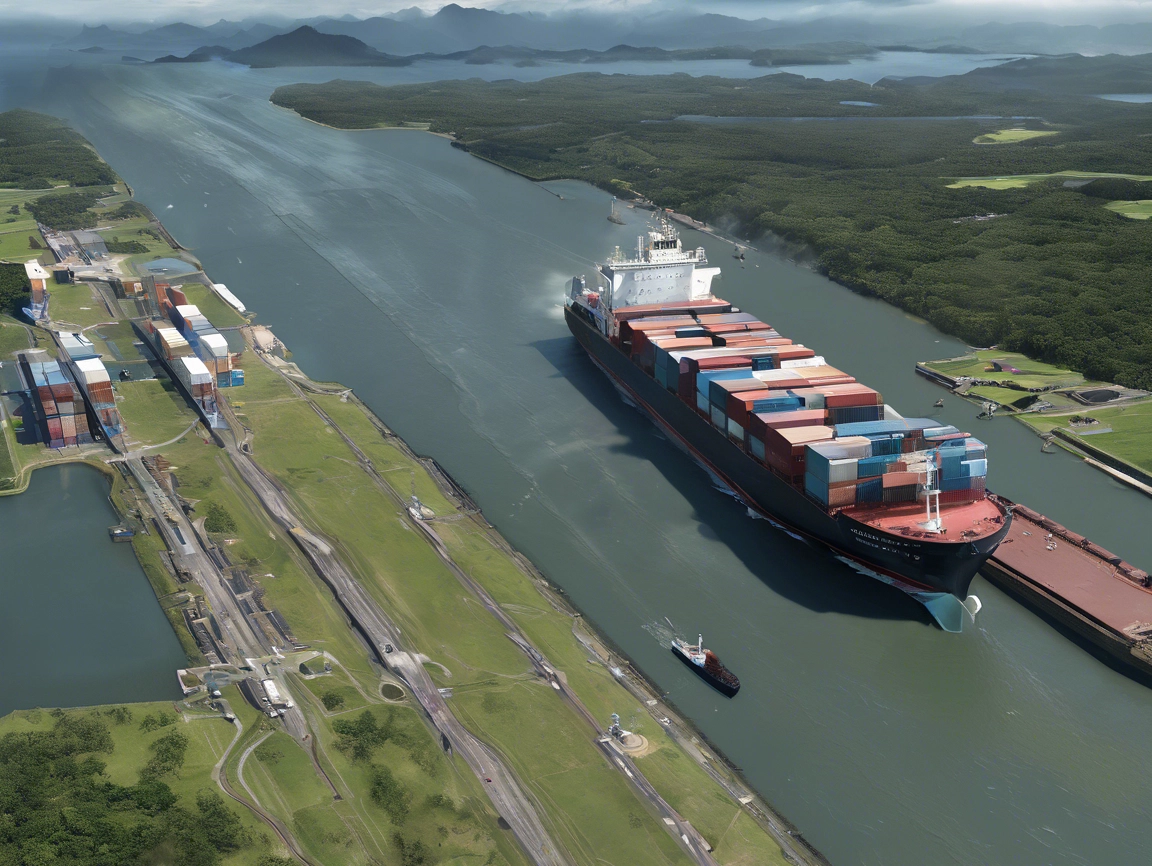
In the competition for global hegemony, control and security of major maritime routes are crucial for world powers. Two strategic corridors in Latin America, the Panama Canal and the Strait of Magellan, connect oceans and continents, serving as vital arteries for global trade and geopolitical influence. While the Panama Canal remains the main route between the Atlantic and Pacific, the Strait of Magellan represents an essential alternative, especially for vessels unable to transit through the canal or seeking to avoid areas of heightened international tension.
This strategic importance has increased in a global context where new routes, such as the Arctic Route, are emerging and putting pressure on old trade routes. At the same time, events such as the blockage of the Suez Canal in 2021 demonstrated how vulnerable these arteries are to unexpected incidents.
Added to this are climate phenomena such as the persistent drought that has reduced the Panama Canal’s operational capacity and growing diplomatic tensions and military pressure on the region, which jeopardize the logistical stability of the hemisphere.
The intensified presence of the United States and China in the area, with naval patrols, surveillance bases, port investment, and strategic agreements, generates an environment of competition and risks to free movement. In this scenario, the Strait of Magellan not only gains relevance as an alternative route but also as a space where regional sovereignty is challenged by external interests, affecting maritime security and Latin America’s commercial capacity.
Recent data show that in 2024, the Panama Canal moved more than 380 million tons of cargo, setting a record. However, its limitations in the face of the growing fleet of mega-ships keep the Strait of Magellan a critical option. However, this strait faces challenges such as adverse weather conditions, limited port infrastructure, and less regional coordination for its management and security.
External pressure, coupled with threats such as piracy, cyberattacks on logistics systems, and tensions between military blocs, is driving up logistics costs and transit times, undermining Latin American competitiveness in increasingly demanding global markets.
Conflict Hypotheses: What Could Go Wrong?
Given the growing geopolitical value of these routes, several strategic analysis centers have begun to outline conflict hypotheses in the Americas’ interoceanic maritime corridors:
1. Diplomatic escalation between the US and China in Panama: A potential open struggle for control of critical infrastructure, such as ports and telecommunications, could lead to trade blockades, sabotage, or cross-sanctions.
2. Sabotage or forced accident in the Panama Canal: In a hybrid warfare context, a failure caused by or attributed to a foreign actor could temporarily close the canal, diverting traffic to more costly and unstable routes.
3. Cyberattacks on navigation and port control systems: State or paramilitary groups could attempt to paralyze logistics chains through cyberwarfare operations.
4. External pressure to restrict transit from certain countries: Under global sanctions schemes, trade flows could be interrupted by third countries (such as Venezuela, Iran, or Russia), using these routes as geopolitical tolls.
5. Indirect militarization of the Strait of Magellan: As its strategic value increases, ships or bases could be deployed in nearby areas, increasing the risk of incidents between fleets or disputes with Chile and Argentina over control and presence.
6. Covert militarization of the Panama Canal and the Panama Strait: Although Latin America has so far tried to maintain a distant stance in the face of conflicts between major powers, the region’s strategic maritime corridors are beginning to show signs of covert militarization. In the Panama Canal, Washington has repeatedly expressed its concern about the growing influence of Chinese companies, particularly over port operators with long-term contracts.
The Chinese company Hutchison Ports, for example, controlled key terminals at both ends of the canal, raising US suspicions of surveillance, political influence, and possible dual (civil-military) use of the infrastructure. The aforementioned company sold its facilities to the US private equity firm BlackRock.
This sale was partly due to pressure from the Trump administration and China’s growing influence in Latin America, all to the astonishment, surprise, and dismay of the Chinese government and nationalist sectors.
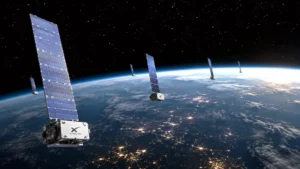
Meanwhile, in the Strait of Magellan, the repositioning of naval units, visits by extracontinental warships and/or “scientific” vessels, the strengthening of logistical capacities in ports in southern Chile and Argentina, and increased satellite surveillance of the area suggest preparation for possible reconfigurations of global maritime traffic.
Although not officially declared, indirect militarization is already underway, disguised as civilian investment, security cooperation, and environmental monitoring. In this context, South America is emerging as a territory under pressure, a space where hegemonic powers will compete for routes, resources, and strategic positioning on an increasingly fragmented playing field.
Region and Routes in Dispute
As was the case during the first Cold War, the region will not be immune to systemic tensions and the pressures of hegemony: it is no longer just about ideologies, but also about routes, logistics, data, critical raw materials, and geoeconomic positioning.
Amid the realignment of global power, maritime trade has once again become a strategic battleground. Along with the rivalry between the United States and China, and the rise of other powers such as India, Turkey, and Iran,
Latin America is once again emerging as a contested territory, subject to cross-pressure from superpowers vying for global hegemony, but also from mid-sized, extracontinental powers seeking to gain influence and strategic stature in the post-globalist era.
In this context, the security and control of the continent’s major maritime corridors—the Panama Canal and the Strait of Magellan—become fundamental.
Water shortages in Central America, diplomatic conflicts between China, the United States, and Panama, the accident in the Suez Canal that paralyzed global trade in 2021, and the melting ice that is slowly opening up the Arctic Route are all signs of a new world of dispute.
The southern routes are no longer secondary: they are points of potential friction. These hypotheses do not seek to fuel paranoia, but rather to underscore what is at stake: the stability of Latin America as a reliable transit zone or multipolar interconnection node in a world under tension.
A strategic opportunity: Latin America as a multipolar logistics hub
Specialists point out that it is essential to strengthen regional integration to jointly manage maritime security in the surrounding seas, in addition to modernizing and standardizing port infrastructure. Investing in regional technologies, such as satellite surveillance and coordinated naval capabilities, will allow us to defend sovereignty and protect these routes. Furthermore, active diplomacy is required to guarantee neutrality and free transit, minimizing the influence of external powers.
Port and logistics modernization, along with policies to mitigate the impact of climate change, are also key elements in improving the efficiency and resilience of maritime trade. Beyond the technical and logistical aspects, what is needed is political will for Latin America to decisively assume its role as an essential logistics hub for global trade, adopting a strategy of active neutrality that aligns with the new multipolar reality. It is not just about defending routes, but also about positioning itself as a reliable, stable, and open space for all nations, without becoming a field of dispute between major powers.
Ultimately, only with a shared and determined vision can Latin America transform the Panama Canal and the Strait of Magellan into true engines of development, free from the interference that currently limits their economic and geopolitical potential. In a multipolar world, there is no room for passivity: Latin America must act as a logistical and diplomatic power at the service of world peace.
While the Panama Canal faces external and climatic pressures, the Strait of Magellan is gaining prominence in the struggle for control of global maritime routes.
Latin America must decide whether it will be a spectator or a logistics power in the new multipolar era. With drought in Panama, tensions between powers, and the return of the Strait of Magellan to the strategic map, South America faces the challenge of defending its maritime sovereignty in the midst of a silent trade and geoeconomic war.
The costs of non-cooperation will increase if the international system becomes more unstable.