The end of the Cold War marked a new debate two competing theories emerged to explain the dynamics of global politics in the post-cold war era: Fukuyama’s “end of history” and Huntington’s “clash of civilizations.” As a pragmatic liberal theorist, Fukuyama argues that the fall of communism and the spread of liberal democracy mark the end point of humanity’s ideological evolution.
For Fukuyama, liberal democracy would spread worldwide and all societies would eventually converge on a single form of government. Contrary to this, Huntington speculates that the primary source of conflict in the post-Cold War world will not be ideological, but cultural. He argues that the world is divided into several distinct civilizations, each with its unique culture and values, which could make clash unavoidable as they compete for resources and influence.
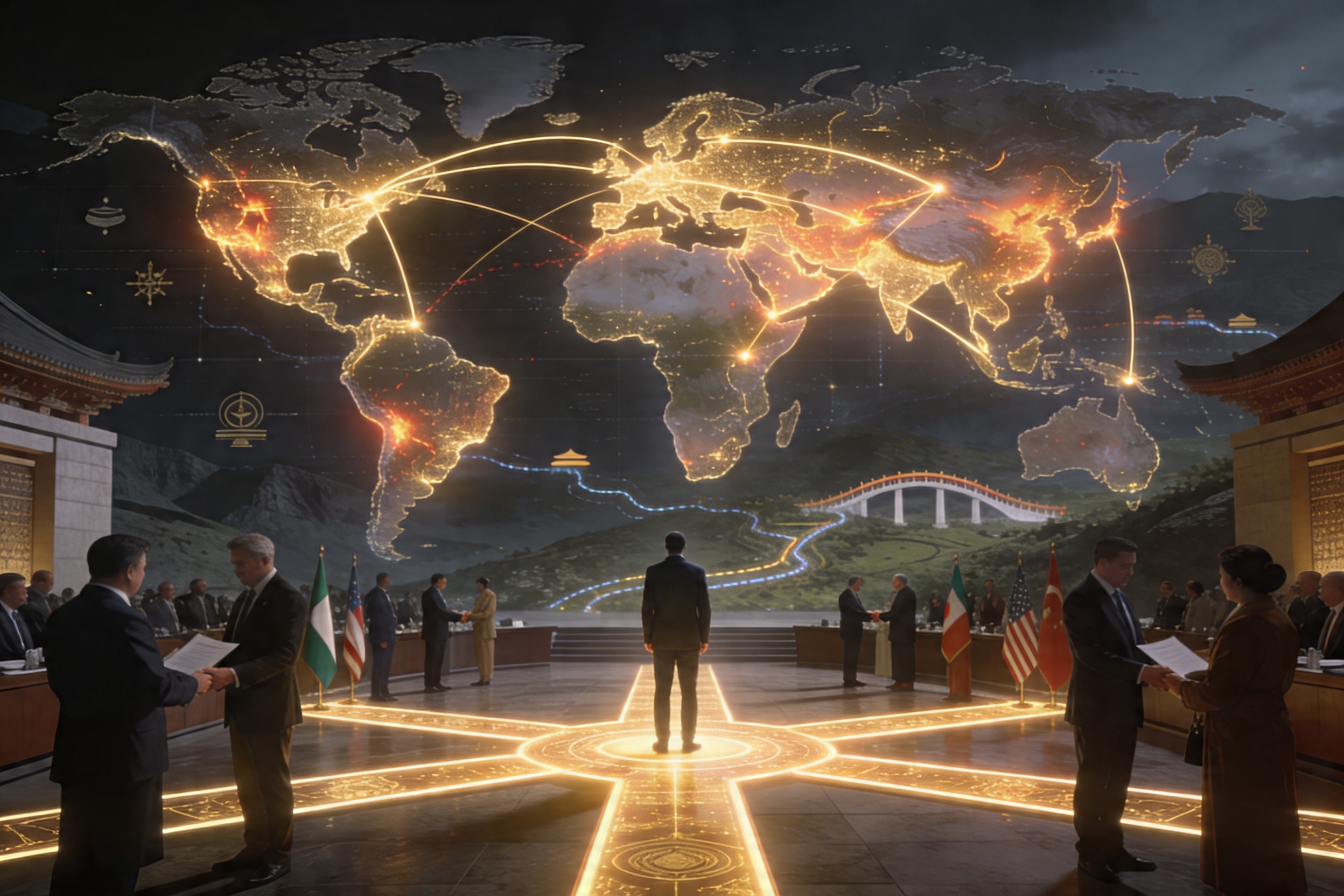
In my view, one of the major geopolitical transformations at the end of the Cold War was the end of the bloc politics and the emergence of new regional centric geopolitics. The regional centric geopolitics refers to the rise of new “sovereign” hegemonic competition limited to regional zones. States like Pakistan, India in South Asia, and Malaysia and Vietnam in the South East Asia represents the domain regional centric geopolitics.
If we analyze the foreign policy dimensions of these states we see a clear departure from the notion of traditional based bloc or alliance politics. In this respect, the case of Islamic Republic of Pakistan is unique particularly when it comes managing its position within the geopolitical theatre. Due to its unique geostrategic position in the Asian continent, Pakistan has historically played mature role in the global diplomacy. One notable example is its role in establishing the relations between the US and China in 1970s during the height of Cold War.
Despite being part of the Western bloc during the Cold War, Pakistan perpetually maintained its status of “Swing State” in the global Grand chessboard. In the past two decades, Pakistan has further improved this status by uniquely maintaining its relations with global powers i.e China, Russia vis-à-vis US in a strategic manner. In 2015, despite pressure from the Western powers particularly from the US, Pakistan joined the China’s Belt and Road Initiative (BRI) thereby professing its strategic sovereignty.
Over time this bold move opened the opportunities for Pakistan to became part of major regional grouping like Shanghai Cooperation Organization (SCO). A major milestone in its diplomatic career occurred on June 9, 2017, during the 17th heads of the state meeting in Astana Kazakhstan, when Pakistan officially became the member of SCO group along with India. Joining SCO was a not just a symbolical event rather a strategic move towards claiming its deserved position in the emerging Multipolar World (MW).
Today, in the face growing geopolitical uncertainity around the World, Pakistan with its image of “Swing State” can play a deliberate role in the global political theatre. For intance, during the last month US-Israel led attack on Iran, which turned into 40 days long War, Pakistan played a very silent role through back-to-back diplomatic channels in forging peace talks to end the war.
The peace talks held last week in Islamabad once again thrust Pakistan onto the world stage, reiterating its reputation as a nation of remarkable diplomatic dexterity. The historic meeting brought together a US delegation under Vice President JD Vance and an Iranian delegation led by Speaker of the Iranian Parliament Mohammad Bagher Ghalibaf, two powers whose tensions have long defined the threshold of global geopolitics, yet both chose to meet on Pakistani soil.
While other regional heavyweights such as Oman, Turkey, and Egypt played meaningful supporting roles in brokering the dialogue, but it was Islamabad not Istanbul, Muscat, or Sharm El-Sheikh that earned the privilege of hosting.
The reason is no coincidence: the close strategic partnership of Pakistan with Washington on one hand, and its warm cultural affinity with Tehran on the other, make it a rare bridge in an increasingly divided world. This also demonstrates the geostrategic importance of Pakistan during times of geopolitical volatility at the global level, meanwhile underpinning the fact that Pakistan has a great potential of becoming a “swing State” in the emerging Multipolar World. In this respect,