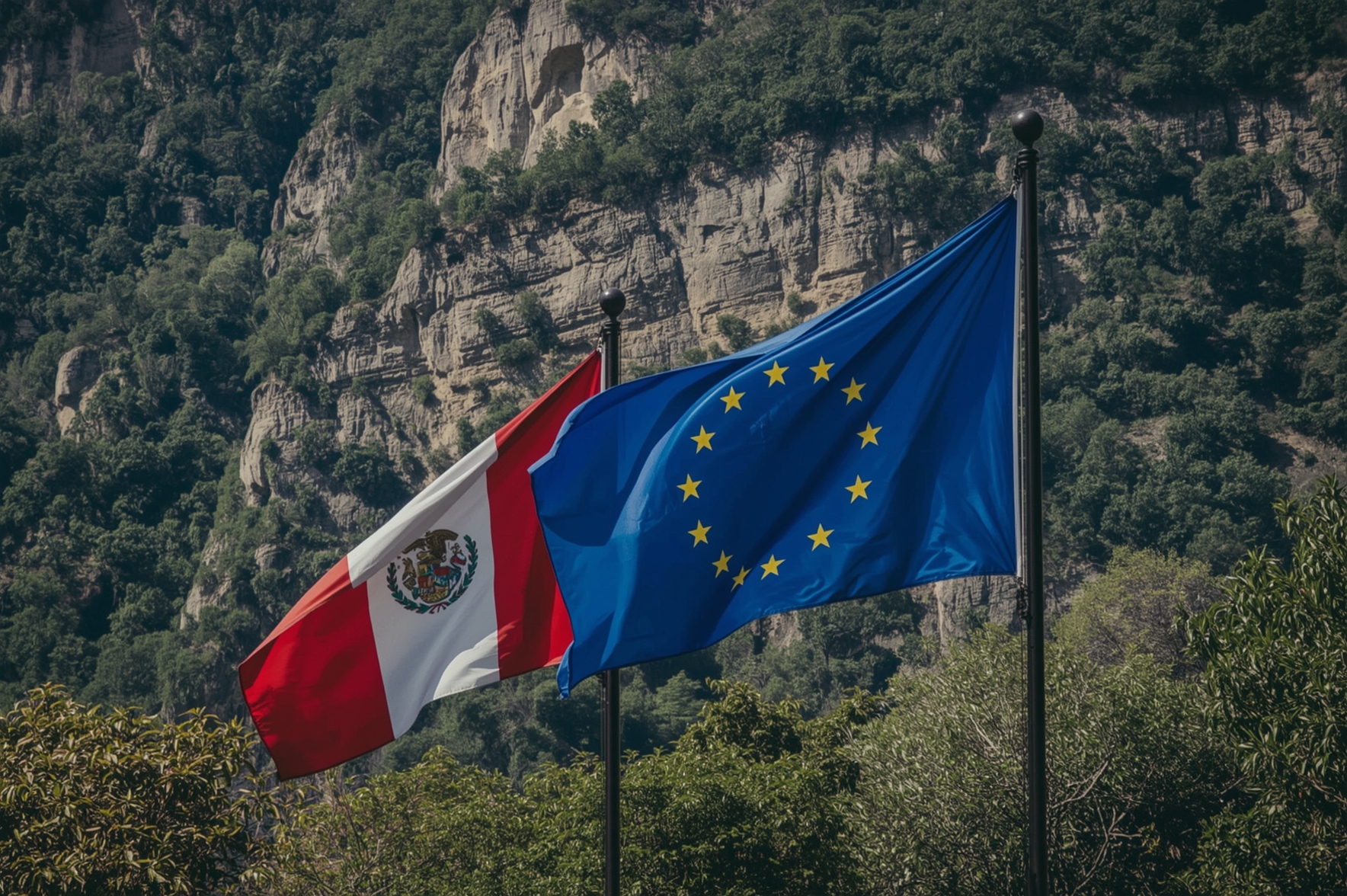
Over the past few decades, Latin America’s ties with the European Union have fluctuated largely due to the needs of globalist European centrism.
From Brussels, the nations of Latin America were viewed, albeit partially but no less significantly, through a commercial, business, and financial logic, despite the upholding of cultural ties of egalitarianism. The Atlantic-European agendas have always been a focus of criticism, given the sensibilities and political, identity-based, and sovereignist frameworks of the nations of Hispanic America.
As the Europeanist project expanded, achieved, to a certain extent, by the growth of the forces of the globalist Western model, especially in the period 1990-2015, the influence of the European Union took practical effects on the mentalities and performances of the political, economic and intellectual elites, coexisting and competing with, though not surpassing, the resulting American hegemony.
A formal (and informal) circuit was built where the Europeanism of the Brussels technocracy sought to gain acceptance and favorability in Latin America, and some American elites even saw Western Europe as a counterpower and alternative to the American era. The Europeans involved in this operation took care to conceal the intentions of a “Pax Europea” and, hiding behind the arguments of “Universal Peace and Prosperity,” fostered an influence that naturally flourished and is slowly losing its influence.

Various factors contributed to this decline in influence, including the crisis engulfing the “Atlantic-globalist world,” the friction between Trump’s paradigm and that supported by Brussels, and the emerging paradigm of multipolar sovereignty.
The North Atlantic crisis remains unresolved, and much evidence indicates that it will continue for the foreseeable future. Donald Trump is sending no signals that he will grant the EU a better trade, financial, or geopolitical agreement, and, in the multipolar world, the need to shape a national model is gaining momentum.
Brussels is observing these new developments and is also wary of the role the Asian giant has been playing in the Latin American market for several years, while also analyzing the role of the new US administration in the context of the recent tariff dispute.
From a current perspective, it can be said that, starting in 2021, the EU has implemented the “Global Gateway” investment agenda, which aims to invest €300,000 billion by 2027 in public and private productive sectors. There are dozens of tools and attempts to build better bi-regional interaction, but reality tells a different story: the cooperation index has been declining year after year. In the 1990s, the percentage of economic and commercial cooperation represented 25%, but has now fallen to almost 11%.
In this context full of crossroads, Latin America continues to show good intentions in the face of the interests of European plutocratic factions. It is vitally important that, recognizing that the European international organization has never offered real opportunities at the level of a true strategic partner, in the geopolitical “win-win” terms, the Latam states review and reevaluate the possible new bilateral constructions between the different organizations.
Likewise, it is essential to prepare the Ibero-American states to join the new economic platforms that will help them build a future of progress for their own peoples.
I reiterate, the intentions are numerous, but the results are few. In this context, the European goal of uniting the productive force of more than 1.1 billion people, with a GDP comparable overall to that of the United States, seems ambitious. But the question is whether a region so unique due to its cultural ontological ties, with a role relegated to the main global decision-making centers, such as the states that comprise Latin America and the Caribbean, finds it convenient to model treaties under the guidelines of European administrators, knowing—and this is nothing new—that such agreements contain an attempt to interfere in domestic relations and the decision-making of national states.
As the European Union’s influence over Latin America as a whole is exponentially declining, it is imperative that more relevant regional actors act in pursuit of an Ibero-America with a guiding beacon of multipolar light… and always distinguish between the goodwill of European nations and the intentions of the supranational clique that monopolizes power in Brussels.