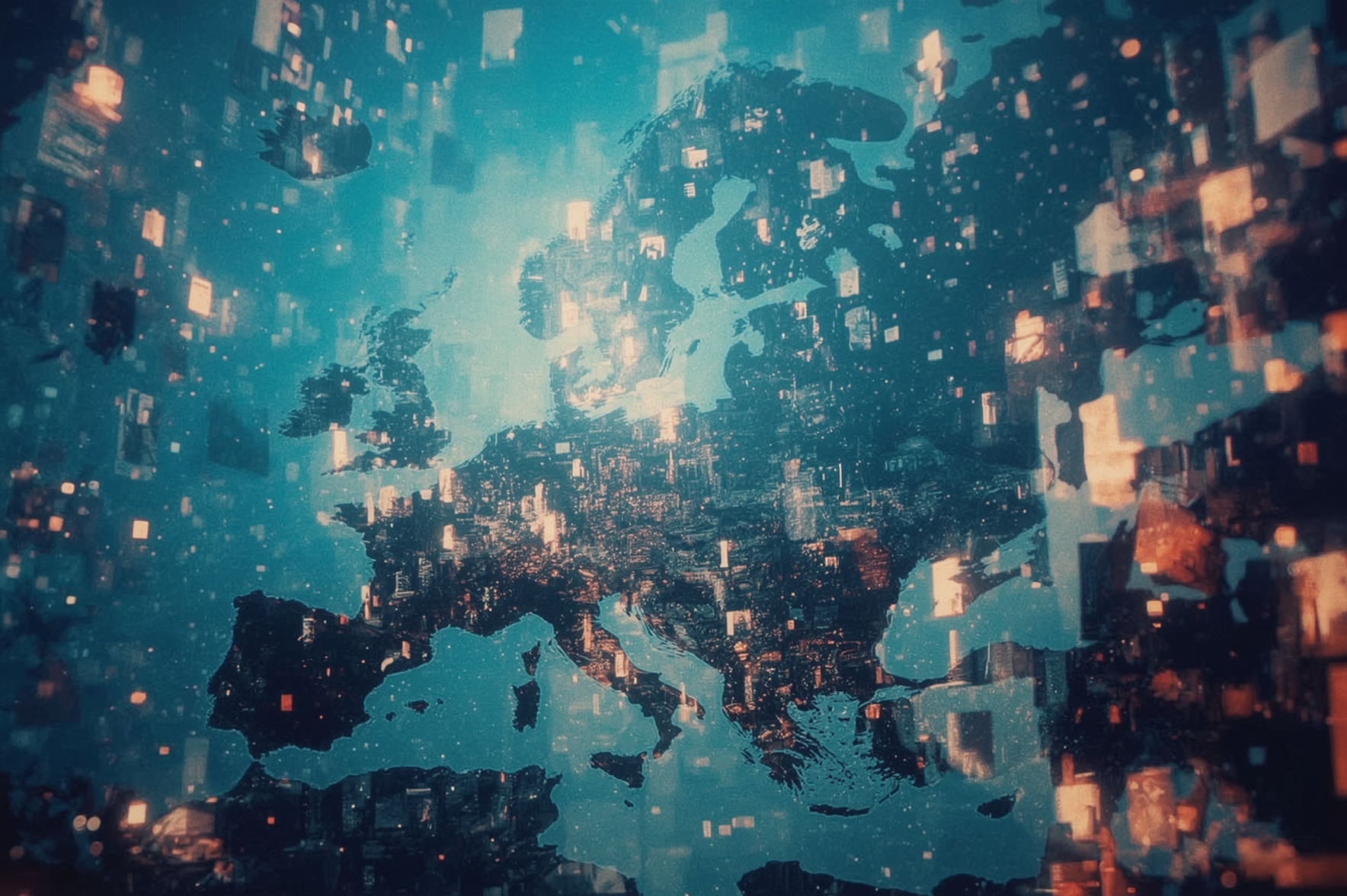
Europe as a continent reached its pinnacle in the years leading up to the First World War. During these years, England was the leading maritime power and Germany the land power. There were also major European powers such as France, Russia, Italy, and the Austro-Hungarian Empire. When war broke out between them, the continent was weakened and lost ground to the United States and Japan, while maintaining a multipolar global order.
After the Second World War, which led to the destruction of Europe and the fall of Japan, a world order was established with two major poles, one led by the Americans and the other by the Soviet Union. From that moment on, Europe began to move within the framework created by these two powers.
To halt the USSR’s advance on Western Europe, the US developed its containment strategy with the Marshall Plan, which successfully rebuilt Europe. In this context, in 1951, France and Germany created the Steel and Coal Community as a means of bridging the gap between the two continental powers. This would serve as the basis for the future European Union, created in 1993, in a world with new rules following the fall of one of the poles (the USSR) and the establishment of a unipolar world (globalization), led by the US.
Globalization and the European Union After the fall of the Soviet Union in the early 1990s and the establishment of a unipolar world (globalization – an interdependent world), there was the rise and consolidation of international organizations, which would create the conditions for peaceful conflict resolution. Thus, Europe consolidated itself as a common bloc that allowed the continent’s major powers to secure a large-scale market for their products, relocate their companies in search of lower costs, and trade with the rest of the world, generating significant economic development.
However, during the economic boom, European countries did not seek to achieve a greater share of power, as they felt comfortable with the prevailing situation, mainly because they had their backs covered by the NATO security treaty, led by the global hegemon of the time.
The End of Globalization and the Rise of National Interest
Friedrich List, the thinker who laid the foundations for Germany as a 19th-century power, taught that power is more important than wealth, since wealth without power will easily be seized by someone with power. The German thinker added that: “The power to create wealth is infinitely superior to wealth itself.” So, if Europe lacks the power to shape the world in its favor, can it continue to boast the levels of influence it once had?
Evidently not, since it lacks the power to maintain the old status quo of globalization. National interests and agendas are being imposed on the processes of globalization and global agendas expressed in international organizations, which is increasingly creating rifts within the European community.
Latin America and the European Union
During the pre-Globalization process, the early 1970s, and the post-Globalization process—although the date of its end is debated, we could conclude that this process took place between the early 1990s and the late 2000s—one of the big winners was China, by participating in long supply chains. Unlike the EU, the Asian country planned its development to achieve the greatest possible share of power and thus obtain the benefits that power brings.
This projection of power allowed it, among other things, to become the main trading partner of most countries in the world, understanding trade as an instrument of power derived from economic interdependence.
Over the past few decades, China has displaced the EU from various areas of influence, including the Middle East, Africa, and Latin America. In these latter countries, the EU went from representing 25% of trade to just 14% in just 20 years. Such is the loss of influence and consideration that Latin American countries develop their foreign policies based on the pendulum concept, seeking to take maximum advantage of the two powers seeking to dominate the region: the US and China.
In fact, neither country considers establishing a counterbalance based on its relationship with Europe and its continental organization.
From all this we can conclude that there is a notable contraction of the EU’s power, generated by systemic factors (external), such as the multipolar world and the struggle for geopolitical zones of influence, and by the lack of power politics (internal factors) that involve both the will and the capacity that Europe as a whole may have to return to being, what it sometimes seems to despise so much, Europe itself.