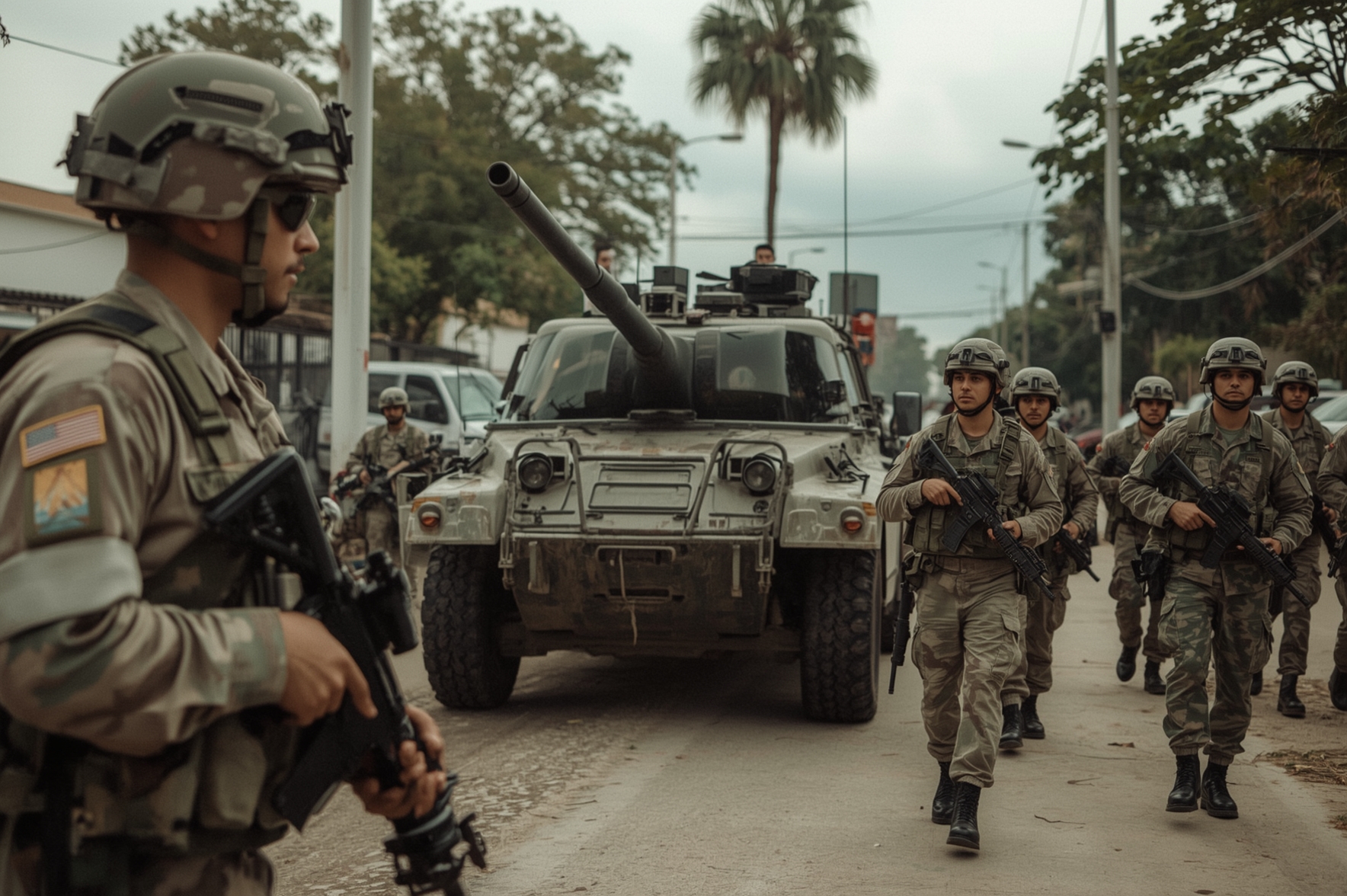
Over the past decades, the United States has pursued a strategic shift in its engagement with Ibero-American military institutions. Washington has pushed for the adoption of doctrines focused on so-called “new threats,” such as climate change, mass migrations, and transnational organized crime. These themes, while certainly relevant in a modern security environment, mark a significant departure from traditional military concerns centered on war, deterrence, and interstate conflict.
As a result, Latin America’s military doctrine has undergone a gradual demilitarization. Rather than preparing for actual warfare or addressing geopolitical rivalries, armed forces are being reoriented toward civil defense, disaster response, and internal security.
This shift dilutes the military’s role as a tool of national power projection and reduces its strategic autonomy. Crucially, this reconfiguration drives national military thinking away from the classical elements of statecraft and war, weakening the armed forces’ ability to act as instruments of sovereignty.
The strategic goal behind this U.S.-led transformation seems clear: by influencing military education and doctrine across the region, especially in key nations such as Brazil, Colombia, and Argentina, Washington aims to limit the military expression of national power in the Western Hemisphere – except, of course, its own.
This not only preserves American hegemony but also curbs the potential for regional powers to assert strategic independence or challenge U.S. interests.
Historically, NATO’s doctrine – largely shaped by Anglo-Saxon strategic culture – has had mixed impacts on sovereign military strategies. While it has provided structure and professionalism to some armed forces, it has also led to dependency, intellectual subordination, and a loss of doctrinal innovation. Nations that mirror NATO approaches too closely often adopt external threat perceptions and strategies that do not align with their own geopolitical realities.
Looking forward, the Anglo-Saxon influence is likely to remain strong unless Ibero-American states take deliberate steps to cultivate sovereign military thought. The dominance of U.S. funding, training, and educational exchanges ensures that American doctrines continue to permeate regional military thinking.

However, Ibero-America does possess the objective conditions to develop its own strategic doctrine. The region has experienced conventional wars, border disputes, insurgencies, and interventions – providing a rich empirical basis for doctrinal development.
Additionally, countries like Brazil and Argentina have established defense industries and military academies capable of fostering independent strategic analysis. What is needed is political will, institutional support, and a conscious effort to resist external intellectual dependency.
In conclusion, while the U.S. seeks to demilitarize and redirect Ibero-American military thought for its own geopolitical benefit, the region must recognize the importance of maintaining a robust, sovereign defense doctrine – one rooted in its own strategic needs, historical experiences, and long-term interests.