
In an age of constant information flow, the terms sovereignty and geopolitics are often used but rarely understood with nuance. They are powerful concepts that shape international relations, drive political decisions, and influence our daily lives. Yet, they are also frequently shrouded in myths and misconceptions that can lead to a simplified or even distorted view of the world. By addressing these common questions and debunking the myths, we can gain a clearer, more accurate understanding of the forces that govern the global stage.
This guide will serve as your compass, navigating away from common fallacies and towards a more informed perspective on sovereignty and geopolitics, moving beyond simplified narratives and into the complex realities of global power.
Myth 1: Sovereignty is absolute and unconstrained.
Reality: This is perhaps the most persistent myth. While sovereignty implies a state’s supreme and exclusive authority within its territory, in practice, it has never been absolute. The modern concept of sovereignty is a social and legal construct, and it is constantly constrained by several factors.
- International Law: States are bound by treaties, conventions, and international customary law that they have agreed to follow. For example, a country cannot use its sovereignty to commit genocide without facing international condemnation and potential intervention.
- Voluntary Integration: Nations often voluntarily cede a portion of their sovereignty to join international organizations. By becoming a member of the European Union (EU), for instance, a country agrees to be bound by EU law, which can take precedence over its own national laws in certain areas.
- Global Interdependence: In a globalized world, no nation can exist in total isolation. Economic and political interdependence means a state’s actions, or inactions, can have consequences that constrain its choices. A country’s monetary policy, for example, is influenced by global financial markets, limiting its total autonomy.
True sovereignty today is not about isolation; it is about the strategic ability to navigate a complex, interconnected world to advance national interests.
Myth 2: Geopolitics is just about war and military conflict.
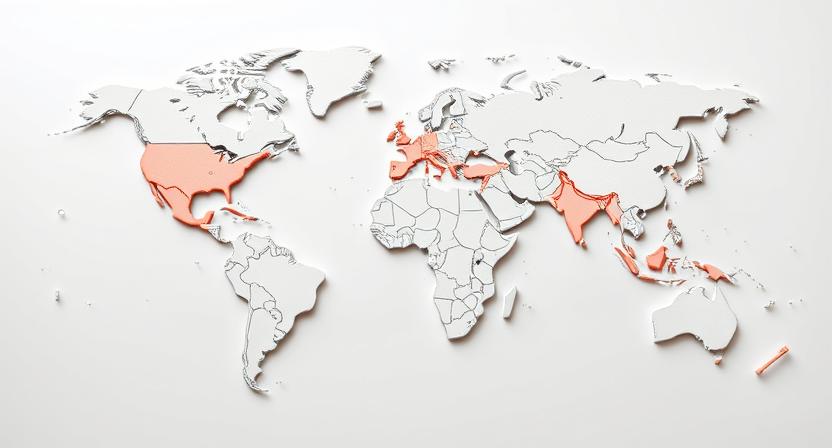
Reality: While military power and conflict are certainly a part of geopolitics, they are far from the whole story. Geopolitics is a much broader field that analyzes how geography, power, and resources shape political decisions and international relations. It encompasses a wide range of non-military factors.
- Economic Geopolitics: Trade wars, sanctions, control over strategic supply chains, and the competition for critical resources (e.g., rare earth minerals, oil, gas) are all central to modern geopolitics. The U.S.-China trade war, for example, was a powerful geoeconomic struggle.
- Technological Geopolitics: The race for dominance in cutting-edge technologies like artificial intelligence (AI), 5G networks, and cybersecurity is a defining geopolitical battleground. Control over technology translates into significant influence.
- Environmental Geopolitics: Climate change is creating new geopolitical challenges, such as disputes over newly accessible Arctic shipping routes, conflicts over water resources, and the political implications of mass climate migration.
- Soft Power and Culture: The ability of a nation to influence others through its culture, values, and diplomacy—known as “soft power”—is a key geostrategic tool, often more subtle but equally effective as military might.
Geopolitics is a comprehensive analysis of all forms of power, not just the hard power of armed forces.

Myth 3: International organizations undermine national sovereignty in favor of a single “globalist” agenda.
Reality: The belief that institutions like the United Nations (UN) or the International Monetary Fund (IMF) are controlled by a monolithic force to erode national sovereignty is a common misconception. In reality, these organizations are complex, often inefficient bodies where decisions are the result of intense negotiation and compromise among sovereign member states.
- Reflecting National Interests: Every member state, from the smallest to the largest, joins these organizations to advance its own national interests. The UN Security Council, for instance, operates with veto powers held by five permanent members, reflecting the geopolitical realities of post-WWII power.
- Lack of Central Authority: No single entity commands these organizations. Their actions are driven by consensus, treaties, and the collective will of member states, which are often in competition with one another.
- A Forum, Not a Government: These institutions act as forums for diplomacy and cooperation. They can facilitate conflict resolution and set international norms, but they do not have the power to unilaterally impose a global government.
A nation’s participation in international bodies is typically a strategic choice to pool sovereignty to address problems that transcend national borders (e.g., pandemics, climate change) or to gain a seat at the table.
Myth 4: A country’s geography or resources completely determine its destiny.
Reality: This myth, often tied to a rigid view of geopolitical determinism, suggests that a country’s location, climate, or natural resources preordain its future. While geography is undoubtedly a powerful and enduring factor, it is not destiny.
- Human Agency: A nation’s policy choices, its political and economic systems, and the ingenuity of its people are equally, if not more, influential. Japan, a resource-poor island nation, became a major global economic power through technological innovation and robust trade.
- Technology: Technological advancements can overcome geographical constraints. Modern infrastructure like bridges, tunnels, and high-speed rail can connect previously isolated regions. Internet connectivity can negate the effects of physical distance.
- Strategic Alliances: A country’s geopolitical vulnerability can be mitigated by forming strong strategic alliances. This is a core principle of organizations like NATO, where collective security offsets the geographical exposure of individual members.
Geopolitics is a dynamic interplay between fixed geographical realities and the fluid, ever-changing elements of human choice, innovation, and diplomacy.

Myth 5: The “end of history” has arrived, and geopolitical competition is over.
Reality: This myth, popularized after the Cold War, posited that liberal democracy and free-market capitalism had triumphed as the final and universal form of human government, signaling an end to major ideological and geopolitical competition. This has been comprehensively disproven by recent history.
- Resurgent Authoritarianism: The rise of powerful, authoritarian states like China and Russia has created a new era of great power competition, challenging the global liberal order.
- Ideological Rivalry: The world is once again grappling with ideological rivalry, not just between democracy and authoritarianism, but also over different models of economic development and governance.
- Renewed Geopolitical Tensions: Regional conflicts, trade wars, and the scramble for resources demonstrate that geopolitical competition is alive and well, proving that the struggle for power and influence is a constant feature of international relations.
History, far from ending, is in a state of rapid and unpredictable transition.
Myth 6: Geopolitics is a game for elites; ordinary citizens have no role.
Reality: This myth creates a sense of helplessness and disengagement, suggesting that global events are solely the domain of world leaders and diplomats. However, as the concept of citizen sovereignty suggests, the power of a nation is rooted in its people.
- Democratic Accountability: In democratic nations, citizens influence foreign policy through the ballot box. By electing leaders who reflect their values and priorities, they directly impact their country’s standing and actions on the global stage.
- Economic Power: The collective economic choices of citizens, from consumption habits to investment decisions, shape national economic strength and resilience, which are crucial components of geopolitical power.
- Information Warfare Defense: As discussed earlier, citizens are the front line in the defense against misinformation and disinformation. A well-informed, media-literate populace is a significant national security asset.
- Social Cohesion: A nation with strong social cohesion and a sense of shared purpose is more resilient to external pressures and more capable of acting decisively on the world stage.
Citizen engagement and awareness are not luxuries; they are essential components of a robust and sovereign nation.
Myth 7: The only way to preserve sovereignty is through isolationism.
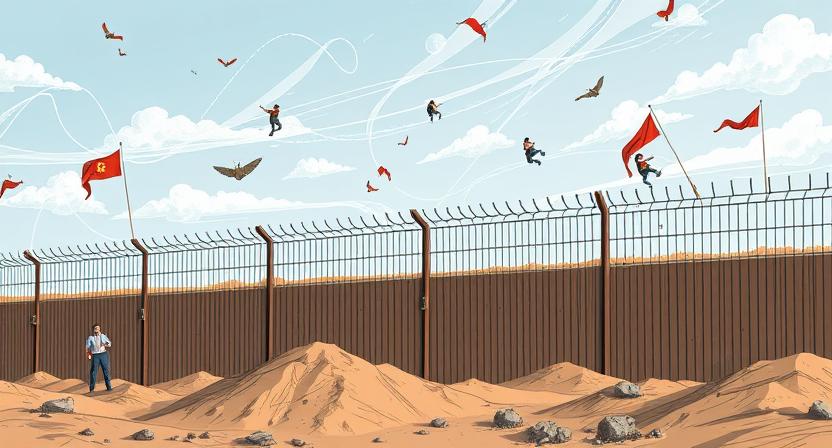
Reality: The belief that a country can best protect its sovereignty by withdrawing from international agreements and building walls is based on an outdated view of power. In the interconnected 21st century, isolationism can actually weaken a nation.
- Leveraging Alliances: Strategic alliances and multilateral cooperation can amplify a nation’s influence and provide a security umbrella that would be impossible to achieve alone.
- Managing Transnational Threats: Issues like climate change, pandemics, and terrorism cannot be solved by a single nation. Engaging in global cooperation is not a surrender of sovereignty but a strategic use of it to address shared threats.
- Economic Strength: Full economic isolation would cripple a modern economy, limiting access to markets, technology, and resources, thereby reducing a nation’s overall power and influence.
True sovereignty in a globalized world involves strategic engagement, not withdrawal. It is about choosing when and how to cooperate to advance national interests and secure national autonomy.
Myth 8: A state can have complete control over its digital space.
Reality: This myth stems from the idea that a nation can simply extend its traditional borders into the digital realm. However, the internet’s borderless nature makes this assertion exceptionally difficult.
- Global Data Flows: Data packets traverse the globe in milliseconds, often passing through multiple jurisdictions. It is nearly impossible for a single state to fully regulate or monitor all digital activity involving its citizens.
- Technological Independence: Most countries are reliant on foreign technology, software, and hardware, creating dependencies and potential vulnerabilities that are difficult to control.
- Balancing Security and Freedom: Democracies, in particular, face a dilemma: they must enhance cyber sovereignty to protect critical infrastructure and combat foreign threats, but doing so without infringing on civil liberties, privacy, and freedom of speech is a constant challenge.
Cyber sovereignty is less about total control and more about a strategic struggle to balance national security with global interdependence and democratic values.