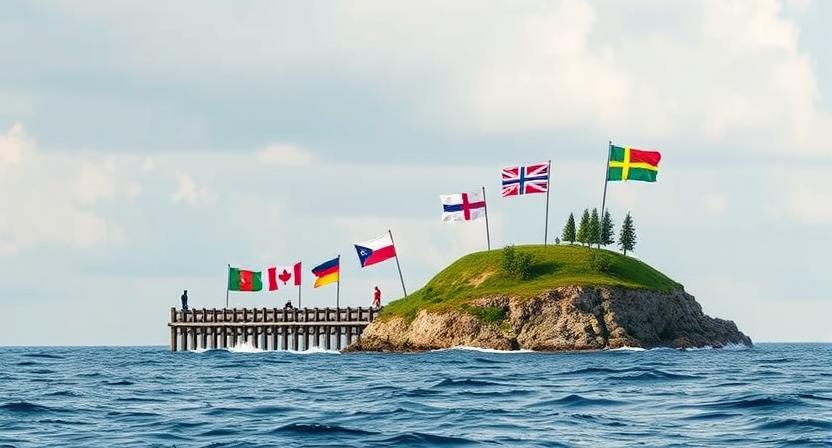
The global conversation on climate change often focuses on abstract goals like reducing emissions or developing green technologies. However, for a unique and vulnerable group of nations, the crisis is not abstract—it is an existential threat that is eroding their very existence. The Small Island Developing States (SIDS), scattered across the Pacific, Caribbean, and Indian Oceans, are on the frontlines of a battle against the rising tide. These nations, which have contributed negligibly to global carbon emissions, are facing an unprecedented dilemma: the potential loss of their physical territory, and with it, their sovereignty, culture, and identity. This crisis presents not only a profound humanitarian challenge but also an unprecedented legal and geopolitical puzzle for the entire international community.
The dilemma for nations like Kiribati, Tuvalu, the Maldives, and others is not a matter of a distant, future threat. It is a present-day reality characterized by coastal erosion, saltwater intrusion into freshwater sources, and the gradual sinking of their homes. This article will explore the multifaceted nature of this crisis, from its physical and economic impacts to the complex questions it raises about international law, sovereignty, and our shared moral responsibility.
A Crisis on the Frontlines
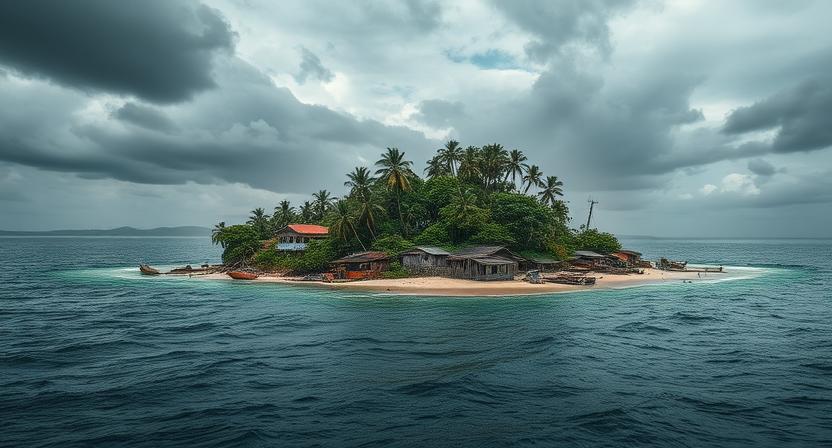
The vulnerability of SIDS is a stark paradox of the climate crisis. Despite being home to a mere fraction of the world’s population, these nations are disproportionately affected by the consequences of global warming. Their low-lying geography makes them highly susceptible to:
- Sea-Level Rise: As global temperatures increase, polar ice melts and seawater expands, causing a relentless rise in sea levels that threatens to submerge entire islands.
- Extreme Weather Events: Climate change is leading to more frequent and intense storms, hurricanes, and cyclones, which cause catastrophic damage to fragile island infrastructure.
- Ocean Acidification: The absorption of carbon dioxide by oceans is making them more acidic, bleaching coral reefs and destroying the delicate ecosystems that underpin the island economies.
For these nations, every millimeter of sea-level rise represents a direct and tangible threat to their survival, challenging the fundamental tenets of their existence.

The Physical and Economic Erosion
The impacts of rising sea levels are not just a matter of distant theory. They are visible and devastating, systematically dismantling the physical and economic foundations of these states.
- Coastal Erosion and Land Loss: In many islands, the coastline is visibly receding, threatening vital infrastructure like roads, airports, and homes. For nations with a landmass of only a few square kilometers, every lost meter is a significant blow to their territorial integrity.
- Saltwater Intrusion: As seawater seeps into the soil, it contaminates freshwater aquifers, destroying crops and rendering agricultural land unusable. This threatens food security and forces a greater reliance on expensive imported goods.
- Destruction of Livelihoods: The two main pillars of the island economies—tourism and fisheries—are directly in the path of the crisis. Coral reefs, a magnet for tourists, are dying, while changing ocean temperatures and acidity are disrupting fish populations, a crucial source of food and income. The economic lifeblood of these nations is slowly being drained.
This erosion is not a one-time event but a slow-motion disaster that is forcing many islanders to consider a future without a home.

The Legal and Sovereign Vacuum
The most profound challenge posed by the crisis is the unprecedented legal and philosophical vacuum it creates. The modern concept of sovereignty is inextricably linked to a physical territory. But what happens when that territory disappears? The international legal framework, built on the assumption of fixed geography, is unprepared for a world with no-longer-existing nations.
- The Fate of Statehood: Under the Montevideo Convention on the Rights and Duties of States (1933), a state must have a defined territory. If a nation like Tuvalu, with its highest point just 4.5 meters above sea level, is submerged, does it lose its statehood? Does it cease to exist as a legal entity? This raises complex questions about its membership in the United Nations and other international bodies.
- The Challenge to Maritime Sovereignty: A nation’s Exclusive Economic Zone (EEZ), which can extend up to 200 nautical miles from its coastline and grants it sovereign rights over marine resources, is based on a “baseline” drawn from its land. If that land disappears, what happens to its EEZ? The rights to fisheries and deep-sea minerals could simply vanish, stripping a nation of its most valuable resource.
- Statelessness and Legal Rights: The people of a “sinking state” would likely face the problem of statelessness. They would have no recognized government to represent them, no citizenship, and no legal framework to protect their rights.
These questions challenge the very fabric of international law and global governance, highlighting the moral inadequacy of a system that has no answer for nations facing extinction.
A People on the Move: The Humanitarian Crisis
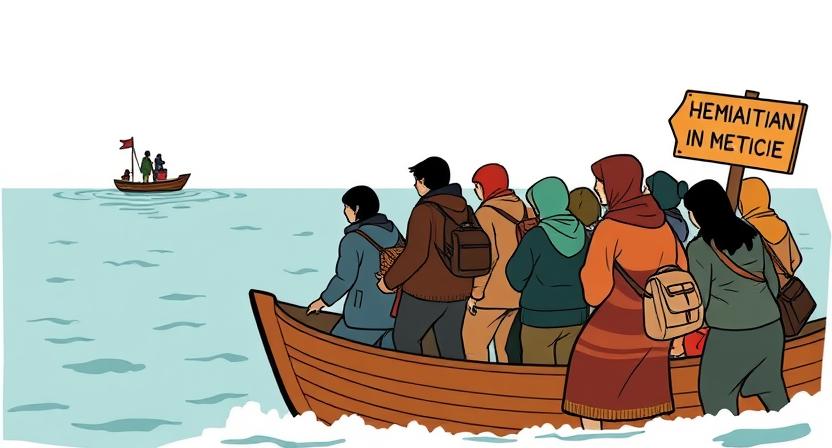
Beyond the legal and physical threats lies a deeply personal and cultural crisis. As a final resort, many islanders are forced to leave their homes, becoming the world’s first large-scale climate migrants.
- Lack of Legal Status: There is currently no formal legal framework or international convention to protect climate refugees. Unlike asylum seekers fleeing persecution, climate migrants have no recognized status, leaving them in a legal limbo with no guarantee of assistance or a new home.
- Loss of Culture and Identity: The displacement is not just a matter of physical relocation; it is an uprooting from ancestral lands that are central to a people’s culture, history, and identity. Languages, traditions, and unique ways of life, passed down for generations, are at risk of being lost forever.
For the people of these nations, the loss of their home is an emotional and spiritual tragedy, forcing them to confront an uncertain future far from the lands and seas that define them.
Searching for Survival: Strategies and Solutions
Faced with this existential threat, SIDS and their allies are pursuing a combination of adaptation, mitigation, and legal innovation.
- Adaptation and Resilience: Some nations, like the Maldives, are investing in large-scale engineering projects, such as building higher land, creating seawalls, and exploring the possibility of artificial islands. The hope is to buy time and protect vital infrastructure from the encroaching seas.
- Mitigation and Global Responsibility: SIDS are at the forefront of the global push for more ambitious climate action. Their powerful “moral voice” is a key driver behind the “loss and damage” fund, a mechanism to compel major emitters to compensate vulnerable nations for the irreversible damage they have caused.
- Legal and Diplomatic Innovation: Nations are working to develop legal precedents to ensure that their sovereignty and maritime rights are not lost, even if their land is submerged. This includes lobbying for international declarations that would recognize a nation’s EEZ as permanent, regardless of its landmass.
- Migration with Dignity: Some nations, like Kiribati, have pursued “migration with dignity” strategies, negotiating with countries like Fiji and New Zealand to secure land and legal pathways for their citizens in the future. This is a last-resort strategy that aims to preserve a people, even if a nation’s territory is lost.
A Moral Imperative for the World
The dilemma of small island nations is not just their problem. It is a reflection of a global failure to address the climate crisis and a moral test for the international community. Their fate foreshadows a future where climate change will create similar challenges for all low-lying coastal cities and regions worldwide. The extinction of a nation is not an isolated tragedy; it is a profound and irreversible loss for all of humanity.
The international community has a moral imperative to provide support for these nations, not as an act of charity, but as a recognition of their responsibility. This includes not only financial assistance but also political and legal support to ensure that their people and their sovereign rights are not abandoned to the rising tide.
Conclusion: A Glimpse into Our Shared Future
The existential dilemma of small island nations is a stark reminder that the traditional geopolitical map is being redrawn by forces beyond the control of any single nation. It reveals that the foundations of sovereignty, territorial integrity, and international law are far more fragile than we once believed. The story of a disappearing island is not just a tragic tale; it is a glimpse into our shared future. The challenges faced by these nations today are a preview of the problems that all coastal regions, from Miami to Bangladesh, will confront in the coming decades. The resilience, legal ingenuity, and moral clarity shown by these small states in the face of an existential threat may well provide the most valuable lessons for us all. The rising tide is an undeniable reality, and our shared destiny depends on how we choose to respond.