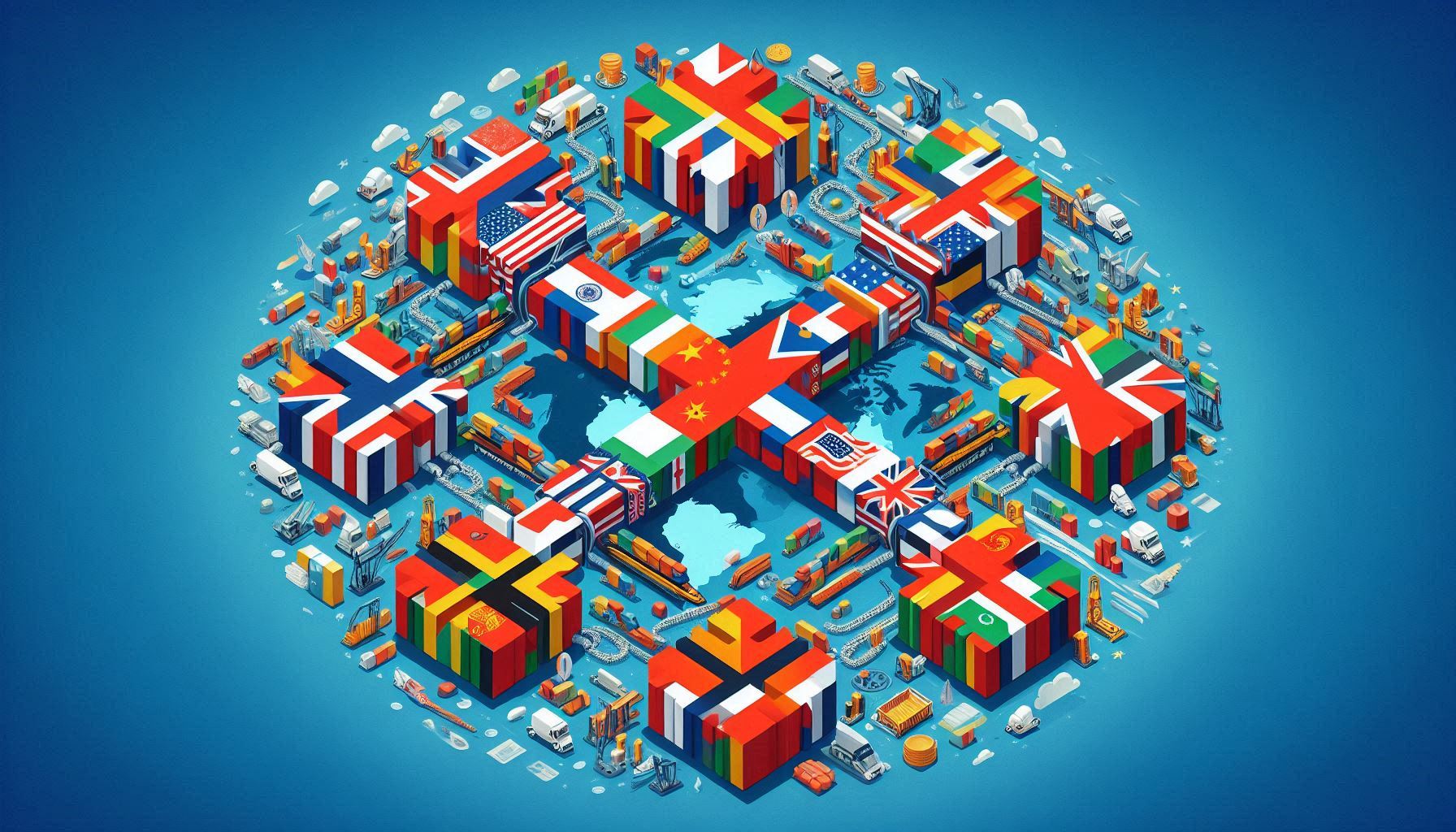
For decades, the world was on a seemingly irreversible path toward deeper globalization. Driven by a shared belief in free markets, technological innovation, and political openness, nations embraced the idea of a flat world where economic interdependence would foster peace and prosperity for all. The promise was simple: by connecting supply chains, capital, and people, we would create a global economy so intertwined that the cost of conflict would become prohibitively high. However, in the wake of financial crises, pandemics, and escalating geopolitical tensions, this consensus has shattered. The world is now in the midst of a pushback, with nations actively seeking to re-establish economic borders and regain control over their own destinies. This phenomenon, known as deglobalization, presents a fundamental question: Is this return to protectionism and insular economies a necessary defense of sovereignty or a dangerous risk that could jeopardize our collective future?
This article will explore the complex geopolitics of deglobalization, analyzing the arguments for and against a more fragmented world. We will delve into the motivations behind the push to re-shore critical industries and build resilient domestic economies, while also examining the potential costs and risks that a retreat from global integration could entail.

The Promise of Globalization: An Era of Interdependence
The era of hyper-globalization, from the 1990s to the late 2010s, was characterized by an unprecedented flow of goods, services, and capital. Companies built vast, complex supply chains that spanned the globe, driven by the search for efficiency and lower labor costs. This model delivered immense benefits:
- Economic Growth and Poverty Reduction: Global trade lifted hundreds of millions of people out of extreme poverty, particularly in developing nations, by providing access to new markets and investment.
- Consumer Benefits: Consumers in developed countries enjoyed a wide range of goods at lower prices, from electronics to clothing, enhancing their quality of life.
- Technological Diffusion: The free flow of information and ideas accelerated technological innovation, spreading new advancements across the world at a rapid pace.
This economic model was also seen as a force for peace. The logic, often called the “Golden Arches Theory” by some theorists, was that nations with highly integrated economies had too much to lose from conflict. The theory posited that economic interdependence would act as a powerful deterrent to war.
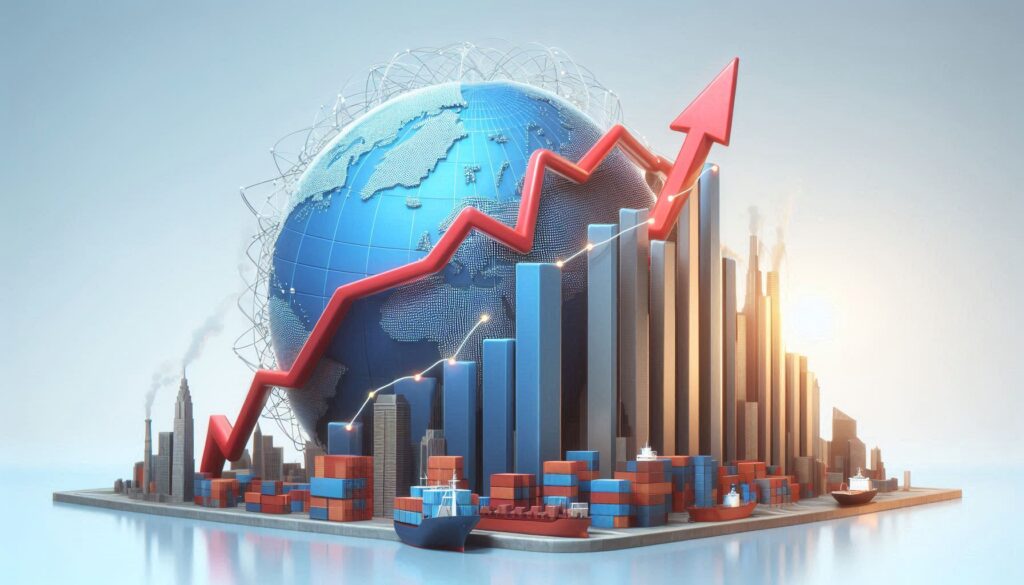
The Pushback: The Case for Deglobalization
Despite its benefits, the hyper-globalization model proved to have significant vulnerabilities. A series of shocks revealed its fragility, leading nations to question the wisdom of putting efficiency above all else.
- National Security: The COVID-19 pandemic exposed a critical national security vulnerability: over-reliance on foreign suppliers for essential goods, from medical masks to pharmaceuticals. Similarly, the United States and its allies realized their dependence on Taiwan for a vast majority of the world’s advanced microchips posed a significant strategic risk.
- Economic Sovereignty: Globalization, by its very nature, limits a nation’s policy autonomy. A country that relies heavily on foreign capital or global trade for its economic health may be constrained in its ability to implement its own industrial policies or social programs without fear of economic retaliation or capital flight. The push for deglobalization is a direct response, a desire to regain control over domestic economies and protect national interests.
- Political Nationalism: The benefits of globalization were not distributed evenly. Many workers in developed countries saw their jobs offshored, leading to economic hardship and a sense of betrayal. This fueled the rise of populist and nationalist movements that campaigned on a platform of protectionism and a return to national borders. They argued that global elites had sacrificed the well-being of the nation for their own corporate gain.
These factors converged to create a powerful political and economic momentum toward a retreat from global integration.
The Strategic Defense: How Borders Can Protect Sovereignty
Proponents of deglobalization argue that the return to economic borders is not a regression but a strategic necessity for the 21st century.
- Supply Chain Resilience: The primary argument for deglobalization is the need for resilience over efficiency. By bringing manufacturing and sourcing closer to home (reshoring) or to trusted allies (friend-shoring), nations can create more robust supply chains that are less susceptible to geopolitical shocks, pandemics, or natural disasters. This is particularly crucial for industries deemed vital to national security, such as semiconductors, defense technology, and pharmaceuticals.
- Protecting Critical Industries: Strategic protectionism—through tariffs, subsidies, and export controls—is seen as a tool to protect and nurture key domestic industries. The U.S. and the EU, for example, are now investing billions in domestic semiconductor manufacturing to reduce their dependence on Asia. This is not just about jobs; it’s about a new form of economic sovereignty where a nation has control over the technologies and resources it needs to defend itself.
- Regaining Policy Autonomy: By reducing economic interdependence, a nation can regain the ability to pursue an independent domestic agenda. It can implement labor standards, environmental regulations, or industrial policies without facing external pressure from foreign competitors or international organizations. This allows for a stronger link between a nation’s democratic processes and its economic outcomes.

The High Cost: Deglobalization as a Risk to the Future
While the arguments for deglobalization are compelling, the potential risks are significant and far-reaching. Critics argue that a fragmented world is not just less efficient but also more dangerous.
- Economic Inefficiency and Higher Costs: Globalization was driven by the principle of comparative advantage, where nations specialize in what they do best. A return to localized production would mean giving up these efficiencies, leading to higher costs for consumers and reduced competitiveness for businesses. This could result in a period of “stagflation” with high prices and low growth.
- Reduced Global Prosperity: The globalized trade system has been a powerful engine for poverty reduction in developing nations. A retreat from free trade would hit these economies hardest, potentially pushing millions back into poverty and reversing decades of progress.
- Increased Geopolitical Tensions: The “Golden Arches Theory” may have been overly simplistic, but its core logic holds true: economic interdependence can act as a deterrent to conflict. When nations’ economies are deeply intertwined, the costs of military confrontation are immense. A world of competing, protectionist economic blocs could make the use of force a more palatable option, as the economic ties that once bound nations together are severed. A trade war can easily escalate into a full-blown geopolitical confrontation.
- Slower Innovation: A fragmented global economy with restrictions on the free flow of ideas, talent, and technology could stifle innovation. Many of the greatest technological breakthroughs of the past few decades have been the result of international collaboration and the free exchange of knowledge.
A New Geopolitical Landscape: The Future of Globalism
The most likely outcome of the current trends is not a full reversal of globalization but a re-imagining of it. The future is unlikely to be characterized by either a single, interconnected global market or a world of isolated, protectionist states. Instead, we are likely to see the emergence of geoeconomic blocs. These blocs will be built on political alliances and shared values, with trade and supply chains consolidated within a group of “friendly” nations.
- “Friend-Shoring” and Regional Blocs: We are already seeing evidence of this. The U.S. is seeking to build a supply chain network with its allies in North America and Europe. The EU is pursuing a strategy of “strategic autonomy,” aiming to reduce its dependence on China and other rivals. China, in turn, is building its own regional bloc through initiatives like the Belt and Road.
- Managed Interdependence: The new model will be one of “managed interdependence,” where nations maintain some degree of global connectivity but with an eye toward security and resilience. Supply chains will be diversified, with a greater emphasis on domestic production for critical goods and a reliance on trusted partners for non-critical ones.
Conclusion: A Balancing Act for Sovereignty and Prosperity
The debate over the geopolitics of deglobalization is ultimately a debate about priorities. Is the primary goal of a nation to maximize economic efficiency, or is it to safeguard its security and sovereignty, even at a cost? There is no simple answer.
The lesson from the last few decades is that a world of hyper-globalization, while creating immense prosperity, also created dangerous vulnerabilities. The pushback we are seeing today is a rational response to those vulnerabilities. However, a complete retreat into protectionism and isolationism would be a perilous gamble, jeopardizing both global prosperity and peace. The challenge for policymakers is to find the right balance—to build resilient economies without sacrificing the benefits of global cooperation, and to defend national sovereignty without igniting a new era of geopolitical conflict. The future will belong to nations that can navigate this delicate balance and find a new way to be both secure and connected.