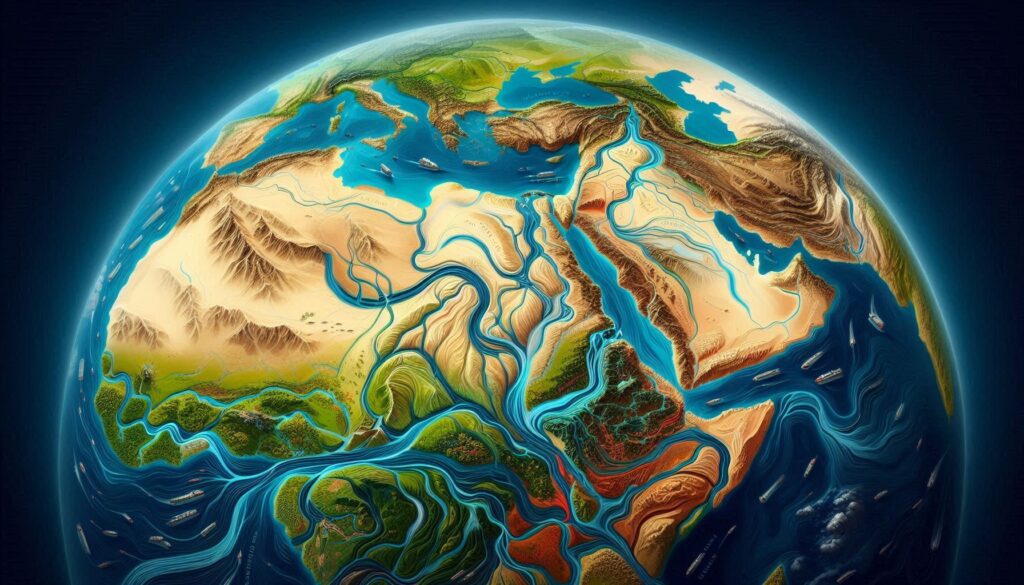
For millennia, the Nile has been the lifeblood of Northeast Africa, a vital artery that has nurtured ancient civilizations and sustained modern nations. From its headwaters in the highlands of Ethiopia to its fertile delta in Egypt, the river system is an indispensable resource for over 11 countries and a source of livelihood for hundreds of millions of people. However, this shared lifeline has become a flashpoint for a modern geopolitical conflict, driven by competing national interests, historical claims, and the growing scarcity of water. The central drama revolves around the Grand Ethiopian Renaissance Dam (GERD), a mega-project that has pitted Ethiopia’s development ambitions against the existential fears of downstream nations, particularly Egypt and Sudan. This article will explore how the geopolitics of water in the Nile Basin is acting as a catalyst for potential conflict, analyzing the core tensions, the players’ strategic positions, and the possible paths toward either cooperation or confrontation.
The “silence” of the Nile is a deceptive one. Beneath the surface of diplomatic stalemates lies a bubbling tension that threatens to spill over into a full-blown crisis, testing the resolve of nations and the limits of international law in a world increasingly defined by resource scarcity.
The Lifeline of a Continent: The Nile’s Crucial Role
The Nile River is more than just a body of water; it is a central pillar of the economies, cultures, and national identities of the nations it touches.
- For Egypt: The Nile is a source of life itself. The country, a vast desert, relies on the river for over 90% of its freshwater needs for agriculture, industry, and a population of over 100 million people. The river has been central to its identity since the time of the pharaohs, and any threat to its flow is seen as a direct threat to national security.
- For Sudan: The river is also a vital resource for irrigation and hydropower. While Sudan’s position is more complex due to its own concerns about the dam’s operation, it shares Egypt’s historical reliance on a stable Nile flow.
- For Ethiopia: The Nile, specifically the Blue Nile tributary, originates in its highlands. However, despite being the source of over 85% of the Nile’s water, Ethiopia has historically been unable to use the river’s power to develop its own economy. For Ethiopia, the Nile is a symbol of a long-denied right to harness its own resources for national development.
The Grand Ethiopian Renaissance Dam (GERD): A New Era of Tension
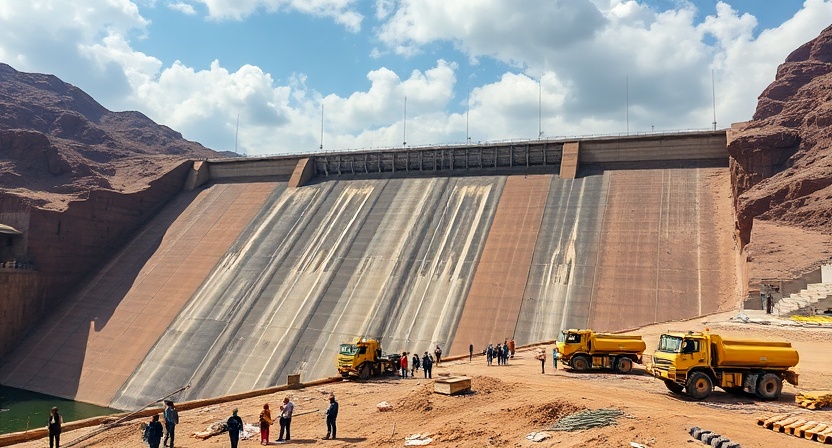
Ethiopia’s decision to build the GERD, a massive hydroelectric dam on the Blue Nile, was a bold move to leverage its most abundant natural resource. The dam is designed to generate over 6,000 megawatts of electricity, a critical step toward industrialization and lifting millions of its citizens out of poverty. Ethiopia sees the project as a matter of national pride and a key to its economic future.
Ethiopia’s Development Ambitions
The GERD is a cornerstone of Ethiopia’s national development strategy. The country’s growing population and expanding economy have a desperate need for reliable energy. The dam, upon completion, will not only provide much-needed electricity but could also allow Ethiopia to become a regional power exporter, creating a new source of revenue and economic leverage.
Egypt and Sudan’s Existential Fears
For Egypt, the GERD is a profound and existential threat. Its primary fear is that the dam’s massive reservoir will significantly reduce the volume of water reaching its borders, especially during the filling phase.
- Agricultural Collapse: A reduction in the Nile’s flow could devastate Egypt’s agricultural sector, which employs a large portion of the population.
- Water Scarcity: Given its near-total reliance on the Nile, any major change to the flow could lead to a catastrophic water shortage, destabilizing the country and potentially leading to a humanitarian crisis.
Sudan, while less vociferously opposed than Egypt, also has concerns. The dam could help regulate floodwaters, but a sudden reduction in the water volume could disrupt its irrigation systems and water supplies, creating significant uncertainty for its own development plans.
A Battle Over Historical Treaties and Water Rights
At the heart of the conflict is a deep-seated disagreement over the legitimacy of historical water rights.
- Colonial-Era Treaties: The dispute is framed by two key agreements: the 1929 Anglo-Egyptian Treaty and the 1959 Bilateral Agreement between Egypt and Sudan. These treaties granted Egypt control over the Nile’s flow and a veto on any upstream projects, reflecting a colonial-era power dynamic. Ethiopia was not a party to these agreements and views them as illegitimate relics of a colonial past that do not reflect the principles of equitable water use.
- Ethiopia’s Right to Develop: Ethiopia argues that it has a sovereign right to use its own resources for its own development. It sees the GERD not as an act of aggression, but as a long-overdue step to address its own energy and development needs, which were ignored in the colonial-era treaties.
This conflict is therefore not just about a dam; it is a battle between a historical claim to water rights and a modern claim to equitable use and development, a tension that is becoming a defining feature of resource geopolitics worldwide.
The Geopolitical Consequences and Potential for Conflict
The GERD has created a diplomatic stalemate that has drawn in regional and international powers, raising the specter of a military conflict.
The Diplomatic Stalemate
Decades of negotiations have failed to produce a comprehensive, legally binding agreement on the key issues, particularly the speed of the dam’s filling and a long-term water-sharing mechanism during periods of drought. Ethiopia has proceeded with the filling of the dam’s reservoir in stages, a move that Egypt has publicly condemned, arguing it violates their right to a stable water supply. The lack of a clear agreement has fueled suspicion and distrust, making a peaceful resolution more difficult.
The Risk of Escalation
While a full-scale war is considered a worst-case scenario, the potential for escalation is real. Egypt’s military has stated that it would not accept a significant reduction in its water supply, and both nations have engaged in military posturing. Beyond direct conflict, there is a risk of proxy wars in the region, diplomatic isolation, and cyber warfare aimed at disrupting the dam’s operations. The involvement of global powers, with China funding the project and the U.S. and European nations trying to mediate, complicates the situation and raises the stakes.

A Path Forward: Towards Cooperation or Confrontation?
The future of the Nile River Basin hangs in the balance. The path forward will require a new kind of diplomacy that moves beyond historical grievances and toward a shared vision of prosperity.
The Need for Equitable Agreements
Any lasting solution must be based on a new, comprehensive agreement that is equitable for all Nile Basin nations. This means recognizing Ethiopia’s right to development while providing a binding guarantee that downstream nations will not face a catastrophic reduction in their water supply, particularly during drought years. A shared management framework for the dam could be a key part of such an agreement.
The Role of Regional and International Mediation
Neutral third parties, including the African Union and international organizations, will be crucial in mediating a solution. Their role is to de-escalate tensions, facilitate dialogue, and create a framework for trust-building. The situation is too volatile to be left to bilateral negotiations alone.
Conclusion: The Unspoken Future of the Nile
The geopolitical conflict over the Nile is a microcosm of a larger global challenge: how to manage water scarcity in a world of a growing population and a changing climate. The “silence” of the Nile is the unspoken tension between a nation’s right to develop and another’s right to survive. The ability of these nations to find a peaceful, cooperative solution to this conflict will be a crucial test case for the rest of the world. It will determine whether a vital resource can unite nations in a shared effort toward prosperity or whether it will become a catalyst for a conflict that no one can afford to lose. The future of the Nile may be silent, but its message is clear: the future of geopolitics will be fought over the most basic resources, and the stakes could not be higher.