
The Arctic Ocean, once an impenetrable fortress of ice, is transforming into the world’s most contested geopolitical arena. As climate change accelerates polar ice melt, nations are scrambling to claim their share of what could be the 21st century’s most valuable frontier. With an estimated 90 billion barrels of oil, 1,669 trillion cubic feet of natural gas, and critical minerals lying beneath the retreating ice, the Arctic represents both unprecedented opportunity and potential conflict.
The Great Thaw: Understanding Arctic Transformation
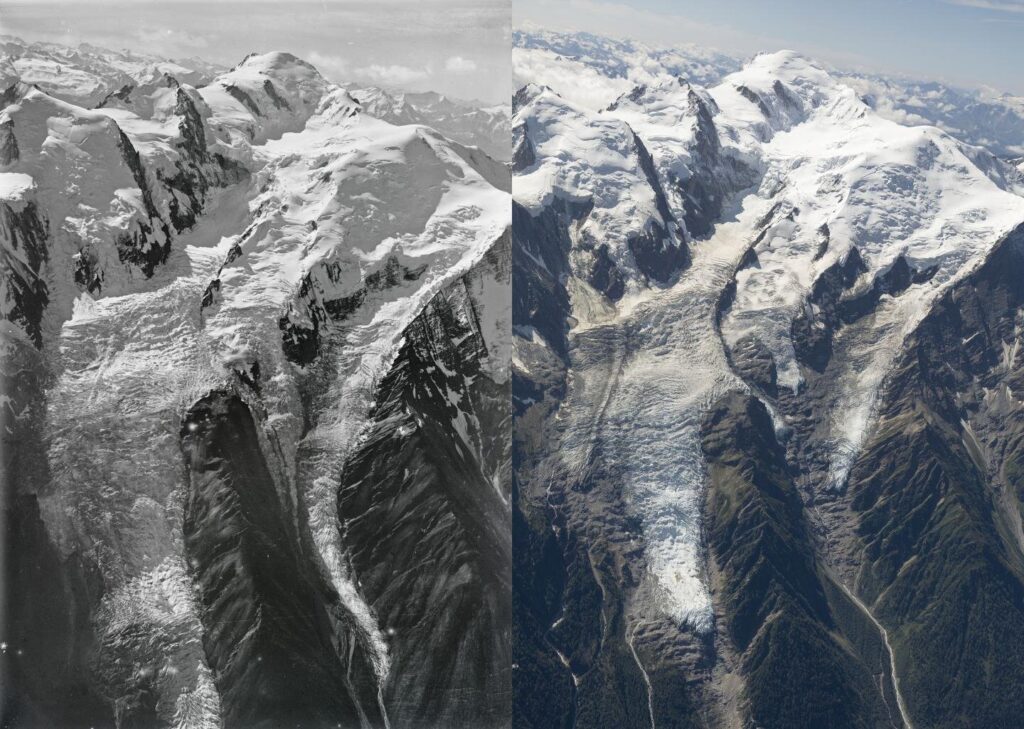
The Arctic is warming nearly four times faster than the global average, a phenomenon scientists call Arctic amplification. Summer sea ice has declined by approximately 13% per decade since 1979, with some models predicting ice-free summers as early as 2035. This dramatic transformation is rewriting the rules of international relations, maritime commerce, and resource extraction.
The New Arctic Geography
The traditional image of the Arctic as a frozen wasteland is rapidly becoming obsolete. Today’s Arctic features increasingly navigable waters, accessible coastlines, and exploitable resources. The September 2023 sea ice minimum reached just 4.23 million square kilometers, the sixth-lowest extent in the satellite record.
This physical transformation creates new geographical realities. Islands previously locked in permanent ice are becoming accessible, continental shelves are opening for exploration, and the Arctic Ocean itself is transitioning from a frozen barrier to a maritime highway connecting three continents.
Climate Change as a Geopolitical Catalyst
While climate change poses existential threats globally, it paradoxically creates opportunities in the Arctic. The melting ice reveals resources previously beyond reach and opens shipping routes that could revolutionize global trade. This irony hasn’t been lost on Arctic nations, who publicly commit to climate action while quietly preparing to exploit the opportunities that warming creates.
The feedback loop is concerning: resource extraction in the Arctic could accelerate the very warming that makes such extraction possible, creating what some scientists call a “carbon bomb” that could push global temperatures beyond critical thresholds.
The Eight Arctic Nations: Players in the Great Game
Russia: The Arctic Superpower
Russia controls the largest Arctic coastline, spanning 24,000 kilometers along the Arctic Ocean. Under President Vladimir Putin, Russia has pursued an aggressive Arctic strategy, reopening Soviet-era military bases, deploying advanced weapons systems, and claiming vast underwater territories.
The Russian Arctic accounts for 20% of the country’s GDP and 22% of exports. Cities like Murmansk and Norilsk have become strategic hubs for resource extraction and military projection. Russia’s nuclear-powered icebreaker fleet, the world’s largest with 40 vessels, provides unmatched capability to operate year-round in Arctic waters.
United States: The Reluctant Arctic Nation
Despite Alaska’s 6,640 kilometers of Arctic coastline, the United States has historically treated the Arctic as a peripheral concern. This is changing rapidly. The 2022 National Strategy for the Arctic Region emphasizes security, climate resilience, and sustainable development, signaling renewed American focus on the region.
The U.S. faces infrastructure deficits compared to Russia, operating only two aging icebreakers. However, American technological superiority and alliance networks provide alternative advantages. The recent decision to build six new polar security cutters represents a significant commitment to Arctic presence.
Canada: Sovereignty and Identity
For Canada, the Arctic is integral to national identity. The Northwest Passage, which Canada claims as internal waters, represents a sovereignty flashpoint. International actors, particularly the United States, consider it an international strait, creating ongoing diplomatic tensions.
Canada’s Arctic sovereignty assertion includes military exercises, indigenous partnerships, and infrastructure development. The Canadian Rangers, primarily composed of Indigenous peoples, provide unique surveillance capabilities across the vast Arctic territories.
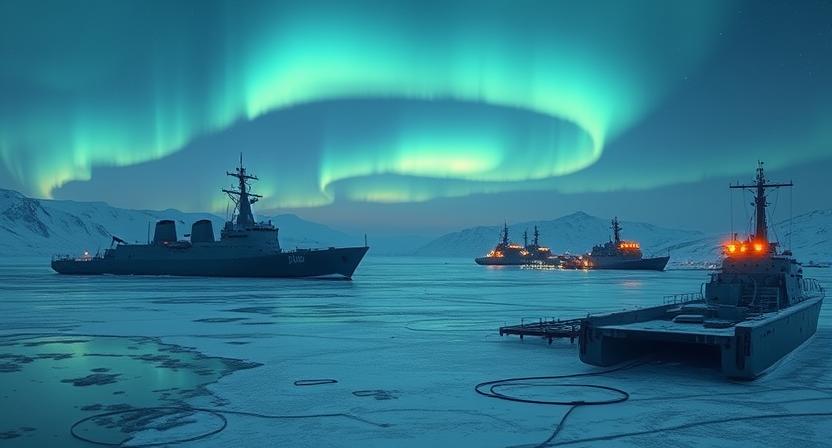
The Resource Bonanza: What Lies Beneath
Hydrocarbons: The Traditional Prize
The U.S. Geological Survey estimates that the Arctic contains 13% of undiscovered oil and 30% of undiscovered natural gas globally. The Barents Sea, Kara Sea, and Alaskan North Slope represent particularly promising regions. Major discoveries like Russia’s Pobeda field and Norway’s Johan Castberg demonstrate the region’s potential.
Energy companies face extreme challenges: temperatures reaching -50°C, months of darkness, and moving ice sheets that can crush drilling platforms. Yet technological advances and rising energy prices make Arctic extraction increasingly viable. Russia’s Yamal LNG project, operational since 2017, proves large-scale Arctic energy development is possible.
Critical Minerals: The Future Economy
Beyond hydrocarbons, the Arctic hosts vast deposits of rare earth elements, copper, nickel, zinc, and platinum group metals. Greenland alone contains 25% of global rare earth deposits, crucial for renewable energy technologies and electronics. The Kvanefjeld project in southern Greenland could become one of the world’s largest rare earth producers.
These minerals are essential for electric vehicles, wind turbines, and advanced electronics, making Arctic deposits strategically vital for the green energy transition. China’s attempts to invest in Greenland’s minerals have raised security concerns among NATO allies, highlighting the intersection of resource extraction and geopolitical competition.
Biological Resources: The Living Arctic
Climate change is reshaping Arctic ecosystems, affecting fish stocks and marine biodiversity. The Barents Sea cod fishery, worth billions annually, is shifting northward as waters warm. New species are entering Arctic waters while traditional Arctic species face habitat loss.
The Central Arctic Ocean Fisheries Agreement, signed in 2018, established a moratorium on commercial fishing in the high seas portion of the Arctic Ocean. This precedent-setting agreement acknowledges both the opportunity and uncertainty surrounding Arctic marine resources.
![Arctic mining operation with industrial facilities in snowy landscape]](https://sovereignty.com.br/wp-content/uploads/2025/09/1ca56d8e-411b-4d08-b5d3-e2f1458f00cf.jpeg)
Maritime Revolution: The New Silk Roads of Ice
The Northern Sea Route
Russia’s Northern Sea Route (NSR) along its Arctic coast could reduce shipping distances between Europe and Asia by 40% compared to the Suez Canal route. In 2023, cargo volume reached 36 million tons, with projections of 80 million tons by 2024. Russia envisions the NSR as a maritime corridor rivaling traditional routes.
The route faces challenges: ice conditions remain unpredictable, insurance costs are high, and specialized ice-class vessels are required. Yet major shipping companies like COSCO and Maersk have conducted trial voyages, recognizing the route’s potential. Russia’s investment in ports, navigation systems, and icebreaker escorts aims to make the NSR commercially viable year-round.
This may interest you
The worsening of the situation in France
What is the origin of the discontent? The wallet of the French. In a recent study commissioned by the renowned…

Who is harnessing france’s anger?
Parties, foreign networks, organised rioters, the State: everyone is seizing the movement, no one is answering it. Some kinds of anger…


France between chaos and flames
1. Introduction: The Dantesque Scenario as a Diagnostic Moment On 17–18 October 2026, France experienced what foreign observers immediately recognised as…

The student factor and the massive social protests in the
To understand what is happening, it is enough to make a simple political reasoning. 2027 represents a crucial electoral appointment for…

The decisive moment in the war of Ukraine is approaching
We have become accustomed to analysing the war in Ukraine through the prism of ground battles, calculating gains in square…

EU budget dispute sharpens
Brussels is experiencing its most uncertain hours since the creation of the European project. The negotiations to define the 2028-2034…

The Northwest Passage
Canada’s Northwest Passage offers similar distance savings but faces greater ice challenges and sovereignty disputes. The route’s multiple channels through the Canadian Arctic Archipelago create navigation complexity. Limited infrastructure and search-and-rescue capabilities pose additional risks.
The Crystal Serenity’s 2016 transit with 1,000 passengers demonstrated tourist potential but also highlighted safety concerns. Canada’s insistence on controlling passage rights conflicts with American and European positions on freedom of navigation, creating ongoing diplomatic friction.
The Transpolar Route
The most speculative route crosses directly over the North Pole, becoming possible only with extensive ice melt. While currently theoretical, some projections suggest this route could open seasonally by 2050. This would represent the shortest path between Europe and Asia, fundamentally altering global shipping patterns.
![Commercial vessels navigating through Arctic waters with ice sheets]](https://sovereignty.com.br/wp-content/uploads/2025/09/8e5a5e13-5c8c-4277-9039-c61dcff34474.jpeg)
Military Buildup: The Arctic Arms Race
Russia’s Military Resurgence
Russia has established a comprehensive Arctic military infrastructure, including the Northern Fleet based in Severomorsk, air defense systems, and coastal missiles. The refurbished Soviet-era bases form an “Arctic pearl necklace” from Murmansk to Chukotka. Advanced systems like the S-400 air defense and Bastion coastal defense missiles provide anti-access capabilities.
Russia’s Arctic forces include specialized brigades trained for polar warfare, nuclear-powered submarines operating under ice, and long-range aviation patrols. The 2023 Ocean-24 exercises demonstrated Russia’s ability to coordinate complex Arctic operations despite international sanctions.
NATO’s Arctic Response
NATO has increased Arctic focus, with Norway hosting large-scale exercises like Cold Response 2022 involving 30,000 troops. The accession of Finland and Sweden to NATO fundamentally alters Arctic security dynamics, with seven of eight Arctic states now alliance members.
The U.S. has reactivated the Second Fleet for North Atlantic operations and increased bomber deployments to Norway. The North Warning System, jointly operated with Canada, undergoes modernization to detect hypersonic threats. These developments signal Western determination to counter Russian Arctic militarization.
China: The Near-Arctic State
Despite lacking Arctic territory, China declared itself a “near-Arctic state” in 2018, claiming legitimate interests in Arctic affairs. The Polar Silk Road initiative integrates Arctic shipping into the Belt and Road Initiative. Chinese investments in Arctic infrastructure, research stations, and resource projects demonstrate long-term commitment.
China operates two icebreakers with more under construction, maintains research stations in Iceland and Norway, and pursues joint ventures with Russian energy companies. This presence concerns Arctic nations, who view Chinese involvement through security as well as economic lenses.
Environmental Paradox: Conservation Versus Exploitation
The Fragile Arctic Ecosystem
The Arctic ecosystem faces unprecedented stress from warming temperatures, ocean acidification, and pollution. Polar bears, walruses, and seals lose critical ice habitat. Permafrost thaw releases methane and CO2, accelerating global warming. Microplastics contaminate even remote Arctic waters.
Indigenous communities who’ve inhabited the Arctic for millennia face cultural and subsistence threats as traditional hunting grounds disappear and species migration patterns shift. The Inuit Circumpolar Council advocates for indigenous rights in Arctic governance, emphasizing that development must respect traditional ways of life.
Governance Gaps and Environmental Protection
The Arctic lacks comprehensive environmental governance comparable to the Antarctic Treaty System. The Arctic Council, while successful in fostering cooperation, lacks enforcement authority. The International Maritime Organization’s Polar Code provides shipping standards but faces implementation challenges.
The Central Arctic Ocean’s international waters remain largely unregulated beyond specific agreements. As activities increase, governance gaps become more apparent. Proposals for an Arctic Treaty face resistance from coastal states preferring national sovereignty over international regulation.
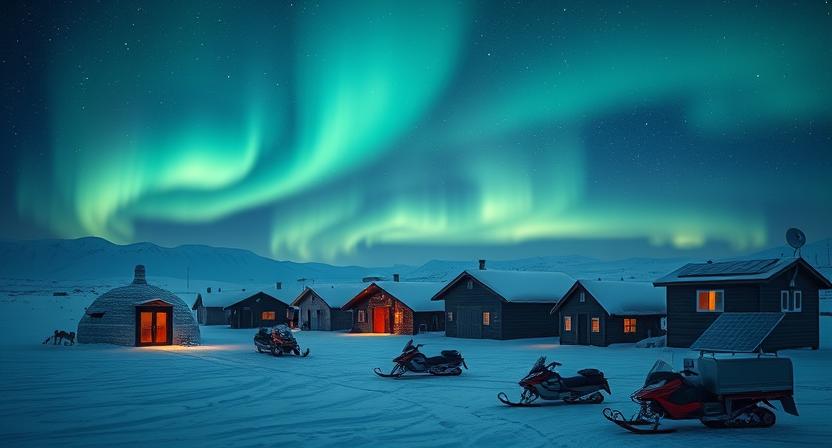
Technological Innovation: Conquering the Impossible
Ice-Resistant Infrastructure
Engineering solutions for Arctic conditions push technological boundaries. Floating nuclear power plants like Russia’s Akademik Lomonosov provide energy for remote operations. Ice-resistant drilling platforms withstand massive ice pressures. Specialized materials prevent equipment failure in extreme cold.
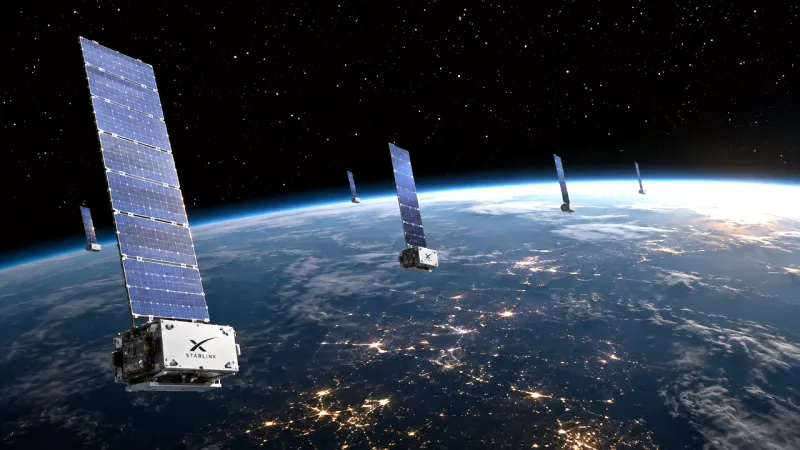
Satellite technology enables navigation through shifting ice, weather prediction in data-sparse regions, and communication where traditional infrastructure is impossible. Autonomous underwater vehicles map the seafloor beneath ice, revealing resources and supporting territorial claims.
Digital Arctic: Connectivity and Surveillance
The Arctic’s strategic importance drives investment in digital infrastructure. Submarine fiber optic cables through the Northwest Passage promise to reduce latency between Europe and Asia. Satellite constellations provide broadband coverage for Arctic communities and operations.
These technologies serve dual purposes: commercial connectivity and military surveillance. The ability to monitor Arctic activities becomes crucial as the region opens. Nations invest in over-the-horizon radar, underwater sensor networks, and satellite surveillance to maintain awareness in this vast region.
Future Scenarios: Cooperation or Conflict?
The Optimistic Path: Arctic Cooperation
The Arctic Council’s success in fostering collaboration despite geopolitical tensions offers hope. Scientific cooperation continues even amid Ukraine-related sanctions. The Agreement on Enhancing International Arctic Scientific Cooperation demonstrates potential for maintaining dialogue channels.
Economic interdependence could promote stability. Joint ventures in resource extraction, shared search-and-rescue responsibilities, and environmental protection necessities create incentives for cooperation. The Arctic’s harsh environment itself forces pragmatic collaboration.
The Pessimistic Scenario: Arctic Confrontation
Alternatively, the Arctic could become a zone of strategic competition. Overlapping territorial claims, particularly regarding extended continental shelves, risk diplomatic crises. Military buildups create security dilemmas where defensive preparations appear threatening to others.
Climate refugees, resource scarcity, and economic pressure could intensify Arctic competition. The breakdown of arms control agreements and erosion of international law norms increases conflict risk. Without careful management, the Arctic could witness the first major maritime territorial conflicts of the 21st century.
Conclusion: The Last Frontier’s First Chapter
The Arctic stands at a historic inflection point. What was once the world’s last blank map is being rapidly filled with shipping lanes, resource claims, and military bases. The region’s transformation from frozen barrier to accessible ocean represents one of climate change’s most profound geopolitical consequences.
The choices made today will determine whether the Arctic becomes a zone of cooperation or conflict. The involvement of all Arctic nations, near-Arctic states like China, and indigenous peoples creates a complex governance challenge. Balancing economic opportunity with environmental protection, sovereignty with international cooperation, and security with peaceful development requires unprecedented diplomatic skill.
As ice continues retreating, the Arctic’s importance will only grow. The region holds keys to energy security, critical minerals for green technology, and shipping routes that could reshape global commerce. Yet it also serves as climate regulation system whose disruption threatens civilization itself.
The Arctic’s future remains unwritten, a blank map awaiting the cartographers of the 21st century. Whether they draw lines of cooperation or conflict will shape not just the Arctic, but the entire planet’s trajectory in an warming world. The last frontier is becoming the first test of humanity’s ability to manage shared resources in an era of climate transformation.