A Palestinian flag in an Instagram bio can now trigger million-dollar corporate decisions. When Gen Z boycotted Starbucks over perceived stance on Gaza, the company lost $11 billion in market value within two months. When young Chinese consumers embraced domestic brands as patriotic duty, Nike’s Greater China revenue dropped 24%. This isn’t traditional consumer behavior—it’s the weaponization of purchasing power by generations who view consumption as political action. For corporations, the implications are existential: young consumers now demand that brands take geopolitical positions, transforming neutrality from safe haven to dangerous liability.
The New Political Consumers: Understanding the Generational Shift
Digital Natives as Geopolitical Actors
Generation Z (born 1997-2012) and younger Millennials (born 1981-1996) represent the first cohorts whose political consciousness formed entirely in the digital age. Unlike previous generations who encountered international news through curated media, these digital natives receive unfiltered, real-time content from global conflict zones, climate disasters, and social movements. TikTok videos from Gaza accumulate billions of views; Instagram stories document Amazon deforestation; Twitter threads explain supply chain exploitation. This direct exposure has created unprecedented geopolitical awareness among consumers aged 18-40, who now represent $143 trillion in lifetime spending power.
The statistics reveal a fundamental shift in consumer psychology. Deloitte’s 2024 Global Consumer Study found that 73% of Gen Z consumers have boycotted brands for political reasons, compared to 42% of Gen X and 27% of Baby Boomers. Among Chinese Gen Z, 91% preferentially buy domestic brands “to support the nation,” while 67% of American Gen Z consumers would pay 10% more for products from companies whose values align with their political views. This isn’t virtue signaling—it’s economic warfare conducted through consumption choices.
Social media has transformed young consumers into distributed intelligence networks capable of investigating and exposing corporate practices globally. When Shein faced scrutiny over Uyghur cotton, Gen Z investigators used shipping data, satellite imagery, and supply chain analysis to trace connections. The resulting #BoycottShein campaign reached 4.5 billion impressions, forcing the company to spend $15 million on supply chain auditing and transparency initiatives. This demonstrates how young consumers have become geopolitical actors capable of imposing costs comparable to government sanctions.
The Values Revolution in Commerce
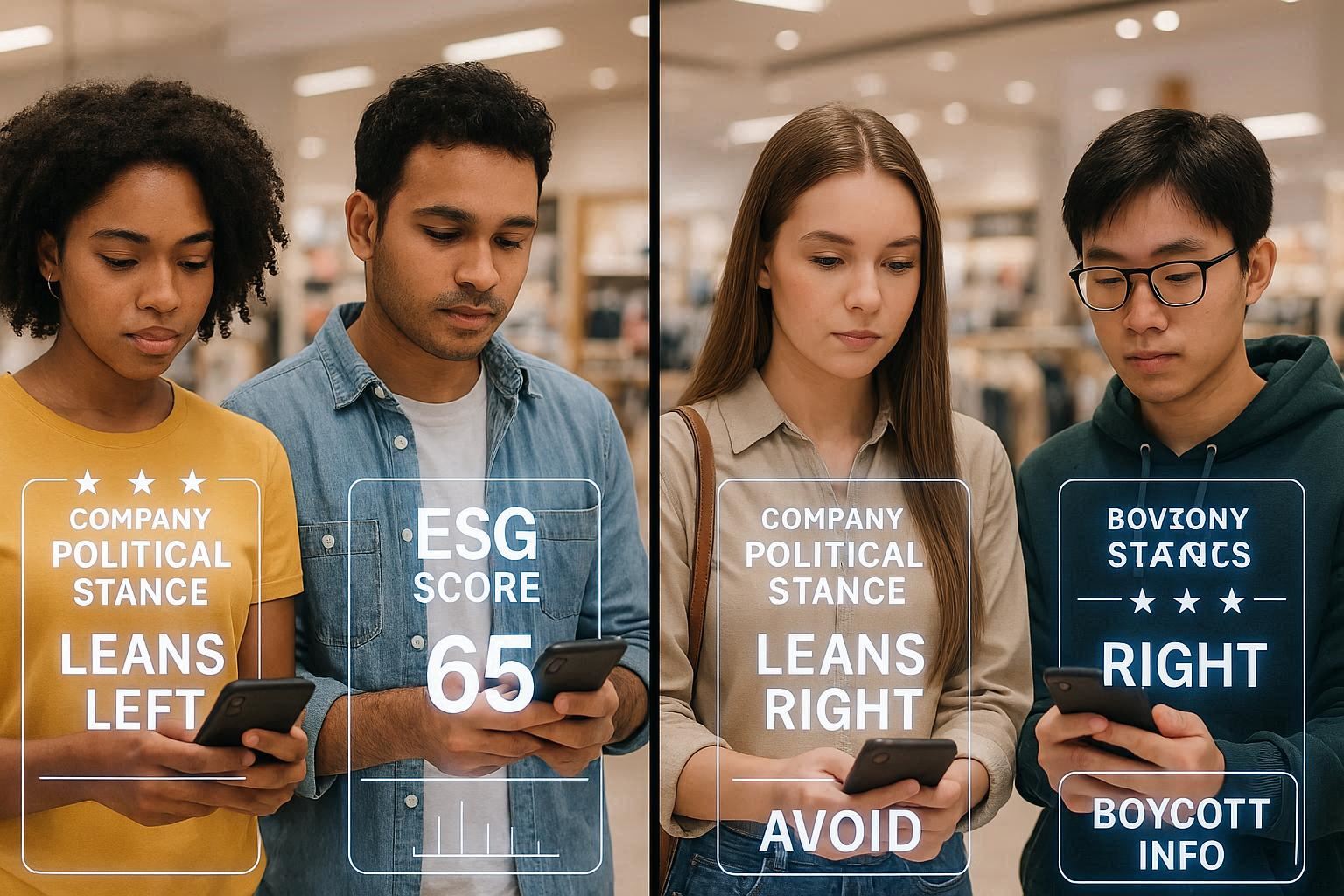
The hierarchy of consumer decision-making has inverted for younger generations. While previous cohorts prioritized price, quality, and convenience, Gen Z and Millennials increasingly lead with values alignment. McKinsey research shows that 85% of Gen Z consumers research a company’s stance on social issues before purchasing, while 76% have refused to buy from companies that conflict with their values. This values-first consumption creates new market dynamics where political positioning determines market share more than product attributes.
Environmental consciousness particularly drives young consumer behavior, with climate change viewed as the defining geopolitical challenge. The “Greta Thunberg effect” has made carbon footprints a primary purchase consideration for 67% of consumers under 35. When Patagonia’s founder donated the company to fight climate change, sales increased 42% among Gen Z consumers within six months. Conversely, when Volkswagen’s emissions scandal broke, the brand lost 35% market share among young European consumers—losses still unrecovered despite billions in marketing spending.
Human rights considerations increasingly override economic rationality in purchase decisions. The boycott of brands using Xinjiang cotton—including H&M, Nike, and Adidas—cost these companies $6 billion in Chinese revenue while simultaneously facing Western pressure to maintain the boycotts. Young consumers’ willingness to sacrifice product access for political principles challenges fundamental assumptions about market behavior and price elasticity.
Corporate Political Positioning: The End of Neutrality
The Impossibility of Political Agnosticism
The traditional corporate stance of political neutrality has become untenable when facing politically conscious young consumers. Disney’s attempt to remain neutral on Florida’s “Don’t Say Gay” bill triggered employee walkouts, consumer boycotts, and ultimately forced CEO Bob Chapek’s statement opposing the legislation. The resulting political backlash cost Disney its special tax status, potentially worth $1 billion over 20 years, while failure to act earlier alienated young consumers and employees. This lose-lose scenario exemplifies the impossibility of neutrality in polarized environments.
Ben & Jerry’s decision to stop selling ice cream in occupied Palestinian territories demonstrates deliberate political positioning despite parent company Unilever’s resistance. The decision cost $100 million in immediate revenue but strengthened brand loyalty among progressive young consumers, with US sales increasing 8% in subsequent quarters. This suggests that clear political stances, even controversial ones, can generate net positive returns when aligned with target demographics’ values.
The speed of required responses has compressed from weeks to hours. When Russia invaded Ukraine, young consumers expected immediate corporate responses. Companies that waited 48 hours before announcing Russia exits faced “complicity” accusations on social media. McDonald’s 10-day delay before closing Russian restaurants generated 50 million negative social media impressions and boycott threats. The premium on rapid, decisive response reflects young consumers’ expectation that corporations act as quasi-governmental actors with foreign policy responsibilities.
Geographic Value Divergence
Multinational corporations increasingly face incompatible political demands across different markets, with young consumers in each geography expecting alignment with local values. Nike’s support for Black Lives Matter increased US Gen Z market share by 18% but triggered Chinese social media campaigns accusing the brand of hypocrisy regarding Xinjiang. Attempts to maintain different positions in different markets—”geo-political arbitrage”—typically fail when young consumers share screenshots across borders, exposing inconsistencies.
The NBA’s experience illustrates geographic value conflicts. Supporting Black Lives Matter was essential for maintaining credibility with young American fans who represent 45% of viewership. However, Houston Rockets GM Daryl Morey’s Hong Kong democracy tweet triggered Chinese boycotts costing the league $400 million annually. Attempts to apologize to China while maintaining US positions satisfied neither constituency, demonstrating the impossibility of segregating political positions by market.
Japanese companies face particular challenges navigating Sino-American tensions while maintaining access to both markets. Uniqlo’s statement that it “doesn’t take political positions” triggered boycotts from both Western human rights activists and Chinese nationalists who expected support. The resulting 15% revenue decline forced a strategy shift toward “localized values alignment”—essentially maintaining separate corporate identities in different markets, with associated complexity and costs.
Employee Activism and Internal Pressure
Young employees increasingly demand that employers take political positions, with 83% of Millennials saying a company’s political stance influences job decisions. Tech workers at Google, Amazon, and Microsoft have organized walkouts over military contracts, forcing policy changes despite lucrative government relationships. The threat of talent exodus in competitive labor markets gives young employees unprecedented influence over corporate political positioning.
The Great Resignation partially reflected political misalignment between young workers and employers. Companies perceived as politically regressive experienced 45% higher turnover among employees under 35. Coinbase’s “mission-focused” policy prohibiting political discussions at work triggered 5% immediate resignations, primarily among younger employees. While CEO Brian Armstrong defended the approach as maintaining focus, the talent loss in crypto’s competitive market forced subsequent policy softening.
Internal activism has evolved from petition-signing to sophisticated organizing resembling labor movements. Amazon Employees for Climate Justice mobilized 8,000 workers, pressured the company into comprehensive climate commitments, and influenced shareholder votes. Microsoft employees forced cancellation of military HoloLens contracts through coordinated pressure. These movements demonstrate how young employees view their employers as political platforms requiring democratic input.
The Geopolitics of Cancel Culture and Boycott Capitalism
Digital Boycotts as Economic Warfare
Social media has transformed boycotts from slow-building movements to instant economic weapons. The #DeleteUber campaign, triggered by perceived strike-breaking during Trump’s Muslim ban protests, caused 200,000 account deletions in 48 hours and permanent market share loss to Lyft. Modern boycotts achieve in days what traditional organizing required years to accomplish, with young consumers’ digital nativity enabling rapid coordination and amplification.
The mechanics of digital boycotts favor dramatic impact over sustained pressure. Analysis of 300 major boycotts shows average participation lasting just 2.3 weeks, but causing average market cap losses of 4.2% with recovery taking 8.5 months. This asymmetry—brief participation causing lasting damage—incentivizes corporate hypersensitivity to young consumer sentiment. Companies now maintain “social media war rooms” monitoring potential boycott triggers 24/7, with response protocols comparable to cybersecurity incident management.
China’s state-coordinated boycotts demonstrate geopolitical weaponization of youth consumer power. The H&M boycott over Xinjiang cotton statements mobilized 450 million Weibo impressions within 24 hours, removed the brand from all Chinese e-commerce platforms, and caused 28% revenue decline. The speed and completeness of digitally-orchestrated boycotts in authoritarian systems provides asymmetric economic leverage, forcing Western companies to choose between values and market access.
The Attention Economy of Activism
Young consumers’ political consumption operates within attention economy dynamics where sustained focus is rare but initial impact can be devastating. The Spotify-Joe Rogan controversy saw 2 million account cancellations over COVID-19 misinformation concerns, causing $4 billion market value loss. However, 70% of cancellers returned within six months, suggesting that corporate strategy should focus on surviving initial impact rather than preventing controversies entirely.
Performative activism—political positioning for social media visibility rather than genuine commitment—has become sophisticated among young consumers. The “Instagram activism industrial complex” rewards visible political consumption choices with social capital. Posting boycott participation generates average engagement rates 3.4x higher than normal content. This gamification of political consumption creates powerful but potentially shallow participation incentives.
Corporations have learned to differentiate between high-intensity, low-duration “cancellation events” and sustained value misalignment. Goya Foods’ CEO’s Trump support triggered massive boycott threats but actual sales increased 22% as counter-boycott “buycotts” materialized. Netflix lost 1.2 million subscribers over Dave Chappelle controversy but gained 2.4 million in subsequent quarters. These patterns suggest that surviving initial outrage without capitulation can actually strengthen brand positioning with specific demographics.
Corporate Counter-Strategies
Companies increasingly employ “values marketing” preemptively to build boycott resistance among young consumers. Nike’s Colin Kaepernick campaign initially caused $3.5 billion market cap loss and conservative boycotts but ultimately increased sales 31% among target demographics. By deliberately choosing sides, Nike transformed from boycott target to political ally for young progressive consumers.
The “stakeholder capitalism” model explicitly acknowledges young consumers’ demand for corporate political engagement. BlackRock’s Larry Fink’s annual letters emphasizing ESG considerations reflect recognition that $68 trillion in wealth transfer to Millennials and Gen Z will flow toward values-aligned investments. Companies demonstrating authentic long-term commitment to political positions—rather than reactive crisis management—build resilience against boycott campaigns.
Some corporations have successfully resisted political pressure through “principled neutrality”—articulating why taking positions would be inappropriate. Coinbase’s public explanation of its apolitical stance, while costly in talent, attracted investors seeking refuge from political volatility. The stock has outperformed tech peers, suggesting markets may reward clear positioning even if controversial. This demonstrates that consistency and transparency matter more than specific positions.

Regional Variations: The Geography of Generational Politics
American Youth: The Progressive Vanguard
American Gen Z and Millennials have emerged as globally influential political consumers, with US social movements achieving worldwide impact through cultural export. Black Lives Matter’s transformation from US protest to global movement affecting corporate policies worldwide demonstrates American youth’s agenda-setting power. When young Americans demanded corporate racial justice commitments, global companies pledged $200 billion despite varying relevance in other markets.
The US university system amplifies young American political influence. Campus protests against investment in fossil fuels have forced endowments worth $40 trillion to divest $1.5 trillion from carbon-intensive industries. When Columbia students occupied Hamilton Hall demanding Gaza divestment, copycat protests emerged at 140 universities globally within 72 hours. This demonstration effect multiplies American youth political impact beyond demographic weight.
American young consumers’ technological platform control provides structural advantages. With Silicon Valley platforms mediating global discourse, US youth political priorities receive algorithmic amplification. TikTok may be Chinese-owned, but 67% of viral political content originates from American creators. This soft power through platform dominance enables American generational politics to shape global corporate strategies disproportionately.
Chinese Youth: Patriotic Consumption as Duty
Chinese Gen Z has embraced “guochao” (国潮)—national tide—transforming domestic consumption into patriotic expression. Li-Ning’s transformation from struggling sportswear brand to premium national champion demonstrates this shift. After debuting “China Li-Ning” at New York Fashion Week with designs celebrating Chinese identity, revenue increased 400% among consumers under 30. The brand now commands premium pricing over Nike and Adidas in tier-one cities.
The state has successfully channeled youth nationalism into economic weapon against foreign companies. When Canada arrested Huawei CFO Meng Wanzhou, young Chinese consumers organized Canada Goose boycotts so effective the company delayed Beijing store opening. The speed of youth mobilization—from government signal to economic impact within hours—provides China asymmetric leverage in trade disputes.
“Lying flat” (躺平) and “run” (润) movements reveal Chinese youth’s complex relationship with political consumption. While publicly embracing patriotic consumption, private behaviors show exhaustion with political demands. Luxury goods sales among Chinese youth increased 35% in 2023 despite official criticism of Western materialism. This gap between public political performance and private consumption choices complicates corporate strategy in China.
European Youth: The Sustainability Warriors
European Gen Z has made environmental politics central to consumption choices, with climate considerations overriding traditional brand loyalty. When Lufthansa offered “green fares” offsetting carbon emissions, bookings among under-30 travelers increased 45% despite 19% price premiums. Flight shaming (“flygskam”) has reduced Swedish domestic aviation 9% as young consumers choose trains despite longer travel times.
The European Green Deal’s success depends on youth political consumption supporting regulatory changes. When EU proposed banning combustion engines by 2035, young consumer support prevented industry resistance from defeating the measure. Survey data shows 78% of European Gen Z willing to pay 20% more for electric vehicles, enabling aggressive decarbonization policies politically feasible only with youth backing.
European youth’s political consumption increasingly challenges American corporate cultural hegemony. The “digital sovereignty” movement encouraging European alternatives to US tech platforms has gained traction among young consumers concerned about data privacy and cultural autonomy. When WhatsApp updated privacy policies, 30 million European users migrated to Signal and Telegram within one month, demonstrating coordinated political consumption at scale.

The ESG Revolution: Young Investors Reshape Capital Markets
The Millennial Wealth Transfer
The impending $84 trillion wealth transfer from Baby Boomers to Millennials and Gen Z represents history’s largest intergenerational wealth transfer, fundamentally reshaping investment priorities. Unlike their parents who prioritized returns above all, 95% of Millennial investors consider ESG factors, with 75% willing to accept lower returns for values alignment. This shift transforms ESG from niche consideration to market-moving force.
Robinhood’s meme stock phenomenon demonstrated young investors’ ability to weaponize capital markets for political expression. The GameStop short squeeze, framed as struggle against Wall Street establishment, caused $20 billion in hedge fund losses. While financially irrational, the episode revealed young investors’ willingness to sacrifice returns for political impact. The subsequent rise of “movement investing”—coordinating investments for political rather than financial goals—challenges efficient market hypotheses.
Young investors’ crypto adoption partially reflects political disillusionment with traditional financial systems. The narrative of decentralization resonating with 40% of Millennials owning cryptocurrency represents rejection of institutional control rather than pure speculation. When Canadian truckers’ bank accounts were frozen, Bitcoin donations spiked 400% as young supporters routed around government financial control. This political dimension of crypto adoption suggests staying power beyond speculation cycles.
Sustainable Finance Goes Mainstream
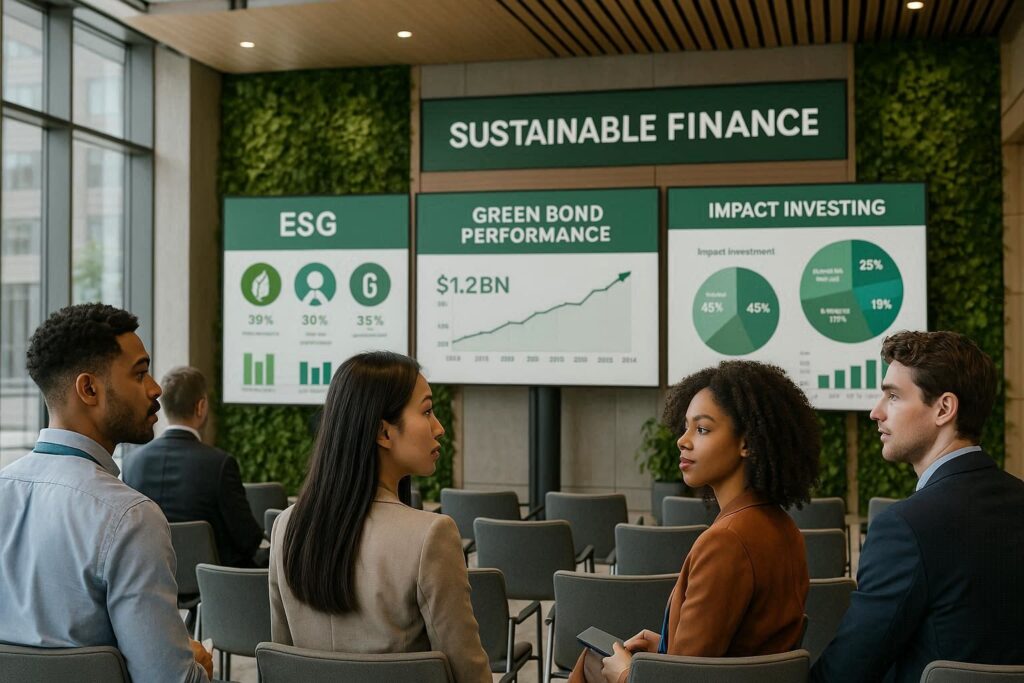
ESG assets under management reached $35 trillion globally, driven primarily by investors under 40 demanding sustainable options. When BlackRock launched ESG-focused ETFs, 73% of investors were Millennials or Gen Z despite controlling only 5% of wealth. This demographic skew suggests explosive growth as wealth transfers accelerate. Companies failing to meet ESG standards face capital access challenges as young investors control increasing wealth shares.
The “impact investing” movement has evolved from philanthropy to mainstream strategy among young wealthy individuals. The Giving Pledge’s younger signatories increasingly deploy capital for political and social objectives rather than traditional charity. MacKenzie Scott’s rapid deployment of $14 billion to social justice causes demonstrates new model of weaponized wealth for political change. As tech wealth concentrates among younger entrepreneurs, expect acceleration of politically-motivated capital deployment.
Shareholder activism has been revolutionized by young investors using technology to coordinate. Engine No. 1’s successful ExxonMobil board coup—replacing three directors with climate advocates despite owning 0.02% of shares—succeeded through small investor mobilization via social media. The $12 million campaign generating $60 billion market cap impact demonstrates asymmetric leverage when young investors coordinate through digital platforms.
Green Bonds and Transition Finance
The green bond market’s explosion to $500 billion annual issuance reflects young investor demand for climate-aligned investments. When Poland issued Europe’s first sovereign green bond, 77% of buyers were under 40—unprecedented demographic concentration for government debt. This youth demand enables governments to fund energy transitions at lower costs than conventional bonds, creating fiscal incentives for climate action.
“Transition bonds” funding fossil fuel companies’ renewable shifts have sparked fierce debate among young investors. Shell’s $10 billion transition bond issuance faced youth-led campaigns demanding exclusion from ESG funds despite renewable investments. The controversy highlights generational disagreement about engagement versus divestment strategies for forcing corporate change. Young investors increasingly demand immediate transformation rather than gradual transition.
The taxonomy wars—defining what qualifies as “sustainable”—represent proxy battles for young investor capital. The EU’s inclusion of nuclear and gas in green taxonomy triggered youth protests and legal challenges. When S&P removed Tesla from ESG indices while retaining ExxonMobil, young investors withdrew $8 billion from S&P ESG funds within one month. These definitional battles determine capital flows worth trillions as young investors gain wealth control.
Technology and Generational Political Power
TikTok as Geopolitical Battlefield
TikTok has emerged as the primary platform for youth political organization, with 150 million American users and 1 billion globally. The platform’s algorithm—optimizing for engagement over accuracy—amplifies political content achieving 10x reach compared to Instagram or Twitter. When TikTok creators organized against US ban attempts, they generated 7 million calls to Congress in 48 hours, demonstrating unprecedented political mobilization capacity.
The platform’s Chinese ownership creates unique dynamics where Western youth consume content potentially influenced by foreign algorithms. Research suggests TikTok suppresses content about Xinjiang, Tibet, and Taiwan while amplifying US social division content. Young users’ average 95 minutes daily on TikTok means Chinese algorithms significantly influence Western youth political consciousness—a soft power achievement traditional propaganda never accomplished.
Corporate brand management on TikTok requires radically different approaches acknowledging platform political dynamics. Brands attempting traditional advertising face immediate backlash, while those embracing platform-native political messaging achieve viral success. When Duolingo’s TikTok account posted supporting Ukraine with language-learning memes, downloads increased 132% among Gen Z. The fusion of entertainment, politics, and commerce on TikTok creates new marketing paradigms.
Digital Organizing and Flash Movements
Young consumers’ digital organizing capacity enables “flash movements”—rapid political mobilizations achieving immediate impact before institutional response. The Kellogg’s strike support campaign organized boycotts reaching 100 million consumers within 72 hours through TikTok and Twitter coordination. Traditional unions required months for similar reach; digital natives achieve equivalent impact in hours.
Blockchain technology enables new forms of economic coordination among young political consumers. ConstitutionDAO raised $47 million in 72 hours to bid on US Constitution copy, demonstrating cryptocurrency’s potential for instant political fundraising. While unsuccessful, the experiment revealed young consumers’ ability to rapidly deploy capital for political objectives outside traditional institutional channels.
Artificial intelligence amplifies young consumers’ investigative capabilities for exposing corporate practices. When Fashion Checker AI analyzed 250 fashion brands’ supply chains using satellite imagery and customs data, it identified labor violations affecting 2.5 million workers. Young consumers’ technological sophistication—combining AI, open-source intelligence, and social media—creates unprecedented corporate transparency demands.
Corporate Adaptation Strategies
The Authenticity Imperative
Young consumers possess sophisticated authentication capabilities, punishing “purpose-washing” more severely than admitted imperfection. When Pepsi’s Kendall Jenner protest advertisement attempted appropriating social justice imagery, the backlash caused $5 billion brand value loss. Conversely, when Patagonia’s founder admitted the company’s imperfect environmental record while donating profits to climate causes, brand trust increased 40% among young consumers.
Successful corporate political positioning requires long-term commitment predating crisis moments. Microsoft’s decade-long LGBTQ+ advocacy provided credibility when taking stances on related legislation. Companies attempting sudden political pivots during controversies face “bandwagon” accusations. Building political credibility requires sustained investment comparable to brand building—measured in years, not campaigns.
Employee-consumer alignment has become critical for authentic political positioning. When Spotify employees publicly criticized Joe Rogan’s podcast, it validated consumer concerns and limited boycott impact. Conversely, when Amazon warehouse workers contradicted corporate climate commitments, young consumers’ trust collapsed 35%. Internal coherence between employee experience and external positioning determines credibility with politically conscious consumers.
Multi-Stakeholder Navigation
Companies increasingly employ “stakeholder councils” including young consumers, employees, and activists in political positioning decisions. Unilever’s Sustainable Living Brands Council, including Gen Z representatives, guides political stances generating 75% of company growth. This participatory governance model exchanges control for legitimacy with young stakeholders demanding voice in corporate decisions.
The “radical transparency” approach—publicly sharing decision-making processes around political positions—has gained traction. When Airbnb published internal deliberations about Russia operations, including employee dissent and board debates, young consumer trust increased despite controversial outcome. Transparency about difficult trade-offs resonates more than claiming perfect solutions.
Geographic federation models allow regional political positioning while maintaining global coherence. McDonald’s franchise model enabled local owners to close Russian restaurants before corporate decision, providing political cover. This distributed decision-making allows rapid response to local political demands while protecting global brand. However, coordination complexity and potential inconsistency require sophisticated management.
The Long Game
Forward-looking companies recognize that today’s young consumers become tomorrow’s power brokers. Tesla’s controversial decisions alienating older consumers while cultivating youth loyalty represents long-term positioning for generational power transfer. The company’s 73% favorable rating among Gen Z despite quality issues suggests political alignment can override traditional product considerations.
Investment in youth political priorities—even at short-term cost—represents strategic positioning for demographic inevitability. CVS’s decision to stop selling tobacco products cost $2 billion annual revenue but positioned the company as health advocate for young consumers. The long-term benefits in brand value and regulatory positioning exceeded immediate losses.
Building “political capital” with young consumers enables navigating future controversies. Patagonia’s decades of environmental activism created reservoir of trust allowing survival of controversies that would destroy other brands. This political capital functions like brand equity—accumulated over time, spent during crises, requiring constant replenishment.
Future Trajectories: The Next Decade of Generational Geopolitics
The Alpha Generation Arrives
Generation Alpha (born after 2010) will enter consumer markets with even more radical political expectations. Growing up entirely post-smartphone with AI as native technology, their relationship with corporate political positioning will differ fundamentally. Early indicators suggest expectation of predictive corporate political alignment—companies anticipating and addressing political concerns before they arise.
Climate change’s acceleration will make environmental politics existential for Alpha generation. By their peak consumption years, climate impacts will be undeniable daily reality rather than future threat. Companies failing to demonstrate genuine climate action will face not just boycotts but complete irrelevance to Alpha consumers. The window for superficial environmental positioning closes as climate impacts intensify.
The metaverse and virtual consumption create new territories for political expression. When Balenciaga launched Fortnite skins, young consumers’ virtual fashion choices became political statements reaching 350 million players. As consumption increasingly shifts virtual, corporate political positioning must extend into digital realms with different dynamics than physical products.
The Globalization of Youth Politics
Young consumers worldwide increasingly share political priorities transcending national boundaries. Climate change, social justice, and economic inequality resonate globally among youth, creating coordinated transnational movements. When Greta Thunberg called for climate strikes, 6 million young people participated across 150 countries within six months—unprecedented global youth coordination.
The rise of “glocal” political consumption—global causes adapted to local contexts—requires sophisticated corporate strategies. Black Lives Matter’s translation into local racial justice movements worldwide demonstrates how American youth politics becomes globally vernacular. Companies must navigate between global youth solidarity and local political sensitivity.
Language barriers’ erosion through translation technology enables real-time global youth political coordination. When Iranian women protested hijab requirements, young consumers worldwide organized boycotts of companies operating in Iran within hours despite language differences. This instant global solidarity multiplies local political movements’ economic impact.
The Backlash Scenario
Potential backlash against corporate political positioning could emerge as young consumers mature. Survey data shows political consumption fatigue among older Millennials, with 42% wanting companies to “stick to business.” If economic pressures intensify, political consumption might become luxury younger generations cannot afford.
Authoritarian governments increasingly restrict corporate political expression, creating tensions with young consumer demands. China’s requirement that companies “tell China’s story well” conflicts with Western youth expectations of corporate criticism. Russia’s “foreign agent” laws punish companies taking political stances. This authoritarian pushback might force corporate political retreat.
The fragmentation of youth politics along ideological lines could make universal positioning impossible. Progressive and conservative youth increasingly consume different brands, watch different content, and inhabit different digital spaces. This polarization might create parallel corporate ecosystems serving incompatible political constituencies.
Conclusion: The Permanent Revolution of Political Consumption
The transformation of consumption into political expression by younger generations represents a fundamental restructuring of capitalism rather than passing trend. Young consumers have discovered that purchasing power, aggregated through digital coordination, rivals traditional political institutions in forcing corporate behavior change. This recognition has permanently altered the relationship between corporations and society, making political positioning as important as product quality for market success.
For corporations, this new reality demands capabilities previously unnecessary: political intelligence rivaling governments, values authentication surpassing marketing rhetoric, stakeholder management encompassing global youth movements. The companies thriving amid this transformation are those recognizing political positioning not as cost center but as core competency for accessing young consumers’ $143 trillion lifetime value.
The implications extend beyond corporate strategy to capitalism’s fundamental structure. When consumption becomes political expression and investment becomes activism, market mechanisms incorporate values beyond profit maximization. This “post-capitalist capitalism”—markets operating within political constraints imposed by conscious consumers—represents young generations’ attempt to reform systems they inherited.
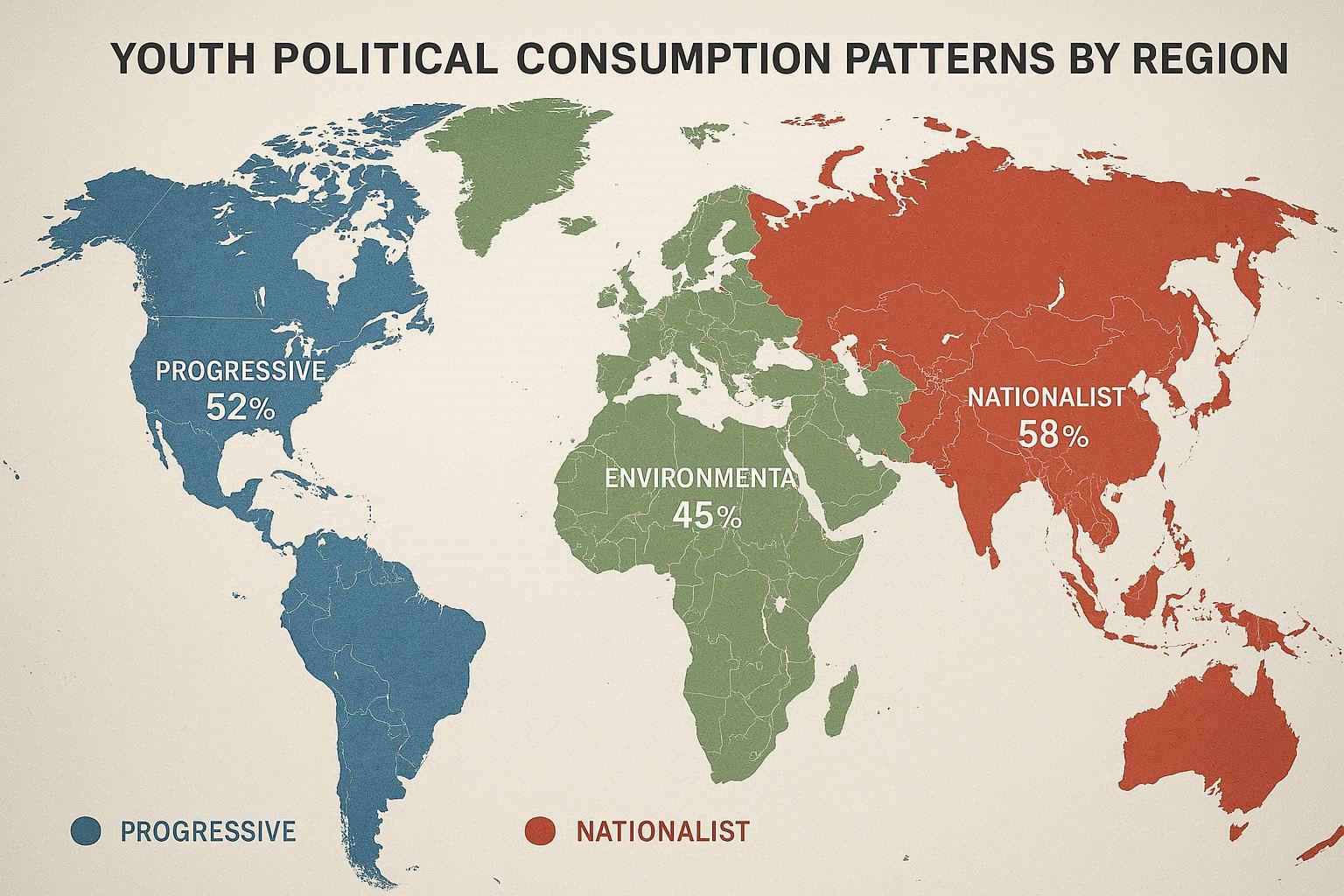
The geographic variations in youth political consumption create additional complexity. Companies must simultaneously satisfy American progressive youth, Chinese nationalist youth, and European environmentalist youth—often with incompatible demands. This multi-polar political consumption landscape advantages regional companies over global corporations, potentially reversing decades of consolidation.
Technology will continue amplifying young consumers’ political power. Artificial intelligence enabling instant corporate practice investigation, blockchain facilitating economic coordination, and virtual reality creating new consumption spaces all increase youth leverage over corporate behavior. Companies must anticipate technological empowerment of political consumption rather than merely reacting to current capabilities.
The generational wealth transfer will crystallize these dynamics. As Millennials and Gen Z inherit Baby Boomer wealth, their political consumption preferences will determine capital allocation across entire economies. Companies and investment funds aligned with young generations’ political priorities will access abundant capital; those misaligned will face capital starvation.
Looking ahead, the question isn’t whether political consumption will persist but how it will evolve. Will youth political priorities converge globally or fragment locally? Can corporations maintain coherent strategies amid incompatible political demands? How will authoritarian governments respond to youth economic power challenging political control? These questions will shape not just corporate strategies but global political economy’s fundamental structure.
For business leaders, the message is clear: young consumers have permanently fused consumption with politics. The traditional separation between commercial and political spheres has collapsed, replaced by integrated ecosystem where every purchase is political statement and every brand is political actor. Success requires not just understanding this transformation but embracing it—building political consciousness into corporate DNA rather than treating it as external constraint.
The companies that will dominate the next decade are those that recognize political positioning as source of competitive advantage rather than necessary evil. They will build authentic political identities resonating with young consumers, create governance structures incorporating youth voices, and develop capabilities for navigating complex multi-stakeholder political environments. Most importantly, they will understand that in the age of political consumption, neutrality is not option but liability.
The revolution is here, it’s young, and it’s shopping.