Morocco is one of the North African countries where history is most clearly felt in the present. The current social protests are not a sudden eruption, but rather the continuation of a conversation the country has been having with itself for over a century: how to move forward without upsetting its internal balance.
Contemporary Morocco emerged in 1956 with the independence of the French and Spanish protectorates. But tensions date back to the 19th century, when the sultanate attempted to modernize its administration to resist European pressure. During the protectorate (1912–1956), France and Spain divided the territory, although they maintained the status of the monarch.
When Mohammed V returned from exile in Madagascar, he embodied national resistance and instilled in the people the hope of introducing reforms that would improve the lives of its citizens. The reign of his son, Hassan II (1961–1999), consolidated the modern state, but at the cost of strong political control over all social and institutional aspects of the country. In 1999, the arrival of Mohammed VI generated new expectations and a push for modernization. However, the significant economic growth the country has experienced so far this century failed to correct inequalities, neither social nor regional.
The 2011 Constitution, approved after the February 20th Movement and within the framework of the so-called Arab Spring, strengthened freedoms and participation, but without altering the power structure. Although it did not provoke a violent revolution or regime change, as in other Arab countries, the events that followed the Arab Spring, which began in late 2010 in Tunisia with the fall of Ben Ali and quickly spread to Egypt, Libya, Yemen, Syria, and Morocco itself, had a unique impact on this country.
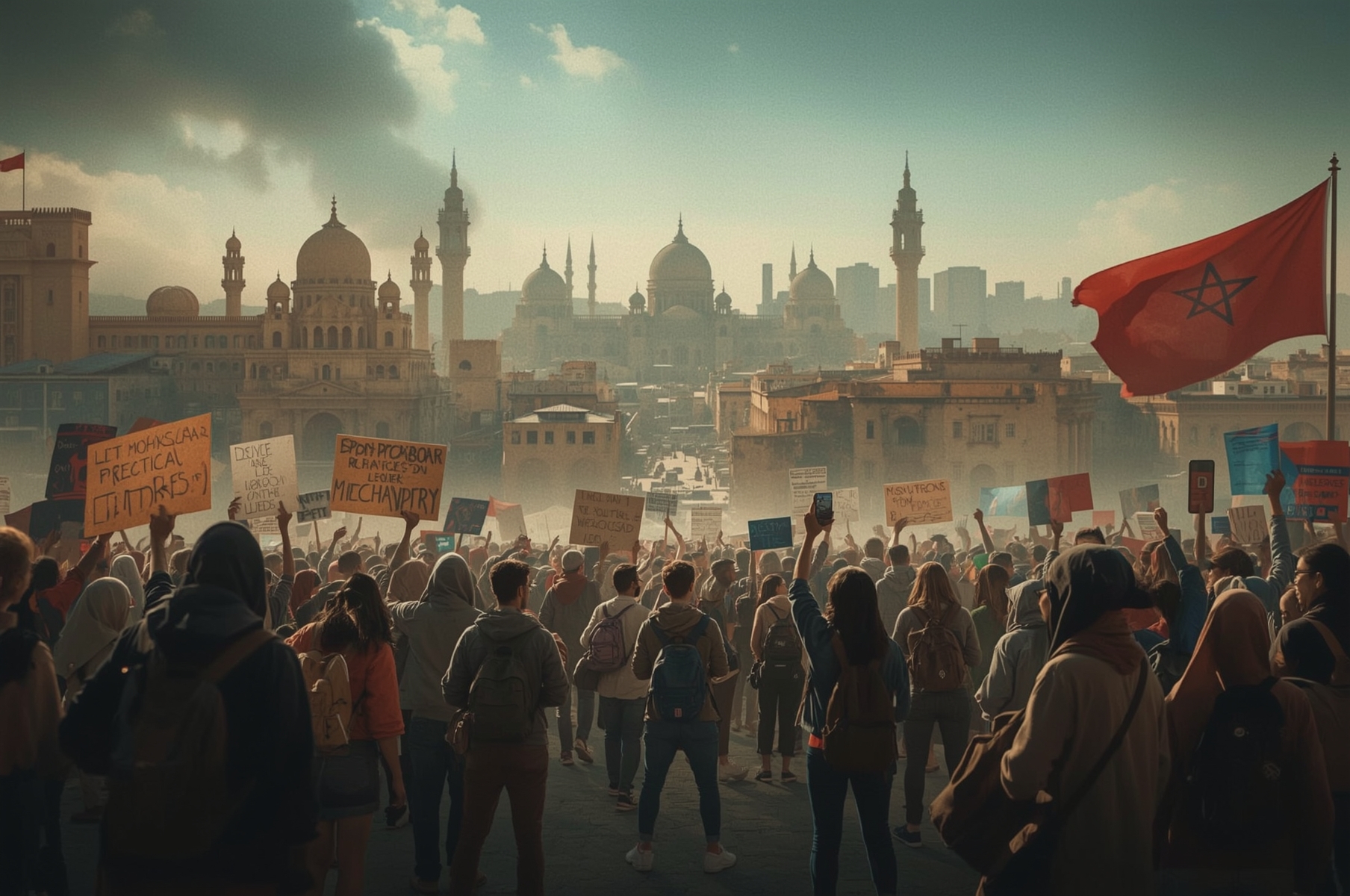
Instead of a systemic collapse, it produced political reforms controlled from above, driven by popular pressure, yes, but always within the context of peaceful demonstrations in the main cities of the Alawite country. The current protests prolong this search for balance between authority and change.
Generation Z—those born between 1995 and 2010—stands out in this process, becoming more connected and aware of their place in the world. Through social media, they express their concerns and demand transparency and efficiency. Some analysts even speak of a “Z Revolution,” a generational pressure that seeks to renew institutions without destroying them.
The immediate trigger for the current protests was the death of several women (at least eight are reported) at the Hassan II regional hospital in Agadir, following complications related to botched cesarean sections. This event sparked social outrage and highlighted the shortcomings of the Moroccan healthcare system.
The tragedy, still under judicial investigation, has become a symbol of the deterioration of public services and social inequality in access to healthcare. Generation Z youth have embraced this episode as an emblem of a broader protest against precariousness and lack of opportunities, reminding everyone that Morocco’s malaise stems not from foreign policy but from everyday emergencies.
Geography also explains part of the tensions. Morocco and Mauritania are currently the starting points for massive and uncontrolled migration to the Canary Islands and the Iberian Peninsula. This flow, which overwhelms Spain’s reception capacity and strains relations between its autonomous communities—particularly due to the arrival of unaccompanied minors—reveals a human and political tragedy. Both Morocco and the European Union use this movement as a tool of diplomatic pressure: a key that opens or closes depending on the circumstances, in a form of “extortion diplomacy.”
In Spain, however, this phenomenon is rarely addressed from a strategic perspective. Everything is interpreted through domestic policy lenses. Immigration is used as a weapon between regional governments and political parties, without a state policy that understands the magnitude of the challenge. Morocco, aware of this, combines cooperation and pressure, knowing that its geographical position gives it unique bargaining power.
It is significant that young Moroccans—especially those of Generation Z—protest against the government, but not against the monarchy. This distinction reflects a historical constant: the Crown, ruled by the Alawite dynasty, is perceived as a symbol of unity and continuity beyond political power.
The past is respected without renouncing the future.
History teaches us that the strength of the Maghreb kingdom lies in its capacity to adapt. Each generation reinterprets the balance between tradition and change. The current tensions are unlikely to end in a rupture, but rather will be a new episode in an ongoing historical process.